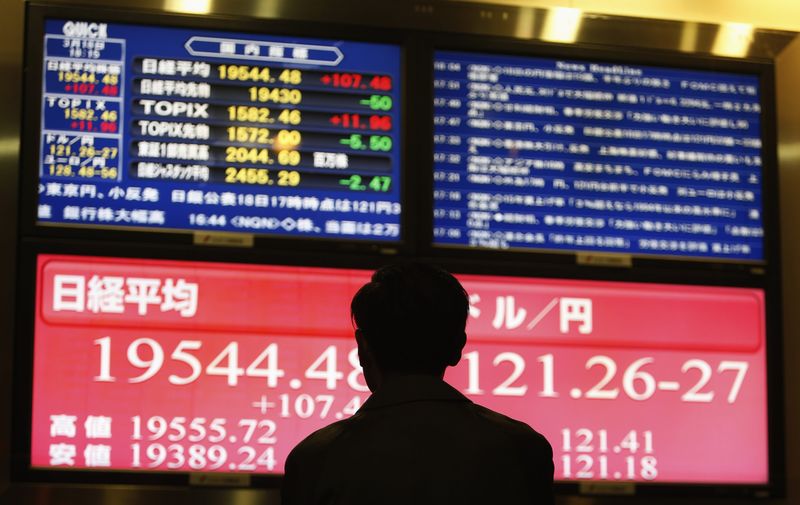
Fresh U.S. military strikes on Iran reignited geopolitical तनाव, pushing oil prices up more than 2% and sending Asian equities lower across the board. Brent crude traded near $97 a barrel and WTI moved above $90, while regional benchmarks fell between 0.1% and 2.0% as investors unwound risk ahead of U.S. PCE inflation data. The renewed conflict raises the chance of persistently higher energy prices and complicates the Fed’s policy outlook.
This is a classic cross-asset regime shift where geopolitics re-prices first through oil, then through rates. The market is still treating the conflict as a headline risk, but if energy stays bid for more than a few sessions, the second-order effect is higher breakevens and a stickier PCE print that can compress duration-sensitive multiples even if nominal growth holds up.
The near-term winner is the energy complex, but the cleaner expression is not just crude beta; it is refined product and services exposure because supply bottlenecks and freight/security premia tend to widen cracks faster than upstream realizations fully catch up. Conversely, the biggest hidden loser is high-multiple AI/semis and crowded growth, where the combination of higher oil, firmer inflation expectations, and de-risking can trigger factor rotation even without any change in earnings estimates.
The consensus is probably overestimating the probability of a quick de-escalation while underestimating how quickly portfolio flows can unwind after record highs. In the next 1-3 trading sessions, the main catalyst is not the geopolitical event itself but the inflation print; a hotter PCE would force the market to price less policy flexibility, which could turn a temporary risk-off into a broader multiple reset. The contrarian view is that any pullback in equities may be shallow if energy spikes prove transitory, because real economy damage from a brief oil pop is limited unless Brent sustains above the high-$90s for several weeks.
AI-powered research, real-time alerts, and portfolio analytics for institutional investors.
Overall Sentiment
moderately negative
Sentiment Score
-0.45
