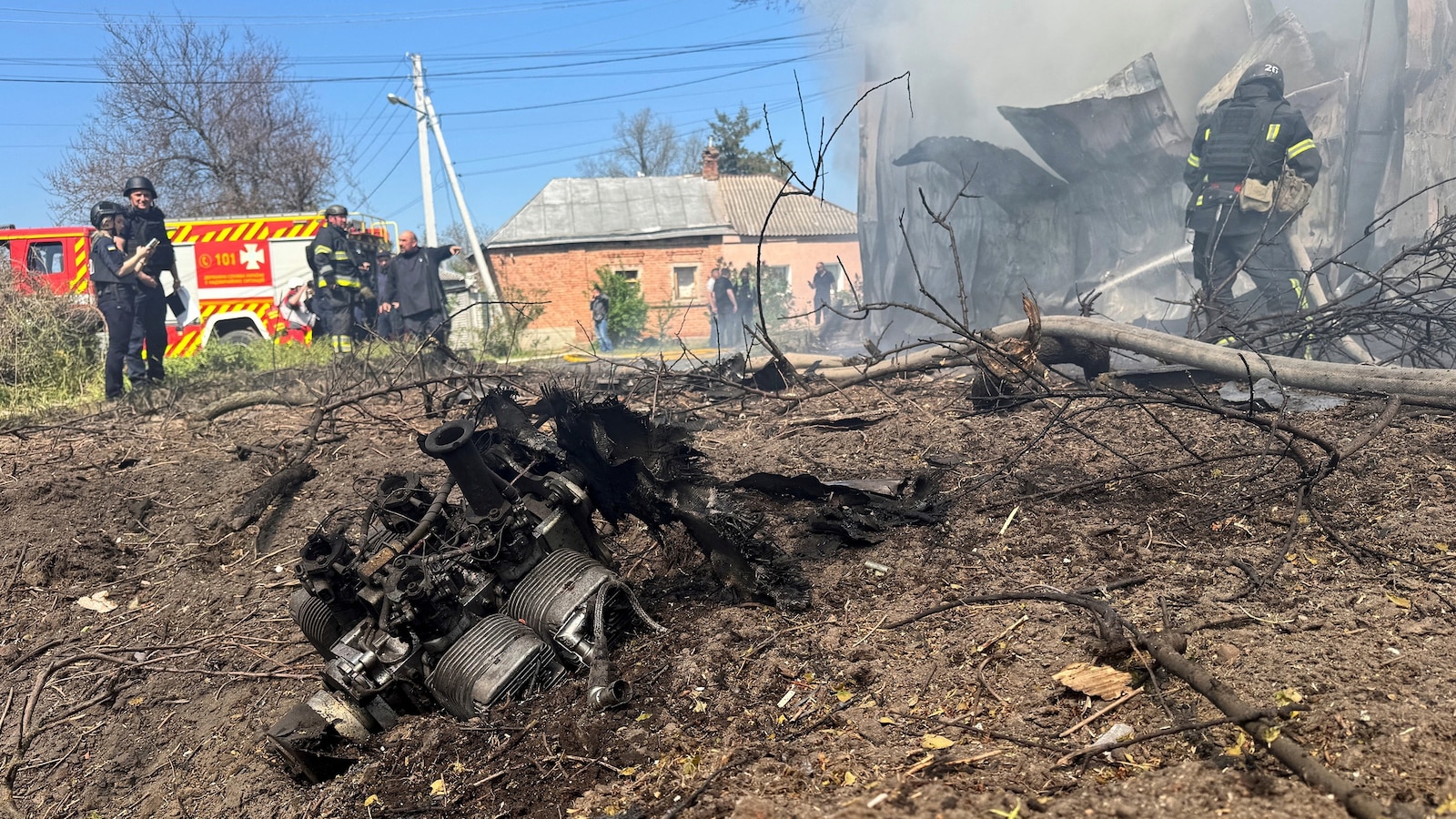
Russia and Ukraine agreed to a 3-day ceasefire on May 9-11 and a prisoner swap involving 1,000 prisoners from each side, following U.S.-mediated talks. Trump framed the deal as a possible "beginning of the end" of the war, while both Moscow and Kyiv said the swap and ceasefire were tied together. The development lowers near-term escalation risk, but the ceasefire is limited and appears unlikely to extend beyond the holiday window.
This is less a de-escalation signal than a tactical pause with asymmetric informational value. The market implication is not direct risk-on for broad Europe equities; instead, it is a short-dated volatility compression event that mainly benefits any asset pricing in immediate escalation risk around symbolic dates. The bigger second-order effect is that the U.S. has reasserted itself as the broker of short-horizon outcomes, which marginally lowers near-term tail risk premiums in defense-heavy European names, even if it does nothing to improve the medium-term war trajectory.
The key setup is that a brief, highly conditional pause tends to reduce the probability of a surprise event over the next 72 hours, but it can also concentrate risk immediately after expiry if one side uses the window to reposition. That argues for looking at defense equities, European gas, and FX vol through a one-week lens rather than interpreting this as a trend change. If the pause is violated or ignored in even a limited way, the market will likely punish credibility much more than the initial announcement rewarded it.
The contrarian point: consensus may be overestimating the signaling value of any holiday ceasefire and underestimating how much both sides can use it for force regeneration, logistics, and narrative management. That makes the medium-term implication mildly negative for a durable peace trade, because each failed micro-ceasefire lowers the market's willingness to reprice a genuine settlement premium. In other words, the event can be bullish for headline risk premium suppression for a few days while being bearish for long-duration peace expectations.
For defense and infrastructure, the practical read-through is that procurement and replenishment cycles remain intact; if anything, repeated short truces with no strategic progress reinforce the need for stockpiles, air defense, and munitions capacity. Any relief in European energy pricing should be treated as tactical unless there is evidence of a sustained negotiations track extending beyond the ceasefire window. The risk is not a durable lower-vol regime, but a binary re-acceleration of volatility once the clock resets.
AI-powered research, real-time alerts, and portfolio analytics for institutional investors.
Request DemoOverall Sentiment
neutral
Sentiment Score
0.05
