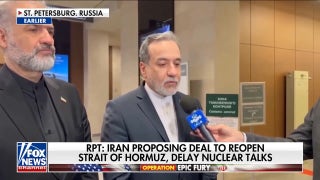
The Strait of Hormuz crisis has effectively closed a route that previously handled roughly 130-140 vessels per day, pushing governments and financiers to accelerate alternate Gulf-to-Europe trade corridors. Iraq’s $24 billion Development Road is now framed as a strategic project, with Phase 1 of the 63-kilometer first stretch due by 2028 and projected transit revenue of $4 billion per year. The shift is supportive for overland infrastructure in Iraq, Turkey and the Gulf, but reflects a broader supply-chain and energy-risk shock from reduced Hormuz traffic.
The market is underpricing the duration of the rerouting problem. Even if Hormuz reopens, a meaningful slice of cargo, financing, and procurement behavior will have already migrated toward redundancy, which is sticky because logistics contracts and port capacity are path-dependent. That creates a second-order winner set: not just corridor operators, but Turkish rail/port assets, Egyptian/Suez substitution plays, and Gulf inland logistics names that can monetize “resilience premiums” without needing a full normalization of trade lanes.
The clearest loser is Iran’s coercive pricing power, but the more investable short is the friction cost embedded in regional trade. Every extra transshipment, customs handoff, and overland leg raises working capital needs and pushes shippers toward larger balance sheets and state-backed counterparties, which disadvantages smaller freight forwarders and thinly capitalized EM importers. Over 6-18 months, this should widen spreads between asset-heavy infrastructure beneficiaries and cyclical industrials that remain exposed to Gulf bottlenecks.
Energy is more nuanced than a simple bullish shock. A prolonged closure would support prompt crude and tanker rates, but it also accelerates capex into bypass routes and reduces the strategic premium embedded in the strait over time, meaning the upside is front-loaded while the structural effect is disinflationary for route-risk premiums. The contrarian view is that the market may overestimate the permanence of these projects: the value of a corridor is only realized if it survives one or two political cycles, and those financing assumptions could compress quickly if security deteriorates further or if reopening reduces urgency.
AI-powered research, real-time alerts, and portfolio analytics for institutional investors.
Request DemoOverall Sentiment
mildly negative
Sentiment Score
-0.22
