


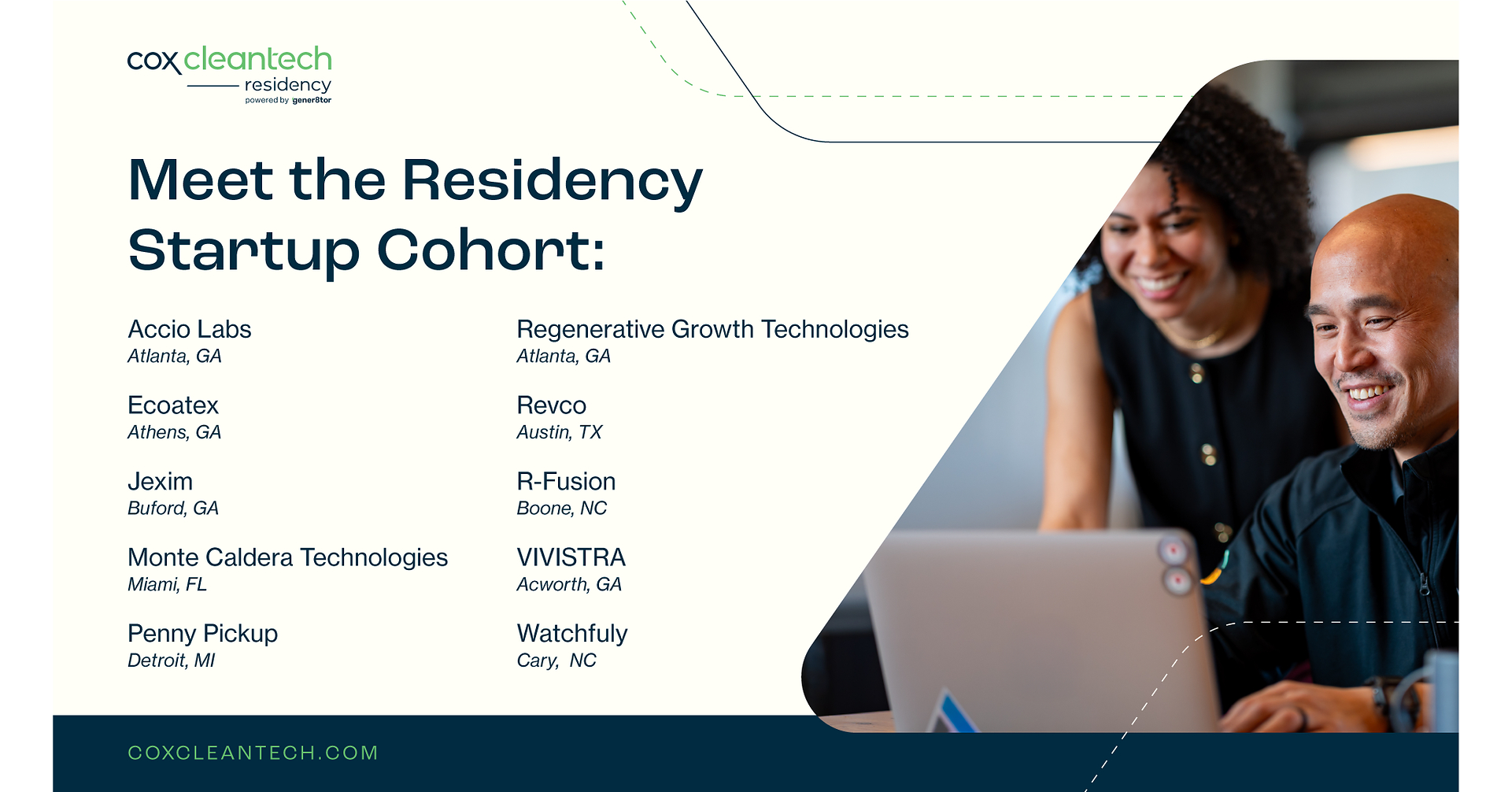
Cox Enterprises announced the inaugural Cox Cleantech Residency cohort of 10 early-stage cleantech startups (selected from 75 applicants) for a 6-week commercialization program with a $10,000 stipend each. The cohort spans AI-enabled utility/grid monitoring, cleaner materials and manufacturing, zero-emission micromobility logistics, and farm-to-biofertilizer systems, supported via Cox’s corporate network. The initiative is incremental rather than market-moving, but it signals continued corporate venture engagement in cleantech.
This is more of a pipeline-building signal than a directly monetizable catalyst. The investable effect is not on the startup cohort itself; it is on the larger incumbents that can absorb pilots, certification, and integration work once these technologies graduate from “idea” to procurement-ready product. In other words, the near-term winner is not a clean-tech microcap, but the commercial channel: utility software, industrial automation, materials testing, and distributed power vendors that sit downstream of early commercialization.
The second-order dynamic is that this kind of program can lower customer-acquisition friction for very early companies, but it does not solve the real bottlenecks: long enterprise sales cycles, capex-heavy deployments, and the need for reference customers. That means any public-market impact is likely to be delayed 6-18 months and filtered through follow-on financing, not through revenue this quarter. For the small-cap climate names in the data, the risk is over-interpretation; ecosystem PR rarely converts into near-term bookings without a paid pilot.
Contrarian view: the market tends to treat “AI + cleantech + Southeast hub” as a bullish growth signal, but the more important variable is capital intensity. If rates stay elevated or utility/industrial customers defer pilots, these companies can still stall even with strong support networks. The thesis would be falsified only if the program starts producing measurable commercialization milestones—paid deployments, repeat customers, or meaningful venture follow-on—within 1-2 quarters after residency completion.
AI-powered research, real-time alerts, and portfolio analytics for institutional investors.
Overall Sentiment
mildly positive
Sentiment Score
0.35
Ticker Sentiment
