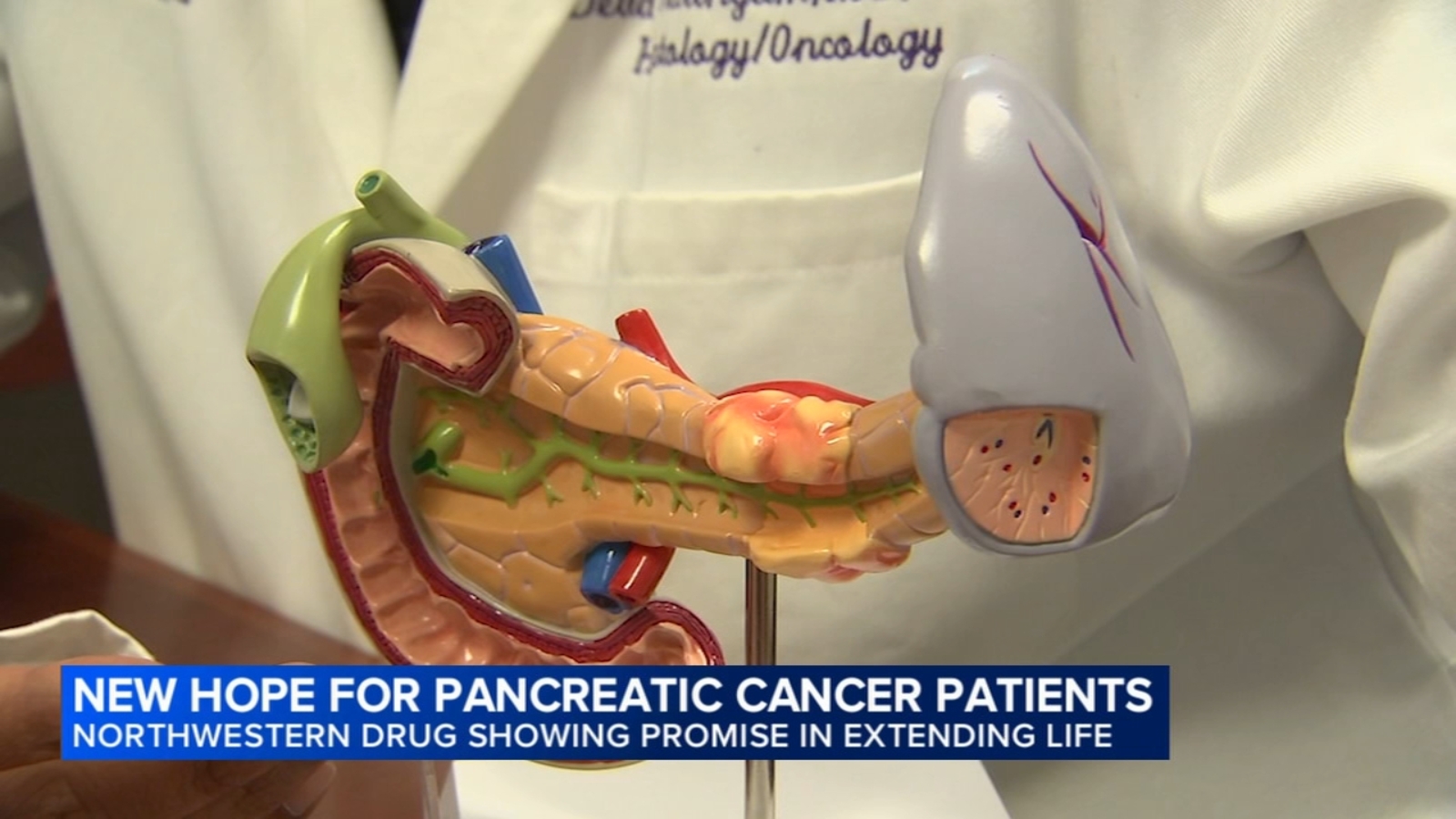
Northwestern Medicine reported hopeful trial results for Elraglusib in stage 4 pancreatic cancer, with patients on the drug plus chemotherapy living longer than with chemotherapy alone. The treatment is not a cure, but researchers say it appears to slow tumor growth and could reach patients in confirmation trials within about two years. The article cites one patient who lived two years after starting the trial versus the usual six to eight months prognosis for advanced pancreatic cancer.
This is not a near-term commercial revenue event; it is an optionality repricing event for the oncology platform behind the asset. The key second-order effect is that a credible survival signal in a hard-to-treat tumor can attract partnership capital, accelerate investigator enthusiasm, and improve trial enrollment economics across the sponsor’s broader pipeline. If that narrative holds, the winner is less the single molecule and more the platform/management team that can now bargain for better economics or a faster path to registration.
The market is likely to over-index on the headline survival improvement before the real risk window arrives: confirmatory trial design, endpoint selection, and whether the benefit persists in a larger, less-selected population. In biotech, early positive data often compresses in months if the control arm improves, if toxicity limits combination dosing, or if the benefit is confined to a biomarker-defined subset that is too narrow for commercial scale. The right read-through is therefore “probability of value creation rose,” not “approval is imminent.”
Competitive dynamics matter because any validated chemo-sensitizer in pancreatic cancer raises the bar for adjacent mechanism programs and could pressure companies pursuing similar adjunctive approaches. That creates a modest negative read-through for peers with late-stage pancreatic programs that lack differentiated survival data, while increasing the probability of BD activity in the space. The contrarian view is that the current optimism is still underpriced if this drug meaningfully extends duration of therapy, because even modest survival gains can support premium oncology economics through higher treatment persistence and broader label potential.
Catalyst timing is the core issue: the next 6-12 months should be data- and trial-design-driven, while true commercial visibility is likely a 2-year story at best. Until a registrational path is clarified, the stock reaction should be treated as a volatility event rather than a fundamental rerating across the sector. Any failure to confirm in the next study would likely unwind most of the enthusiasm quickly, especially if the initial data were small and centered on a difficult-to-replicate subgroup.
AI-powered research, real-time alerts, and portfolio analytics for institutional investors.
Request TrialOverall Sentiment
moderately positive
Sentiment Score
0.60
