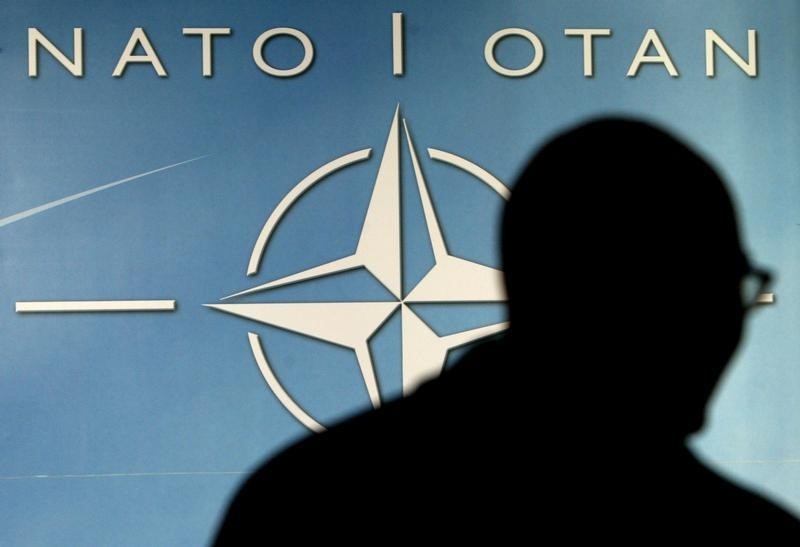
Oil prices jumped after Trump said an interim Iran peace deal is “over,” alongside heightened U.S.-NATO friction over troop access and airspace during the U.S.-Iran conflict. Spain’s IBEX 35 dropped as much as 2.2% on the news, while NATO weighed options such as potentially skipping its 2027 summit and markets are focused on whether Trump signs a communiqué reaffirming Article 5. The episode reinforces expectations of continued defense-policy volatility, with NATO previously highlighting capability gaps and pledging $139B in additional defense spending.
The immediate winner is the defense procurement complex, but the bigger second-order benefit is to suppliers tied to airborne ISR and early-warning systems, where the contract mix tends to be higher margin and less cyclical than munitions. NOC should capture that better than pure platform names because credibility loss inside the alliance pushes spend toward visible readiness items that can be funded quickly; the risk is that Europe increasingly localizes spending over 6-18 months, so the U.S. share of the pie may shrink even as total budgets rise.
The oil spike is a cleaner near-term signal than the NATO rhetoric: the market is paying up for geopolitical tail risk, not yet for verified supply loss. That favors front-month crude exposure and energy-input hedges more than long-duration E&Ps; if the geopolitical premium fades without a physical disruption, upstream equities can lag while refiners, airlines, chemicals and European cyclicals bear the margin pain. For Spain-linked risk, the move in IBEX looks like de-risking of policy uncertainty rather than a fundamental earnings shock, which usually mean-reverts once the market decides sanctions are theater versus implementation.
The contrarian miss is that a historic alliance rupture would be more deflationary for Europe than inflationary for the U.S. over time: higher defense spending helps select primes, but weaker coordination and potential trade retaliation raise capex friction and suppress multiples across European industrials. DJT-style political optionality can stay volatile, but the investable edge is in the procurement spillover, not the headline diplomacy. Falsifiers: a communiqué that reaffirms Article 5, no follow-through on Spain sanctions/troop withdrawals, or crude failing to hold the geopolitical bid over the next 1-2 sessions.
AI-powered research, real-time alerts, and portfolio analytics for institutional investors.
Request DemoOverall Sentiment
moderately negative
Sentiment Score
-0.35
Ticker Sentiment
