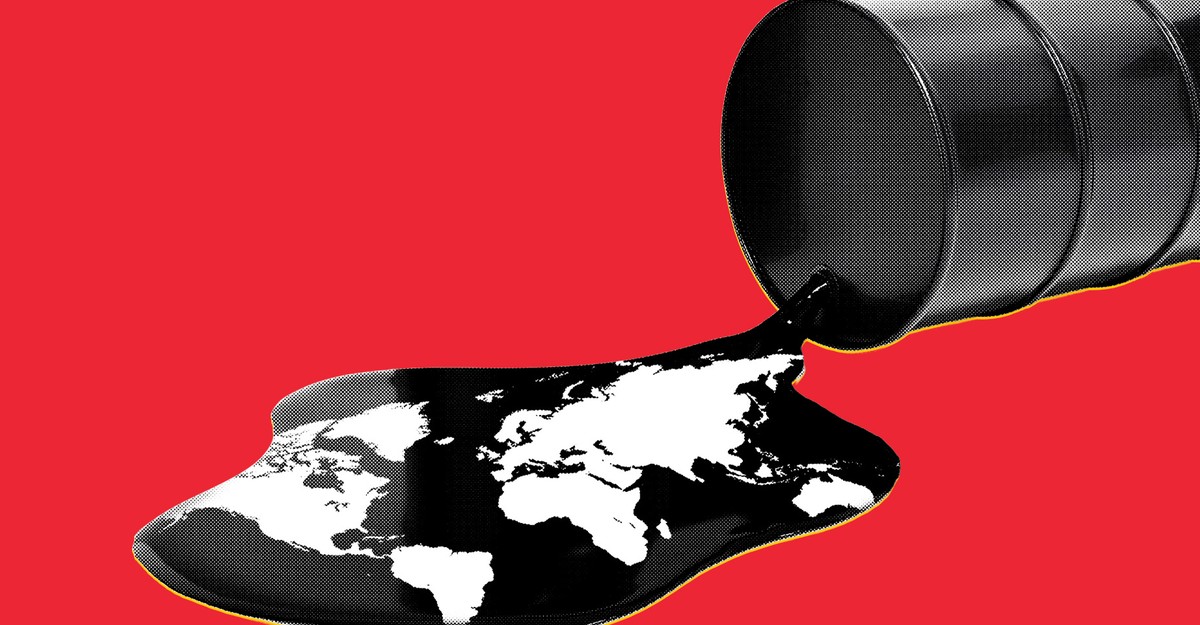
The Strait of Hormuz disruption (carries ~20% of global oil supply) has pushed crude from about $65 pre-conflict to $90–$100 and could reach $200/barrel if seaborne exports remain blocked for a month. The IEA calls this the largest global oil supply disruption; sustained $200 oil would likely trigger a global recession, higher inflation, and upward pressure on market-determined U.S. bond and mortgage yields as central banks face a tradeoff between growth and price stability. Geopolitically, Russia would reap a major fiscal windfall while China—with ~1.2 billion barrels of reserves (~4 months of seaborne imports) and large renewable/battery production capacity—could emerge stronger as countries pivot away from oil dependence.
This shock is asymmetric: oil-price upside is faster and deeper (days–weeks) than demand destruction (quarters). A sustained chokepoint that removes ~20% of seaborne flows for 1–3 months functionally tightens global crude balances by ~6–8% of daily supply once rerouting, insurance-driven liftings, and refinery operational constraints are included — that math supports $120–160/bbl outcomes before structural demand responses kick in.
Second-order winners are not just majors but fast-cash-output producers and service firms with fixed-cost leverage (US shale names with shut-in flexibility, drilling contractors with day-rate upside) and insurers/war-risk underwriters charging outsized premia. Losers extend beyond airlines and refiners: container shipping throughput, parcel logistics (fulfillment margin erosion for e‑commerce incumbents), and any manufacturer with secularly thin gross margins will see margin compression and working-capital strain within 30–90 days.
Policy and financial offsets are critical near-term catalysts: coordinated SPR releases, temporary sanction waivers, or expedited naval escorts could shave $20–40/bbl off peaks in weeks; conversely, successful Iranian interdiction of rerouted tankers would push prices higher. Over 6–24 months, sustained $100+ oil accelerates capex into renewables and EVs (benefiting battery supply chains concentrated in China) and raises the probability of central banks choosing higher-for-longer rates, compressing growth multiples and magnifying pain for high-duration equities.
A tail-risk view: markets may be overpricing perpetual closure; physical arbitrage (land pipelines, storage draws) and demand elasticity at >$120/bbl historically cap upside. Trade structures that monetize convexity (call spreads on energy, time-limited puts on discretionary) capture this uncertainty while limiting capital at risk.
AI-powered research, real-time alerts, and portfolio analytics for institutional investors.
Request DemoOverall Sentiment
strongly negative
Sentiment Score
-0.75
Ticker Sentiment
