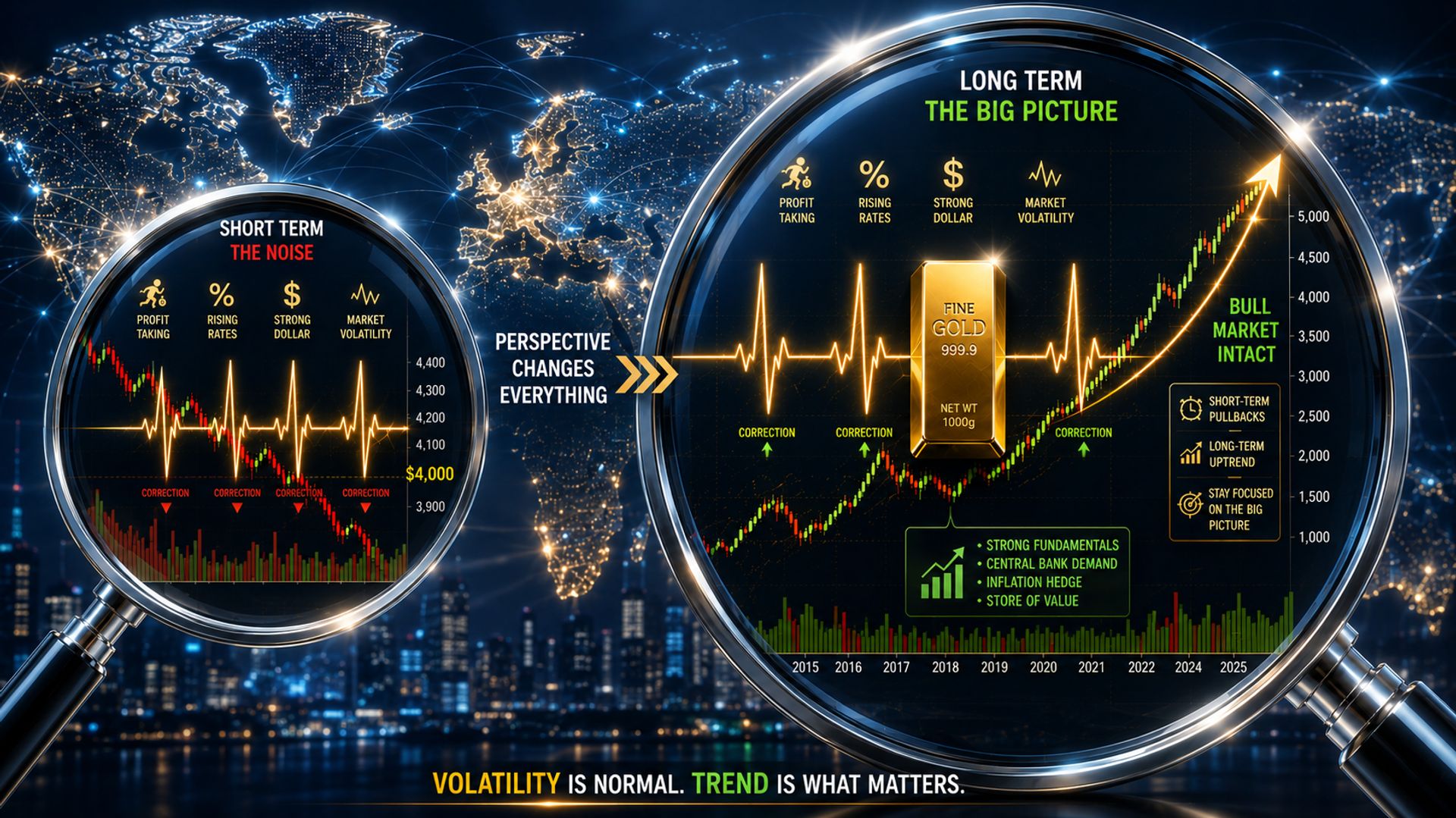
Gold is holding above $4,000 an ounce, with one analyst arguing that a pullback to around $3,900 would still be a buying opportunity rather than the start of a bear market. Thorsten Polleit said gold could look attractive for a five-year horizon, citing negative real rates, money printing, rising government debt and fiscal dominance as structural support. He expects any near-term weakness from higher bond yields to be temporary and sees gold remaining on an upward long-term trend.
The bigger signal here is not a near-term squeeze in bullion, but a regime trade: investors are still treating gold like a tactical inflation hedge when it is increasingly behaving like a debasement hedge. That matters because the marginal buyer is no longer the classic Western discretionary allocator; it is reserve managers, sovereign wealth funds, and balance-sheet stewards who care about the durability of real assets over multi-year horizons. If that buyer base keeps adding, pullbacks become shallower and mining equities with strong balance sheets should re-rate before the metal itself.
The second-order effect is on rate-sensitive asset classes. If markets internalize that policy rates cannot stay “high for long” without triggering fiscal strain, real yields should lose their ability to pressure gold on a sustained basis. That creates a subtle but important asymmetry: gold can rally on weaker growth, easier policy, or renewed financial stress, while the main bullish reversal risk requires a credible period of positive real yields plus stable fiscal dynamics — a combination that looks more like a policy fantasy than a base case.
The contrarian read is that the recent correction may actually be healthy for positioning. A sharp drawdown after a vertical move flushes fast-money longs and resets sentiment, which improves the odds of a grind higher rather than a blow-off top. The market may still be underestimating how quickly gold becomes the “cheap convex hedge” once rate cuts, recession fears, or sovereign funding stress return to the front page.
The main risk is time: gold can remain range-bound for weeks to months if bond yields stay elevated and ETF flows keep leaking. But over a 6-18 month horizon, the setup favors owning optionality on renewed macro stress rather than trying to catch the exact low.
AI-powered research, real-time alerts, and portfolio analytics for institutional investors.
Request DemoOverall Sentiment
moderately positive
Sentiment Score
0.35
