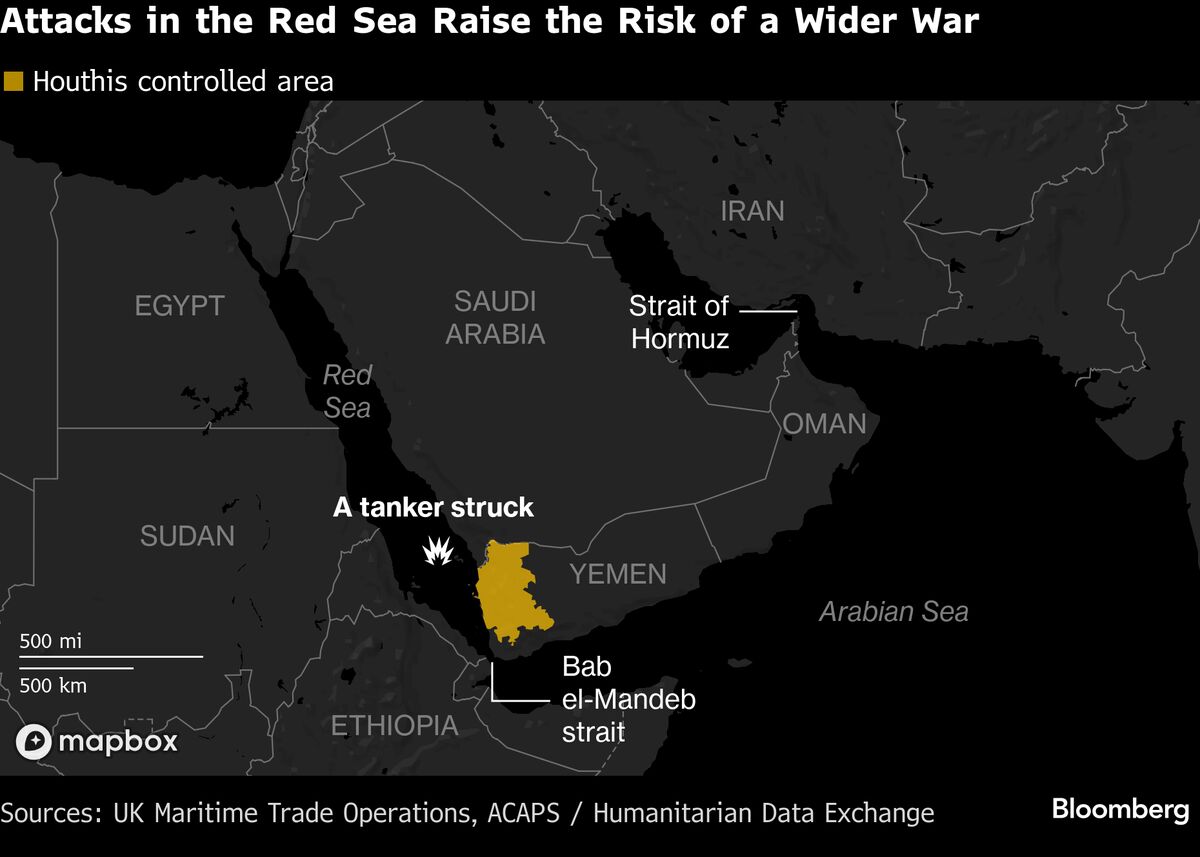
Oil rose to $100/bbl for the first time in nearly two months as Iran-backed Houthis attacked two Saudi oil tankers in the Red Sea, threatening deeper supply disruptions. The Houthis said they used missiles and drones to enforce a blockade of Saudi ports, adding a new front to the Middle East war alongside existing risks to traffic through the Strait of Hormuz. The escalation raises downside risks for global crude flows and near-term energy pricing.
The immediate market mechanism is a geopolitical risk premium, not a clean supply shock. That matters because option-implied volatility in crude and energy equities can stay elevated even if physical barrels never fully disappear; the first money is usually made in the front month, while the second-order winners are producers with unhedged upside and the losers are fuel-intensive sectors that get hit before analysts can re-cut margins.
For equities, the cleaner short-term expression is long XLE/XOP versus short transport and travel proxies like IYT and JETS. Higher crude tends to compress airline and trucking margins within weeks, while integrated E&Ps and oilfield services can re-rate if the curve stays backwardated for a few months; refiners are less straightforward because crude spikes can widen or crush cracks depending on product lag. If shipping risk in the Red Sea persists, look for knock-on benefits to marine insurance, tanker rates, and select offshore/service names rather than a blanket energy bid.
The contrarian risk is that the move is overpricing durability. If there is no sustained loss of export volumes within days, headline risk should bleed out quickly; meanwhile, $100 oil is the zone where demand destruction, SPR rhetoric, and quiet diplomatic pressure usually start to matter over 1-3 months. Over 6-18 months, the bigger loser may be the consumer and industrial complex through higher input costs and delayed capex, but near-term that is often too slow for the market to reward immediately.
AI-powered research, real-time alerts, and portfolio analytics for institutional investors.
Request DemoOverall Sentiment
mildly negative
Sentiment Score
-0.30
