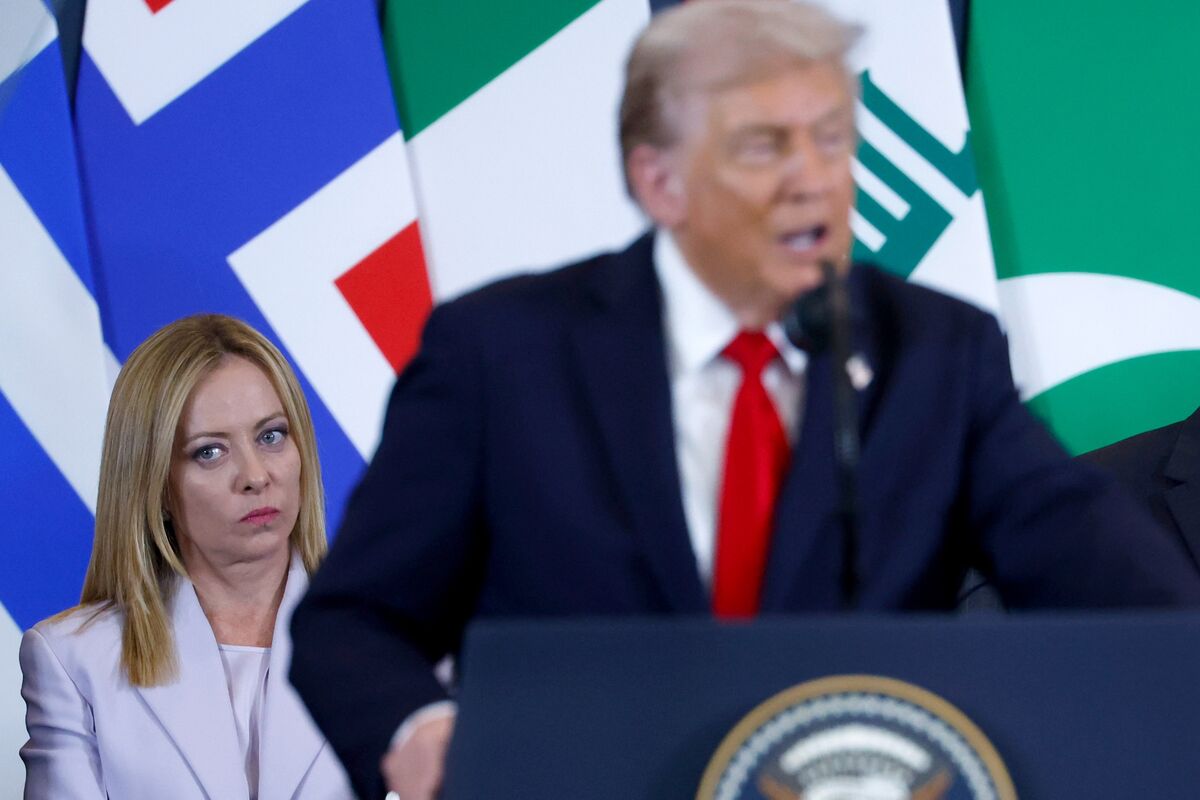
Italian Prime Minister Giorgia Meloni is trying to recover politically after losing a popular referendum last month and ahead of next year’s general election. President Donald Trump’s attack on Meloni over her stance on the Iran war and his criticism of Pope Leo XIV may help her with Italian voters by putting her on the side of public opinion against an unpopular U.S. leader.
Meloni’s shift is less about foreign policy optics than domestic option value: getting crosswise with Trump gives her a cheap, credible signal of independence that can partially reset a damaged approval profile before the next election cycle. The second-order effect is that anti-American rhetoric from the left loses some potency if a center-right incumbent is already absorbing the blowback, which can narrow the opposition’s ownership of “sovereignty” messaging.
The key market implication is not direct, but regime risk for Italian assets. If Meloni successfully converts external conflict into domestic rally-around-the-flag dynamics, BTP spreads can stay better bid on the margin as investors price lower near-term coalition instability; if she fails, the referendum loss becomes the first domino in a broader confidence unwind, with Italian banks and domestically levered cyclicals most exposed over the next 1-3 months.
A more subtle second-order effect is on European defense, energy security, and media narratives: heightened public friction with Washington can increase support for EU strategic autonomy themes, but only if it is framed as competence rather than grievance. The contrarian read is that this may be overinterpreted as a durable realignment; it is more likely a tactical domestic repositioning that fades if Trump’s attention moves elsewhere or if any economic shock refocuses voters on inflation and growth rather than symbolism.
AI-powered research, real-time alerts, and portfolio analytics for institutional investors.
Request TrialOverall Sentiment
neutral
Sentiment Score
0.00
