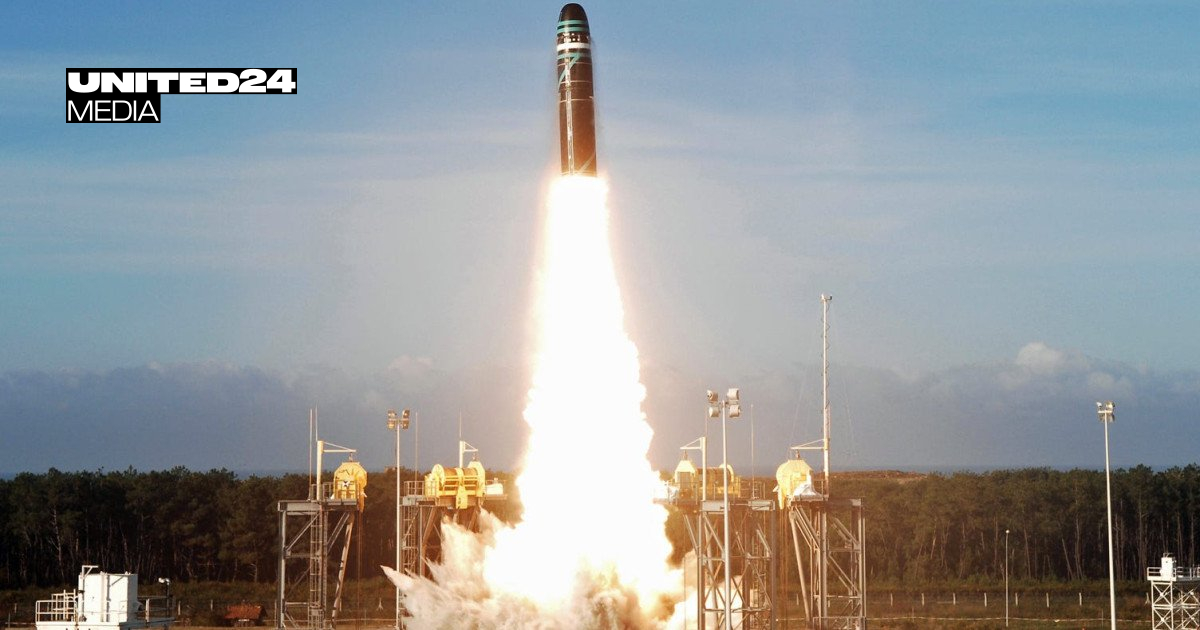
France and Norway signed an agreement tied to France’s nuclear umbrella, but the specific terms, duration, and provisions have not been disclosed. The deal reflects rising European concern over Russia’s large-scale rearmament and the reliability of US security guarantees, with Scandinavian countries increasingly debating nuclear deterrence. The news is strategically significant for Europe’s defense posture, but immediate market implications are limited by the lack of detail.
This is less about an immediate military change and more about a gradual repricing of Europe’s security architecture. The key second-order effect is a higher probability that European defense spending becomes structurally sticky at elevated levels, because once deterrence coordination starts to look bilateral and modular, it is easier to expand into procurement, basing, missile defense, and command-and-control interoperability than to unwind it. That favors the defense primes and systems integrators with exposure to air defense, ISR, electronic warfare, submarines, and nuclear-adjacent deterrence enablers rather than pure munitions names. The market is probably underestimating how this widens the gap between European policy ambition and actual industrial capacity. If the discussion progresses from symbolism to capability, the bottleneck shifts to long-cycle assets: reactors, enrichment, cooling, secure communications, radar, hardened infrastructure, and dual-use civil engineering. That creates a multi-year tailwind for infrastructure/security capex, but also introduces execution risk because Europe’s supply base is fragmented and cannot rapidly scale without U.S. technology, creating a paradox where strategic autonomy still depends on transatlantic vendors. The contrarian point is that this may not be a clean bullish signal for Europe ex-defense. A more explicit European nuclear umbrella can be read as an implicit hedge against U.S. guarantee fatigue, which could increase the risk premium on European assets if investors infer weaker NATO cohesion. In the near term, the catalyst set is political and non-linear: more agreements, joint statements, or procurement announcements matter more than doctrine details. The main reversal risk is a diplomatic reset with Washington that reduces the urgency of autonomy spending, but that is a months-to-years story, not a days-to-weeks trade.
AI-powered research, real-time alerts, and portfolio analytics for institutional investors.
Request DemoOverall Sentiment
neutral
Sentiment Score
-0.10
