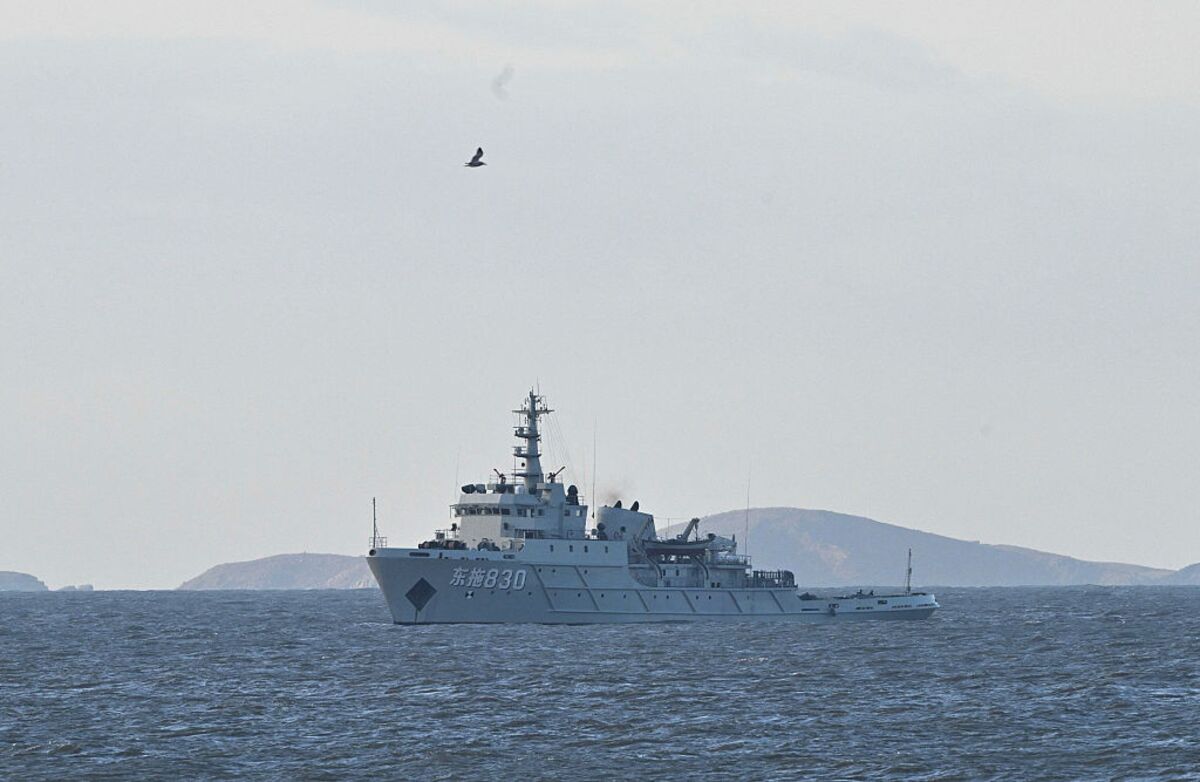
China’s PLA Eastern Theater Command said it conducted routine joint naval and air readiness patrols in the East China Sea on Saturday as part of its annual plan. The drills were described as a capability test aimed at safeguarding sovereignty, security and regional stability. The report is factual and indicates no immediate escalation, so market impact is likely limited.
This is not a market-moving escalation by itself; it is a signaling event that keeps the probability distribution skewed toward a higher baseline of maritime friction without changing the macro regime. The main second-order effect is optionality: repeated readiness patrols raise the value of persistent surveillance, anti-submarine warfare, EW, and distributed command-and-control capabilities, which supports defense electronics and naval systems more than headline platforms. The likely beneficiaries are the prime contractors with exposure to sensors, missiles, secure comms, and shipbuilding capacity, while commercial shipping and insurers only start to care if patrols become more frequent, geographically broader, or accompanied by exclusion-zone rhetoric.
The key risk is not immediate kinetic action but miscalculation during a period when both sides are optimizing for deterrence signaling. That means the real catalyst window is days to weeks around any coincident exercise, political summit, or maritime incident, but the investable trend is measured in quarters as Asia-Pacific defense budgets reprice higher. A sustained pattern of patrols could also accelerate procurement from regional allies, especially in maritime domain awareness, undersea systems, and layered air defense, creating a broader supplier tailwind than the direct China/Japan headline suggests.
Consensus likely underestimates how much this kind of routine activity normalizes higher defense spending without needing a crisis. The market often waits for a shock to re-rate defense names, but incremental patrol intensity can quietly support backlog, margin durability, and multi-year order visibility. The contrarian read is that the move is underpriced in the near term because it lacks drama, yet over time it reinforces a structurally higher floor for regional security capex.
For trading, the cleanest expression is to stay long diversified defense exposures on dips, with a preference for names leveraged to sensors, command-and-control, and naval electronics rather than pure platform beta. If you want a lower-volatility implementation, pair long defense ETFs or primes against a short in a broad industrial basket to isolate the geopolitical capex premium. The risk is that absent a genuine incident, the market treats this as background noise and the trade bleeds on carry, so position size should be modest and intended as a 1-3 month tactical hold with an option to add on any follow-on exercise or diplomatic flare-up.
AI-powered research, real-time alerts, and portfolio analytics for institutional investors.
Request TrialOverall Sentiment
neutral
Sentiment Score
0.00
