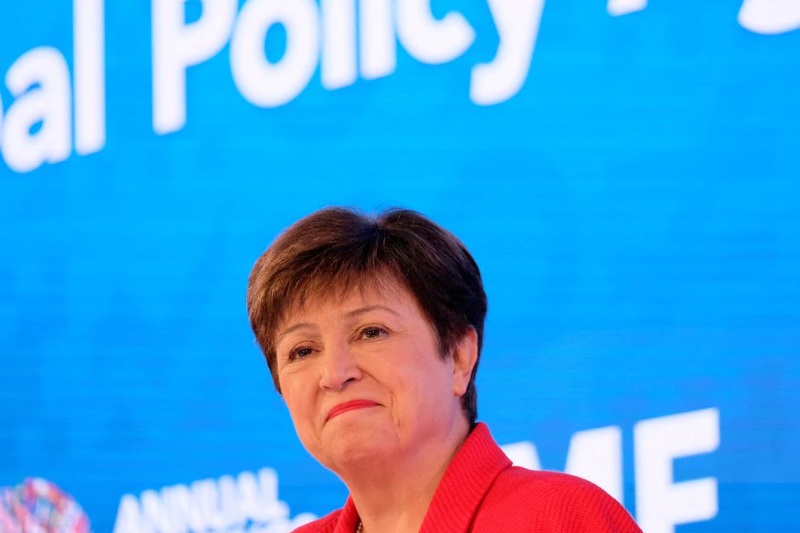
Brent crude spiked over 30% intraday to a peak of $119.50/bbl (WTI $119.43) before trading around $107.07 as the US–Israel–Iran conflict entered its tenth day. IMF MD Kristalina Georgieva warned a sustained 10% oil price rise through most of the year would add roughly 40bps to global inflation; gasoline futures jumped over 10%. Disruptions around the Strait of Hormuz — which channels ~20% of global oil — and Gulf producers curtailing output have prompted OCBC to warn Brent could hold near $100/bbl if a Hormuz stoppage persists.
A supply-disruption-driven shock shows up first in logistics and margin plumbing rather than just headline prices: insurance and freight spikes raise landed crude costs faster than headline benchmarks, while storage saturation forces refiners to cut runs and creates episodic backwardation that traders and physical storage owners can monetize. Expect headline pass-through to core inflation within 3–6 months via higher transport and refining costs, which in turn compresses real discretionary spending and re-prices risk assets before producers meaningfully increase flows.
Winners are the physical and service nodes that capture the squeeze — upstream operators with spare takeaway, oilfield services with utilization leverage, and specialty insurers/owners of VLCCs/terminals; losers are high-energy-intensity operators (airlines, trucking, container lines), small EM importers with weak FX buffers, and refiners lacking feedstock flexibility. Second-order effects include curbed refinery throughput that raises product cracks unevenly (benefitting complex refiners) and forces some marginal barrels off-market as storage capacity binds — a technical shortage that can persist even if new production comes online.
Key catalysts that will reverse or accentuate the move are diplomatic de‑escalation (fast relief), coordinated strategic releases or insurance corridor arrangements (near-term relief), and multi-quarter capex responses from US shale (slow relief). The market currently prices a high probability of sustained disruption; if normalization occurs, expect a sharp reversion (15–35%) in energy-linked assets within weeks, whereas a protracted standoff compresses consumer discretionary earnings over quarters and keeps energy equities elevated.
Contrarian angle: structurally driven AI compute demand is sticky and often prioritized in corporate budgets; high energy costs are therefore more likely to drive allocation away from broad consumer growth into concentrated compute infra spend rather than a universal tech sell-off. That opens a tactical opportunity to own selected AI infra names while using energy-linked hedges to fund the exposure, capturing decoupling during a risk-off re-pricing.
AI-powered research, real-time alerts, and portfolio analytics for institutional investors.
Request DemoOverall Sentiment
strongly negative
Sentiment Score
-0.65
Ticker Sentiment
