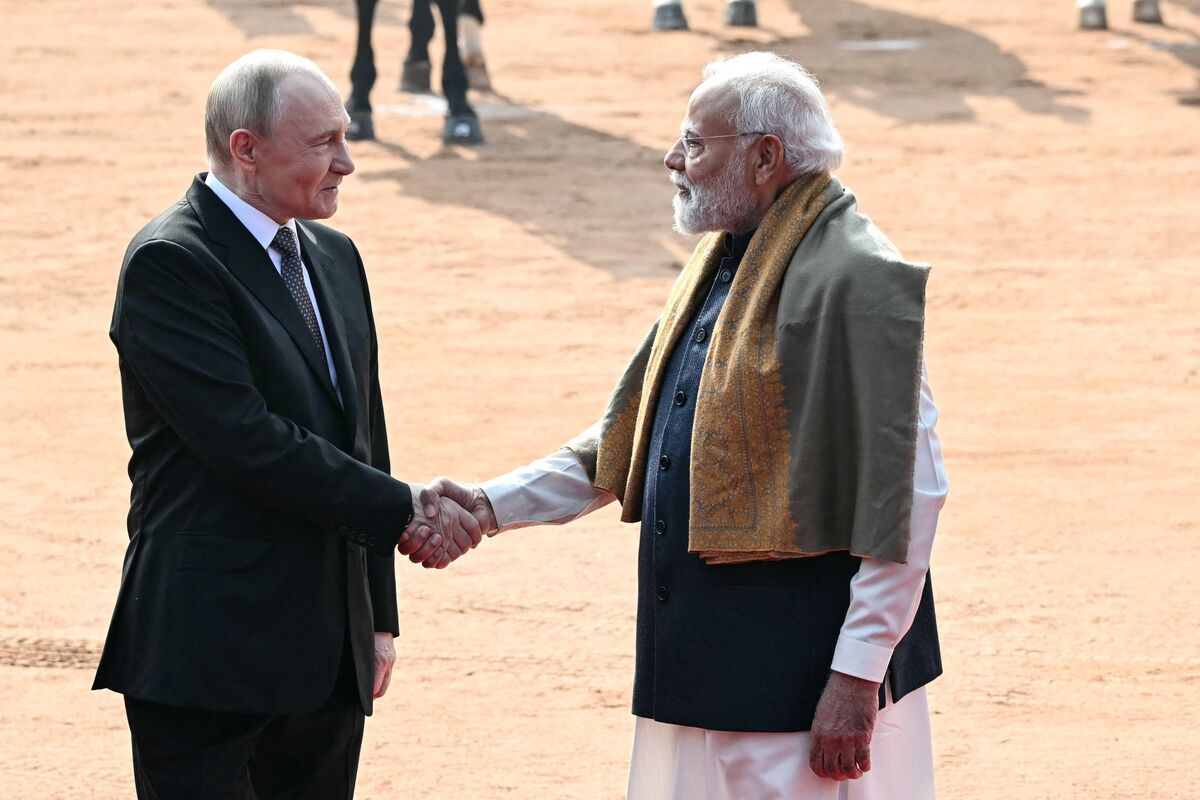
Indian Prime Minister Narendra Modi met with Russian President Vladimir Putin to deepen bilateral economic ties despite pressure from the United States, signaling closer cooperation on trade, energy and investment. The rapprochement heightens questions about sanctions enforcement, potential shifts in energy supply and payment/FX arrangements, and should be monitored by investors with exposure to emerging markets, commodities and defense-related sectors.
Market structure: Deepening India–Russia economic ties chiefly benefit Russian energy/commodity exporters and Asian refiners/traders that can process heavy/sour crude; expect increased bargaining power for Moscow to sell at 10–25% discounts to Western benchmarks, shifting some Urals barrels eastward. Indian importers and domestic infrastructure/defense suppliers gain predictable supply and contract flows, while Western firms exposed to sanctions-enabled trade corridors (shipping insurers, euro-area traders) face margin pressure. Cross-asset impact: expect short-term downward pressure on Brent of $2–6/bbl if volumes reroute smoothly, INR appreciation pressure (USD/INR down 1–3% over 3–12 months) and upward pressure on Russian equity proxies vs. safe-haven assets if sanctions escalate.
Risk assessment: Tail risks include US secondary sanctions on banks or shipping (low-probability, high-impact) that could freeze dollar payments and spike oil +$10–20/bbl within weeks. Immediate market moves (days) will be headline-driven; policy and payment-rail shifts play out over 1–6 months; durable realignment of trade flows and defense procurement takes quarters–years. Hidden dependencies: shipping insurance (P&I clubs), alternative payment rails (RUB/INR settlements) and Chinese facilitation are single points of failure that would amplify shocks. Key catalysts: G7/US sanction announcements (30–90 days), maritime insurance arrangements, quarterly India import data.
Trade implications: Tactical long India exposure (INDA/EPI) for 6–12 months to capture growth and discounted energy benefits; size 2–3% of risk budget. Small, hedged exposure to Russian equity ETF (RSX) 0.5–1% with protective puts (15% OTM, 6–12 month) to cap sanction tail risk. Long gold (GLD) 1–2% as cross-asset hedge; long US refiners that handle heavy crude (PBF, VLO) 1–2% if Brent-Urals spread compresses >$3 from current 30-day average. Use pair trades: long INDA / short European small-cap exporters to reflect diverging flows.
Contrarian angles: Markets may underweight operational frictions — India lacks capacity to absorb all discounted Russian output, so long Russian assets can be overdone if flows stall; conversely, oil sell-offs could be overdone because sanctions could quickly reverse routing and remove Russian barrels. Historical parallel: 1970s rerouting shows short-term price relief can flip to premium when insurance/payment frictions tighten. Watch triggers: weekly seaborne Russian loadings, USD/INR moves >100bp, and any US sanction memo within 30–60 days; these should prompt rapid position adjustments.
AI-powered research, real-time alerts, and portfolio analytics for institutional investors.
Request DemoOverall Sentiment
neutral
Sentiment Score
-0.05
