Escalating U.S. and Israeli military pressure on Iran, coupled with President Trump’s stated support for a Kurdish offensive, has prompted Kurdish opposition groups (including Komala, PDKI, PJAK and the Kurdistan Freedom Party) to present a unified coalition and signal readiness to strike if Iran’s missile and drone capabilities are degraded. Kurdish leaders say operations are currently constrained by Iran’s ability to launch missiles and drones from within Iranian territory, but a successful degradation of those capabilities could open a new front along Iran’s western border, raising regional geopolitical risk that could affect energy markets and defense exposures.
Market structure: Geopolitical risk centered on Iran/Kurdish escalation is a tail but a clear near-term bid for defense contractors (Lockheed LMT, Northrop NOC, RTX) and energy producers (Exxon XOM, Chevron CVX). Expect Brent/WTI realised vol to rise 5–15% and a directional crude impulse of $3–8/bbl within 30 days if strikes or cross-border operations increase; safe-haven bids push 2–10 bps lower in 10y UST yields and raise gold (GLD) 2–6% in the same window. FX flows favour USD and JPY; high-beta EM (EEM) and regional tourism/airlines (AAL, JBLU) are vulnerable.
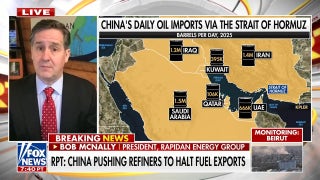
Risk assessment: Tail risks include (A) limited Iranian retaliation to oil chokepoints or regional bases (>10% price shock to oil, ~15% probability over 3 months), (B) a Kurdish incursion provoking wider Iran-Turkey/Iraq conflict (low probability <10% but systemic impact), and (C) cyberattacks on energy infrastructure (medium probability). Immediate (days) risk = headline-driven volatility; short-term (weeks–months) = supply premium in oil/gold; long-term (quarters+) = regime resilience and sanctions/path dependency. Hidden dependencies: US political signalling, Iraqi Kurdistan neutrality, and Israel-US operational alignment are binary catalysts.
Trade implications: Tactical longs in defense (establish 2–3% position in LMT/NOC/RTX basket) and energy producers (1–3% in XOM/CVX) hedge with 60–90d call spreads on Brent (buy 3–6% notional) and VIX calls (30–60d) for tail protection. Pair trades: long LMT vs short UAL/AAL (1–1 dollar-neutral) betting reallocation from civilian travel to defense; long GLD vs short EEM (size 1–2%) to capture safe-haven flight. Enter within 1–14 days; trim if Brent > $95/bbl or VIX > 30; reweight back over 8–12 weeks.
Contrarian angles: Markets often overshoot immediate spikes; past limited escalations (2019–20) saw oil mean-revert within 8–12 weeks by 10–20%. If US does not provide overt air cover, Kurdish action probability falls and defense multiple expansion could reverse — prefer buying options rather than large outright equity exposure. Consider selective EM buy-the-dip (INDA, EWW) at >15% drawdowns versus indiscriminate EM shorts; avoid overpaying for prolonged “permanent defense uptrend” narratives without confirmed multi-quarter budget shifts.
AI-powered research, real-time alerts, and portfolio analytics for institutional investors.
Request TrialOverall Sentiment
moderately negative
Sentiment Score
-0.45
