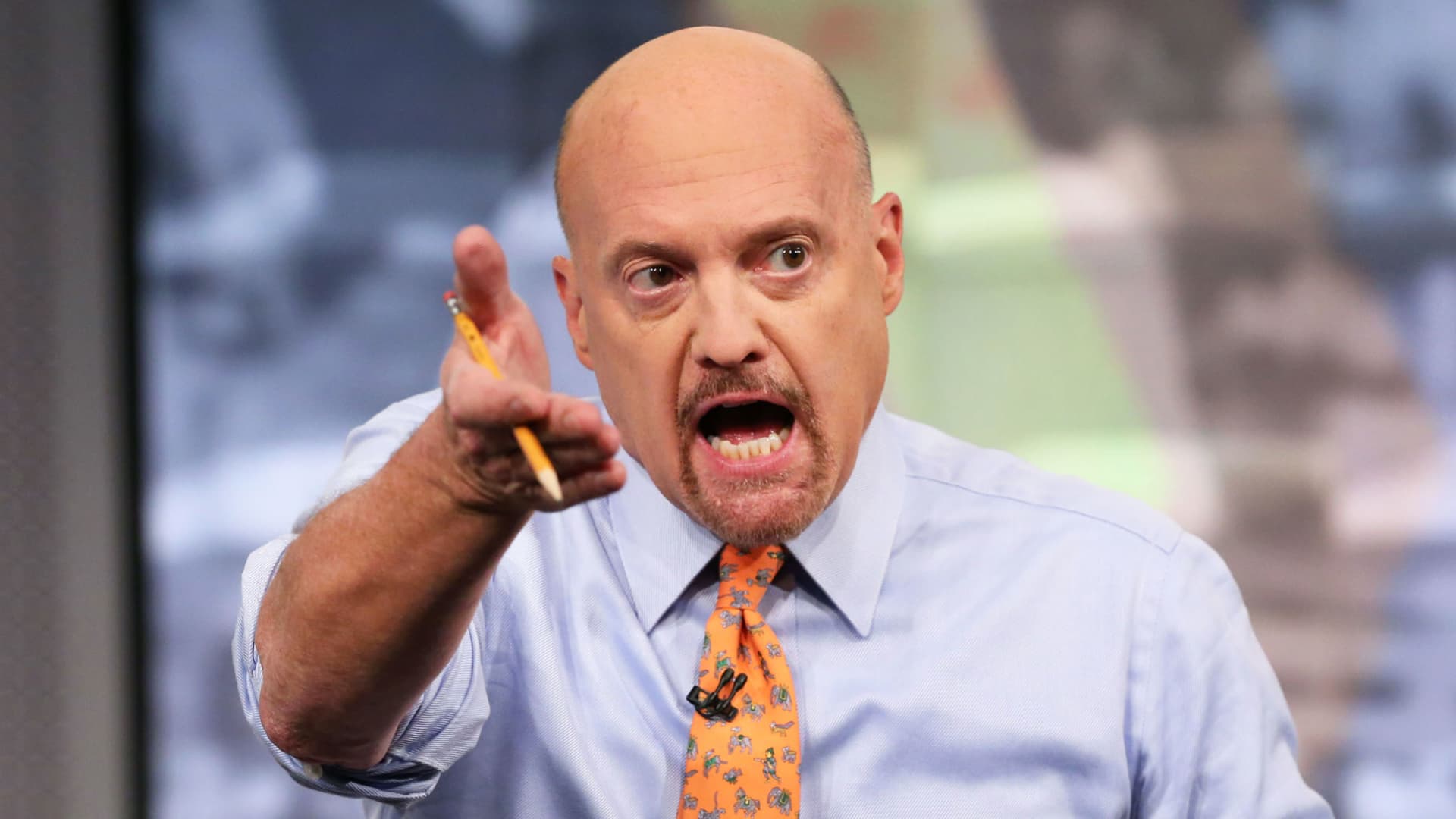
Jim Cramer recommends investors shift new capital toward sectors that typically outperform when the Federal Reserve cuts rates — citing banks, transports, health care and retail — while urging caution deploying fresh money into volatile tech battlegrounds such as Amazon, Salesforce, Meta and Nvidia. He highlighted examples like low‑competition railroads, credit card firms, dollar stores and travel/leisure businesses as potential beneficiaries of an easing rate backdrop; CNBC discloses the Investing Club holds shares in Nvidia, Meta, Amazon and Salesforce.
Market structure: A Fed easing narrative favors rate-sensitive cyclicals (transportation/rail UNP/CSX), consumer discretionary staples (DLTR-like dollar stores) and payment networks (MA, V) via stronger loan demand and consumer spending; high-volatility, high-PE tech (AMZN, CRM, META) faces shorter-term rotation risk as capital reallocates. Lower-for-longer rates should compress term premium, lift equity multiples for cyclicals and weaken USD, supporting commodity/EM exposure.
Risk assessment: Tail risks include a) Fed pause/hawkish surprises that keeps real yields elevated (hits cyclicals and credit-sensitive names), b) regulatory or China spillovers hitting NVDA/META/AMZN, and c) consumer credit deterioration if unemployment inflects. Immediate (days) — elevated implied vol and sector rotation; short-term (weeks–months) — 25–75bps of priced cuts will materially re-rate cyclicals; long-term (quarters+) — secular tech winners retain earnings leverage.
Trade implications: Favor selective cyclicals and payments: overweight MA (2–3% portfolio) and UNP/CSX (each 1–2%) funded by trimming high-PE tech exposure by 200–400bp. Use options to express conviction: buy 6–9 month MA call spreads (25–35 delta long leg) and 30–90 day put spreads on AMZN/CRM to hedge near-term tech volatility. Enter when Fed futures price ≥50% probability of a 25bp cut in next 3 months; take profits on 15–25% moves.
Contrarian angles: Consensus underestimates tech resilience — NVDA or AI leaders should be accumulated on >20–25% corrections (long-term secular demand). Conversely, cyclical crowding can reverse sharply if inflation re-accelerates; avoid levered bank exposure and late-cycle consumer names without clear moat.
AI-powered research, real-time alerts, and portfolio analytics for institutional investors.
Request DemoOverall Sentiment
mildly positive
Sentiment Score
0.25
Ticker Sentiment
