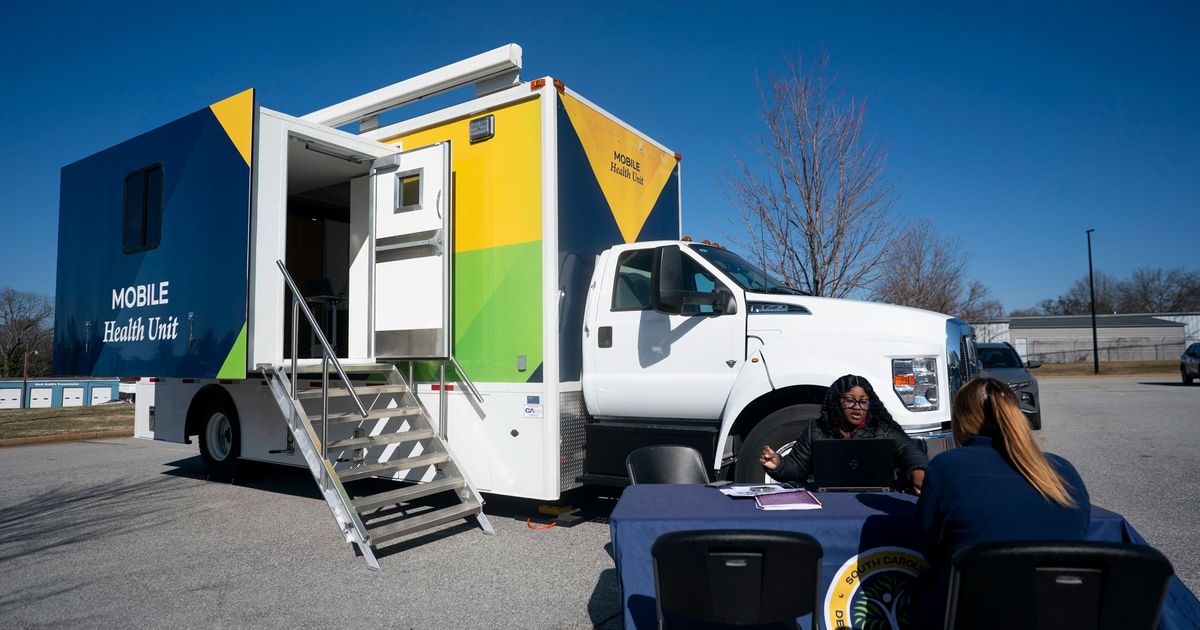
South Carolina says its measles outbreak has ended after nearly 1,000 confirmed cases over about six months and at least 21 hospitalizations, with no new outbreak-linked cases in more than 42 days. Officials said vaccination, contact tracing, and quarantine helped contain the outbreak, while CDC data showed MMR coverage among 3-year-olds rising to about 97% in 2025 from 93% in 2024. The article is broadly supportive of public health efforts, but the broader U.S. measles situation remains elevated with 1,792 cases already reported in 2026.
The near-term market read-through is not the outbreak itself, but the behavior shift it may induce in the next 1-2 quarters: a visible disease event tends to move hesitant households from abstract ideology to concrete risk management. That can create a short-lived but meaningful acceleration in MMR catch-up doses, and more importantly, raise completion rates for other pediatric immunizations when families are already in-clinic. The second-order beneficiary is not just vaccine manufacturers; it is also pediatric office traffic, immunization logistics, and state/local public-health vendors that get pulled into outbreak response.
The harder-to-price implication is that vaccination demand is likely to become more event-driven and regional rather than linearly improving nationwide. That means the next data print on kindergarten coverage will matter more than headline outbreak counts: if uptake is concentrated among already-compliant families, the durable effect is limited; if exemption rates start falling, the inflection could persist into 2026 school-entry cohorts. Conversely, a moderation in case counts could quickly reverse behavior, so this is a classic “fear premium” trade rather than a structural adoption story until the later-year data confirms breadth.
For policy risk, the key variable is rhetoric plus administrative changes around school exemption rules and routine childhood vaccine guidance. Any further politicization that frames one vaccine as a proxy for the broader schedule could dampen the spillover into other shots and keep the trend shallow. On the upside, even a modest national reversion toward pre-pandemic vaccination norms would be enough to improve ordering visibility for the vaccine supply chain, because pediatric inventory planning tends to lag demand changes by several months.
WBD is economically neutral here, but the article reinforces that health-news cycles can carry incremental engagement value for cable and local-news inventory. The bigger tradeable point is in healthcare sentiment: if this is the first sign of a multi-vaccine catch-up cycle, the market is likely underestimating the duration of elevated pediatric utilization and the frequency of state-led procurement events.
AI-powered research, real-time alerts, and portfolio analytics for institutional investors.
Request DemoOverall Sentiment
mildly positive
Sentiment Score
0.15
Ticker Sentiment
