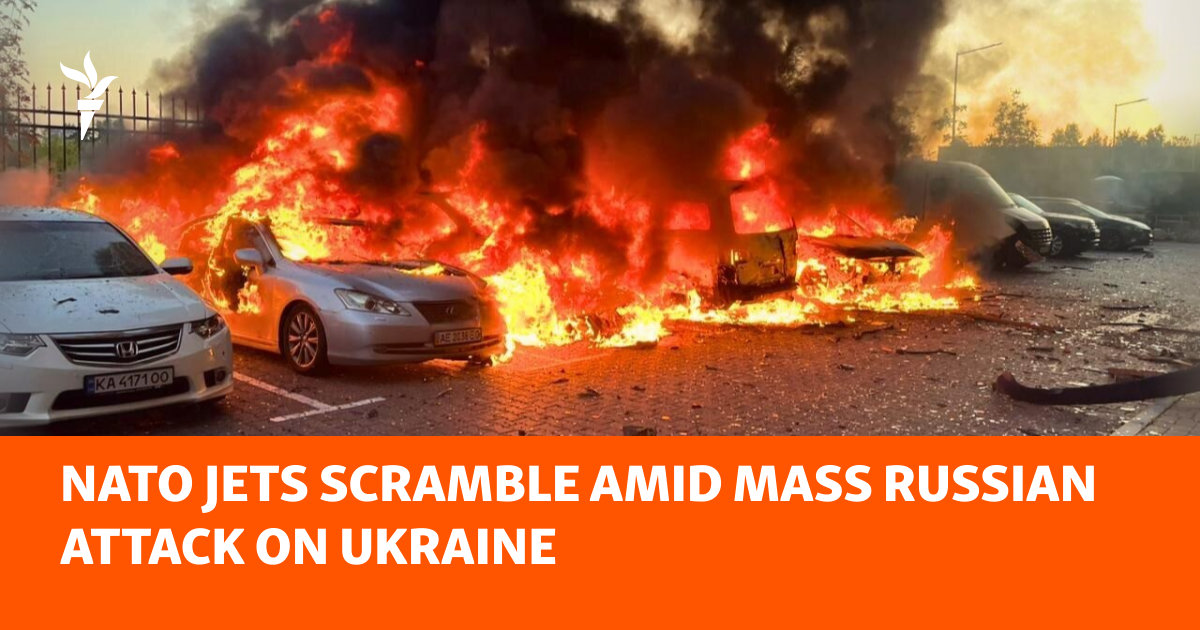
Russia launched a massive drone and missile attack on Ukraine, causing casualties and infrastructure damage, which occurred shortly after Russian airspace incursions led to NATO jets scrambling and heightened alert in member states. Concurrently, Ukraine launched counter-attacks, striking Russian oil facilities in the Saratov and Samara regions and reportedly disabling nearly a fifth of Russia's refining capacity, a development with potential implications for global energy markets. While NATO has deployed additional military hardware to its eastern flank, it continues to resist establishing an air umbrella over Ukraine, underscoring persistent geopolitical tensions and the contained nature of direct NATO involvement.
The conflict in Ukraine has entered a more volatile phase, marked by a significant escalation in both Russian aggression and Ukrainian counter-offensives with direct implications for global markets. Russia's massive drone and missile assault on Ukrainian civilian infrastructure, coupled with recent airspace violations against NATO members Estonia, Poland, and Romania, has substantially elevated geopolitical risk. NATO's response—scrambling jets and launching the 'Eastern Sentry' operation to deploy more hardware to its eastern flank—underscores a heightened state of military alert, though the alliance continues to resist direct intervention within Ukraine. Critically for investors, Ukraine's strategic targeting of Russian energy infrastructure has reportedly disabled nearly a fifth of the country's oil refining capacity, specifically hitting facilities in the Saratov and Samara regions. This represents a material supply-side threat to global refined product markets, shifting the conflict from a regional humanitarian crisis to a direct driver of potential energy price volatility.
AI-powered research, real-time alerts, and portfolio analytics for institutional investors.
Request DemoOverall Sentiment
strongly negative
Sentiment Score
-0.70
