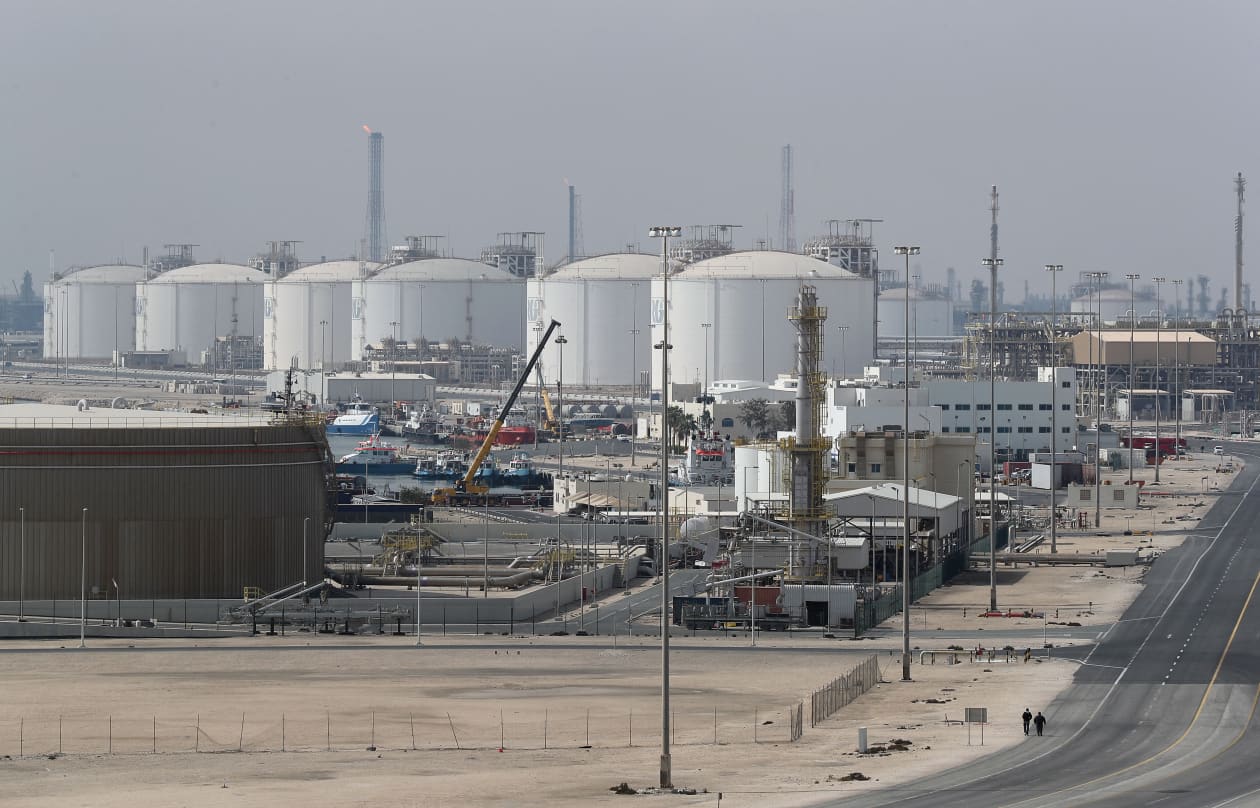
Brent front-month futures jumped 7.6% to $115.55/bbl after Iran targeted energy production in the Gulf, approaching the $119.50 peak hit on March 9 (the highest since July 2022). President Trump warned of a 'devastating' response if Tehran continues targeting regional oil and gas infrastructure, increasing geopolitical risk and likely sustaining upward pressure on oil prices and risk-off market positioning.
Immediate winners are integrated producers and midstream firms that can lock incremental barrels into existing export routes and refining slots; they capture windfall margin on cash flows while upstream independents need weeks-to-months to bring additional supply online. Secondary winners include tanker owners and cargo insurers because rerouting around the Strait raises voyage days and insurance premiums — expect freight rates to reprice for the next 4–12 weeks, benefiting vessel owners and time-charter billets.
Key risks center on the binary of escalation versus rapid de-escalation. In the next 1–30 days, front-month volatility will dominate P&L and option premia; over 1–9 months, US shale and non-OPEC producers can meaningfully increase flows if prices sustain, while material demand response (industrial/diesel substitution, Chinese slowdown) typically appears only after several quarters. Catalysts that would blunt the shock: coordinated SPR releases, an OPEC+ production uplift, or diplomatic de‑escalation; catalysts that would compound it include sanctions on shipping/insurance or direct strikes on export infrastructure.
Trade construct should separate calendar-volatility from directional exposure. A short-dated volatility buy (near-term straddle/strangle on crude futures or ETFs) captures the immediate repricing of risk premia; directional exposure to energy equities (integrated majors long, airlines short) captures margin transfer if prices remain elevated for multiple quarters. Hedge sizing is critical: price spikes are fast, mean reversion can be equally fast once supply/diplomatic responses materialize, so trades should be layered and convex (options or spreads) rather than naked directional positions.
Contrarian lens: the market is likely overpaying for perpetual disruption. Physical constraints are real but transient — global spare capacity and the willingness of consuming states to coordinate releases reduce the probability of a multi-year structural shortage. If you believe the shock is temporary, a calendar sell of implied volatility (2–6 week horizon) and selective long-dated hedges on producers (3–9 months) offers asymmetric payoff where short-term premium funds optionality for a sustained premium scenario.
AI-powered research, real-time alerts, and portfolio analytics for institutional investors.
Request DemoOverall Sentiment
strongly negative
Sentiment Score
-0.60
