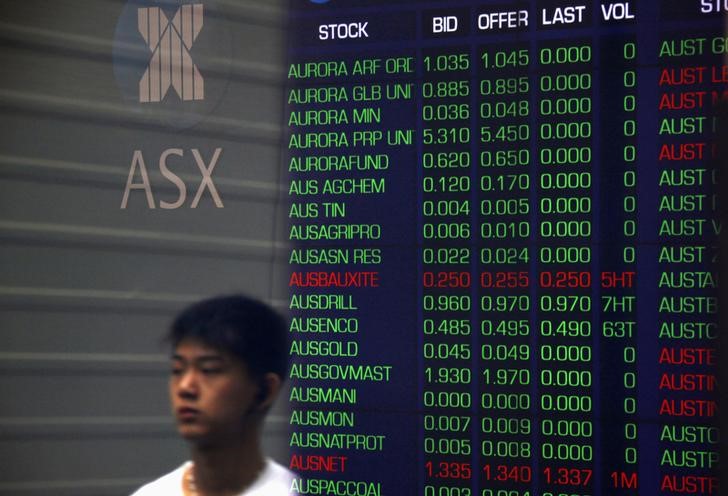
The S&P/ASX 200 fell 0.39% to a new 3‑month low with decliners outnumbering advancers 907 to 351 and the S&P/ASX 200 VIX up 2.90% to 17.58, signaling increased risk aversion. Key movers: Reliance Worldwide +6.85% to A$3.12, AMP +4.27% to A$1.22, Guzman Y Gomez +3.77% to A$18.73; IperionX -22.24% to A$4.09, Regis Resources -7.94% to A$7.07, Stanmore Coal -6.99% to A$2.66. Commodities: WTI/May crude +1.08% to $97.89, Brent/May +1.62% to $104.81; gold futures (Apr) -1.06% to $5,008.06; FX: AUD/USD ~0.70, AUD/JPY +0.20% to 111.73, DXY futures -0.04% at 100.06. Geopolitical headlines (Trump/ NATO/Iran) add an upside risk to energy and volatility dynamics.
Geopolitical commentary that raises the prospect of a sustained risk premium on Middle East supply chains is implicitly a call option on energy, shipping insurance, and premium spreads for near-term crude and LNG. That elevates value for upstream assets with short-cycle marginal barrels and for commodity hedging desks while simultaneously increasing input-cost pressure on high-fixed-cost transport and chemical sectors, which will see margins compress before revenue declines are priced in.
Market internals and volatility trajectories suggest position-squaring rather than a directional capitulation; flows are rotating into energy exposure and away from cyclicals, leaving a crowded trade in defensive commodity names and a softer one in industrials. The divergence between commodity risk premiums and safe-haven bids (gold weaker despite risk-off signals) points to a real-rate / liquidity nuance — market participants are pricing immediate supply risk while still expecting policy or flow responses to blunt a long-duration safe-haven bid.
Key catalysts over the next days-to-months are binary and asymmetric: a credible escalation that disrupts shipping/insurance routes will lift oil/LNG risk premia rapidly and sustain equity dispersion; diplomatic de-escalation, SPR releases or a Chinese demand scare will reverse the move and compress energy equities faster than cyclicals recover. Longer-term, a sustained premium accelerates capex for US shale and renewables transition spending, shifting industry returns over years rather than weeks.
Execution should therefore be tactical and skew-aware: prefer assets that capture margin expansion quickly (low-decline production, flexible LNG sellers) and use options to asymmetrically hedge geopolitical tail risk. Size directional exposure modestly versus larger allocation to convex protection — short windows for news-driven re-pricing create high odds of rapid (and reversible) moves, so set explicit time-based profit-taking rules.
AI-powered research, real-time alerts, and portfolio analytics for institutional investors.
Request DemoOverall Sentiment
mildly negative
Sentiment Score
-0.20
