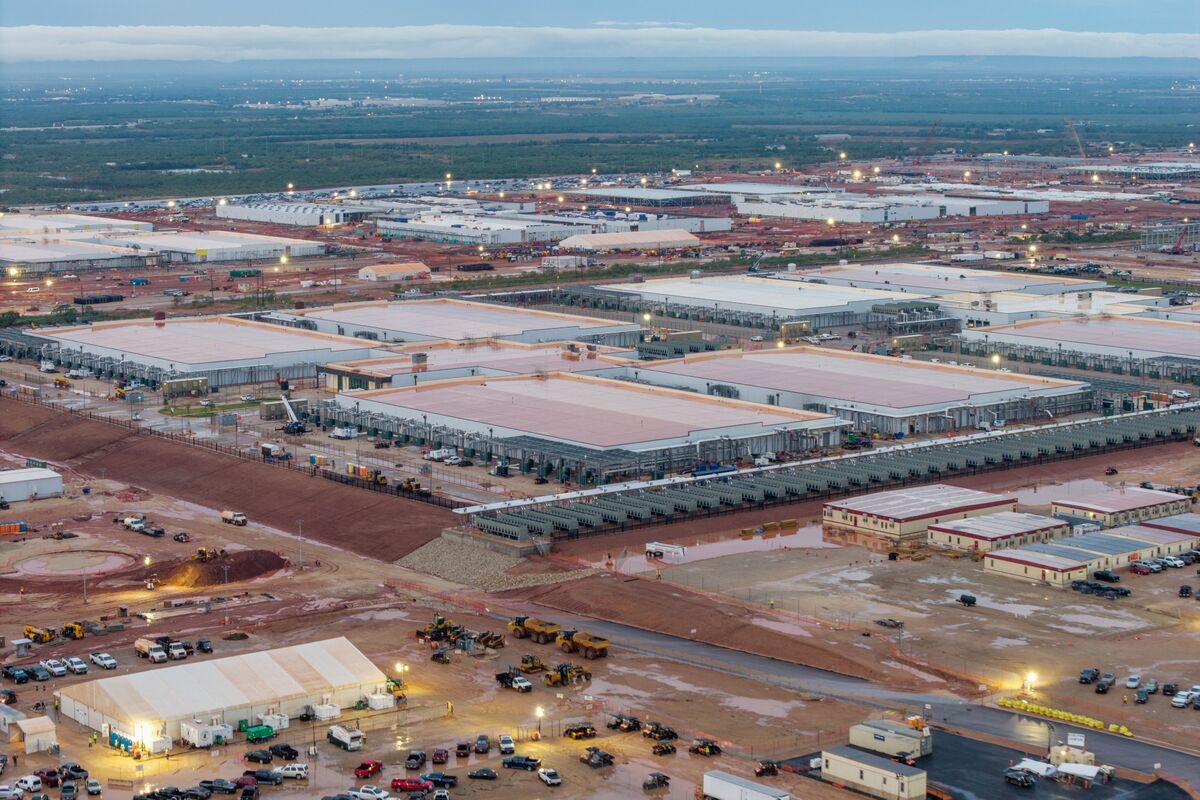
BloombergNEF raised its US data center power-demand outlook to 106 GW by 2035, a 36% upward revision from its April forecast driven largely by a wave of new early-stage data-center projects. The revision signals materially higher electricity consumption from cloud and AI workloads, with implications for utilities, grid planning and energy suppliers as well as potential upside for data-center operators and related infrastructure investors.
Market structure: The 36% upward revision to 106 GW by 2035 implies ~+28 GW incremental demand vs prior BNEF baseline, concentrated in hyperscaler and early-stage campus projects. Clear winners are hyperscalers (AMZN, MSFT, GOOGL indirectly), colocation/data‑centre REITs (EQIX, DLR), and grid/equipment suppliers (ETN, ABB); losers include legacy small hosting firms and regional industrials facing higher power costs. Higher baseload demand should tighten copper/transformer markets and put upward pressure on regional power prices, supporting utility capex and commodity prices over multi‑year horizons, while adding modest upside inflationary pressure that can affect bond curves.
Risk assessment: Tail risks include regulatory moratoria (local permitting or state-level “no new data centers” due to grid strain), major hyperscaler demand pullback if AI spending slows (20‑40% drop in build plans would be material), and transmission bottlenecks that delay revenue realization by 1–5 years. Near-term (days–months) volatility will track large project announcements and interconnection-queue updates; medium/long-term (1–10 years) outcomes hinge on PPA availability, grid upgrades and commodity supply cycles. Hidden dependencies: interconnection queue timing, PPA pricing, and localized water/cooling constraints can materially change ROI on new builds.
Trade implications: Prefer concentrated long exposure to EQIX/DLR and NVDA for compute demand, plus commodity plays in copper (FCX or COPX) and electrical infrastructure (ETN) with 12–36 month horizons. Use 12–24 month call spreads on EQIX/DLR to capture secular upside while capping premium; buy copper call options or futures to capture supply tightness ahead of multi‑year capex. Rotate out of non‑tech office REITs and utility names with high political/regulatory risk (e.g., heavily rate‑regulated CA utilities) toward regulated utilities with strong balance sheets (NEE) and industrials supplying transformers.
Contrarian angles: The consensus assumes continuous unabated build — what’s missed is interconnection and PPA friction that can create multi‑year lumpy capex and localized oversupply (colocation pricing pressure) in secondary markets. Reaction may be underdone in copper/transformer names but overdone in high‑multiple colocation equities if hyperscalers internalize more build and reduce third‑party demand. Historical parallel: 2010s cloud buildouts led to localized power crunches and multi‑year commodity cycles; unlike then, ESG/policy risk is higher now and can flip winners into stranded assets quickly. Monitor permitting trends and interconnection queue ages as early warning signals.
AI-powered research, real-time alerts, and portfolio analytics for institutional investors.
Request DemoOverall Sentiment
mildly positive
Sentiment Score
0.25
