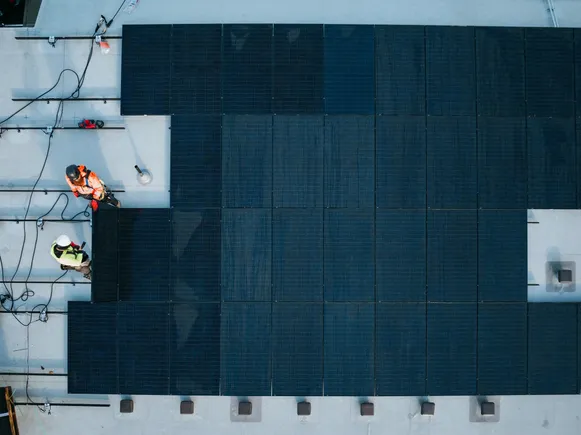
The U.S. energy sector continues its shift towards renewables, with solar leading new capacity additions in July (1.18 GW) and year-to-date (16 GW), although coal saw a rare 18 MW addition in July against an overall retirement trend. Despite government funding aimed at retrofitting coal plants, community solar installations contracted 36% year-over-year in H1 2025. FERC forecasts indicate significant future additions of solar (92.6 GW) and wind (22.6 GW) by 2028, alongside 22 GW of natural gas, while 25 GW of coal and 13.7 GW of natural gas are projected to retire. Critically, a severe shortfall in high-voltage transmission infrastructure development, with only 888 miles built in 2024 compared to 4,000 miles in 2013, presents a major bottleneck for future energy deployment and threatens key economic sectors like semiconductor manufacturing and AI.
The U.S. energy sector is undergoing a significant transition, but faces material infrastructure constraints. Solar power is the definitive leader in new capacity, adding 1.18 GW in July and a total of 16 GW in the first seven months of the year, with FERC forecasting an additional 92.6 GW by July 2028. This renewable momentum, however, is contrasted by a significant 36% year-over-year contraction in the community solar market in H1 2025, indicating potential fragmentation or headwinds in specific sub-sectors. While a minor 18 MW of coal capacity was added in July, bucking the retirement trend, this is overshadowed by a net loss of 40 MW year-to-date and a projected 25 GW of coal retirements by 2028, rendering recent federal funding for retrofits a likely counter-trend measure rather than a long-term revival. The most critical risk highlighted is the severe deficit in high-voltage transmission infrastructure. The completion of only 888 miles of high-voltage lines in 2024—a stark drop from nearly 4,000 miles in 2013—poses a major bottleneck to integrating new generation capacity and is identified as a direct threat to the expansion of energy-intensive sectors like artificial intelligence and semiconductor manufacturing.
AI-powered research, real-time alerts, and portfolio analytics for institutional investors.
Overall Sentiment
mixed
Sentiment Score
-0.15
