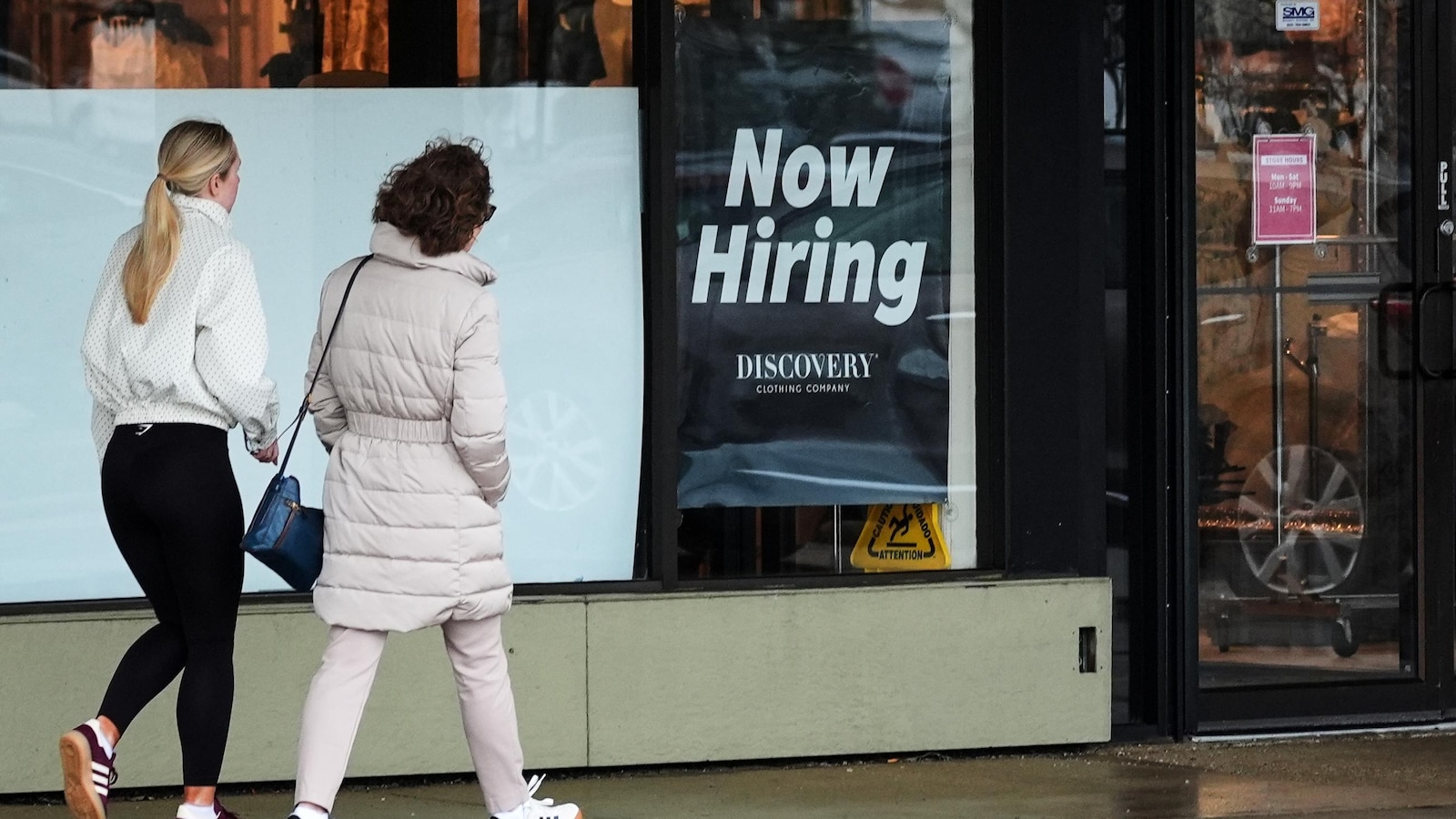
Initial U.S. jobless claims rose 6,000 to 214,000 for the week ended April 18, slightly above the 210,000 expected and still in a historically healthy range. The report points to a labor market that remains resilient but cooling, with the four-week average edging up to 210,750 and continuing claims rising to 1.82 million. Persistent inflation from elevated gas prices and war-related uncertainty may keep the Fed on hold next week despite mixed labor-market signals.
This is a “no recession, no rescue” labor print: claims are still too clean for the Fed to justify easing, but not strong enough to remove growth anxiety from cyclicals. The market implication is that rates may stay higher for longer even as forward earnings for labor-sensitive sectors keep getting revised down, a combination that tends to compress multiples rather than trigger a broad index drawdown.
The second-order effect is margin pressure, not just macro sentiment. Higher fuel and freight costs act like a stealth tax on transport-heavy businesses, while softer hiring reduces wage pass-through but also signals weaker volume growth later in the year. That is especially awkward for UPS: if parcel volumes slow before pricing resets, operating leverage can turn negative quickly because last-mile networks are fixed-cost intensive.
For banks, the read-through is mixed but skewed lower near term. A firm labor market reduces credit stress, yet a prolonged hold on rates with sticky inflation keeps deposit costs elevated and loan growth constrained, so the near-term setup for MS is more about deal flow caution and lower risk appetite than direct credit deterioration. The more interesting contrarian is that investors may be underpricing how long “good enough” labor data lets the Fed stay restrictive, which is bearish for long-duration assets and bullish for cash-generative balance sheets with pricing power.
The cleanest trade is to express a dispersion view: long quality defensives or cash-rich cyclicals with limited labor sensitivity versus short freight/logistics and rate-sensitive beta. If claims remain in the 200k–230k range for another 4–6 weeks, the market is likely to keep fading any dovish Fed repricing, making dips in high-multiple names vulnerable. A reversal would require a sharp move above ~250k claims or a material deterioration in payrolls over the next monthly print.
AI-powered research, real-time alerts, and portfolio analytics for institutional investors.
Request DemoOverall Sentiment
neutral
Sentiment Score
-0.10
Ticker Sentiment
