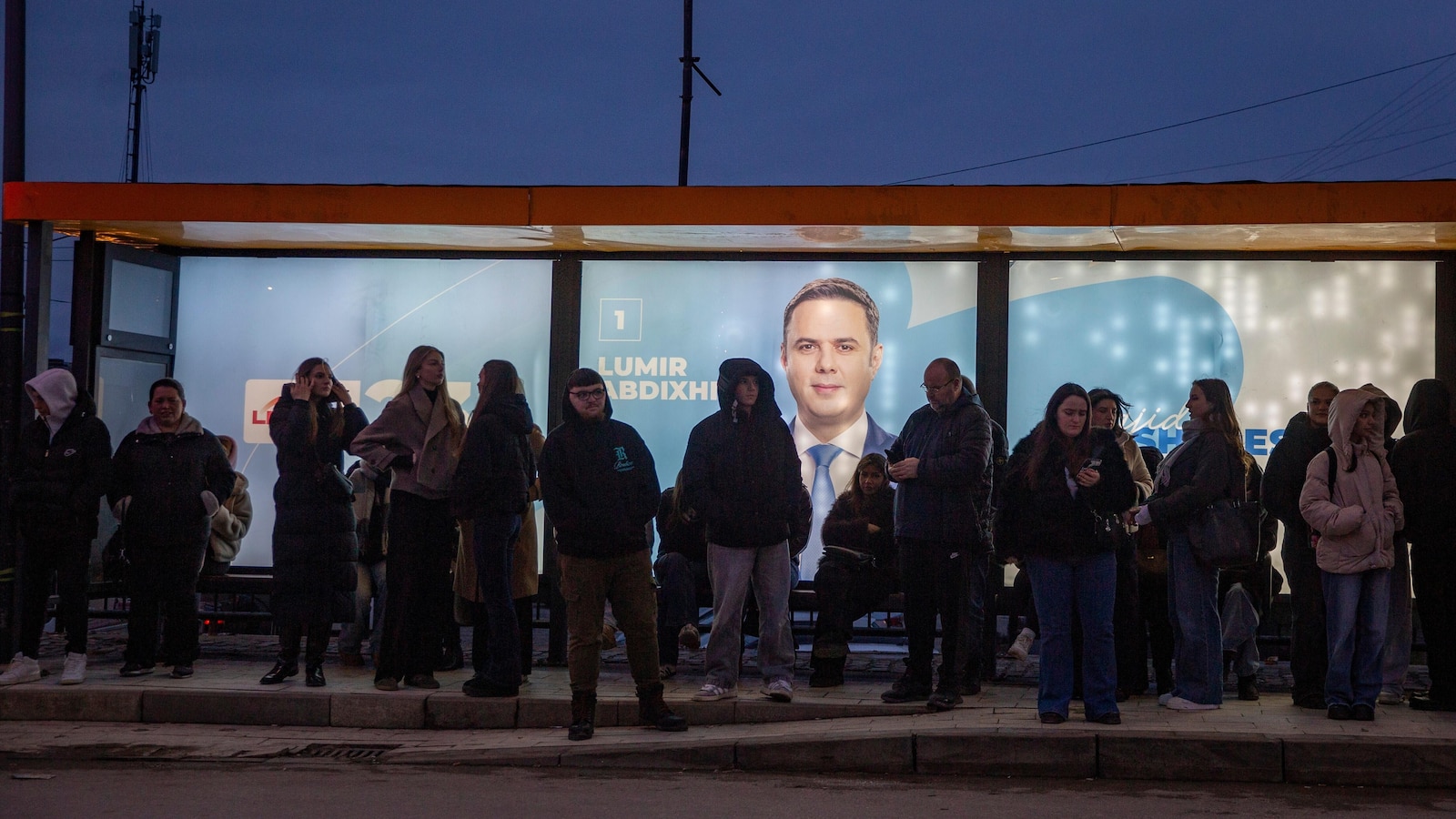
Kosovo held a snap parliamentary election after Prime Minister Albin Kurti's Vetevendosje failed to form a government following a February vote; Kurti remains the favorite but may still lack a majority in the 120-seat parliament (20 seats are reserved for ethnic Serbs and other minorities). The political deadlock has left the government without an approved budget for next year, raising downside risks for an already weak economy of about 2 million people, and could force further elections if a president is not elected in March; ongoing tensions with ethnic Serbs and punitive measures from the EU and U.S. add geopolitical and policy uncertainty that could affect regional stability and investor risk assessments.
Market structure: Short-term winners are defense/security suppliers and NATO-related contractors as political stalemate and Kurti's stated military purchases raise probability of incremental European procurement; expect a 1–3% demand uptick for niche equipment over 6–12 months if tensions persist. Losers are local sovereign and bank credit in the Western Balkans: absent a budget and with potential fiscal stress, regional sovereign spreads could widen 50–150bp and bank funding costs rise, pressuring profitability. Cross-asset: EUR should remain stable (Kosovo uses the euro), but regional FX and EM credit will see volatility; expect higher implied vols on CEE bank options and modest steepening in local curve vs. core EU rates.
Risk assessment: Tail risks include renewed armed clashes prompting NATO operational costs or EU sanctions escalation — a low-probability event that could spike defense equities +10–25% and widen regional credit spreads >200bp within days. Near-term (days–weeks) risk centers on election noise and no-budget outcomes; medium-term (1–3 months) hinge on March presidential vote and budget deadline early April; long-term (>6 months) depends on EU accession progress. Hidden dependencies: remittances, EU aid, migrant flows and Austrian bank exposure are nonlinear catalysts. Monitor EU/US punitive measures and NATO communiqués as binary triggers.
Trade implications: Implement a small, asymmetric portfolio tilt: tactically long defense exposure (RTX, LMT) via 3–6 month call spreads sized 1–2% of portfolio while trimming CEE bank equity risk (ERSTE.VI, RBI.VI) by 1–2% or buying 3–6 month puts/credit protection. Avoid direct Kosovo sovereign or frontier debt; underweight frontier ETFs (e.g., FM) by 100–200bp. Entry within 1–2 weeks; exit or re-assess on budget approval or if CEE bank spreads compress >50bp (take profit) or widen >75bp (add protection).
Contrarian angles: Consensus underweights the potential for EU/NATO-driven procurement funding that could re-rate select defense names over 6–12 months — historical parallel: regional conflicts in 2014 led to ~20% lift in defense contractors within 6 months. Conversely, markets may over-penalize big Austrian/Central European banks for a small Kosovo shock; credit impairment is more likely in thin local sovereign paper than in systemic EU banks. Unintended consequence: a reallocation toward security spending could crowd out EU infrastructure funds, pressuring construction/engineering names—monitor EU budget re-prioritization announcements as a 30–90 day catalyst.
AI-powered research, real-time alerts, and portfolio analytics for institutional investors.
Request DemoOverall Sentiment
moderately negative
Sentiment Score
-0.45
