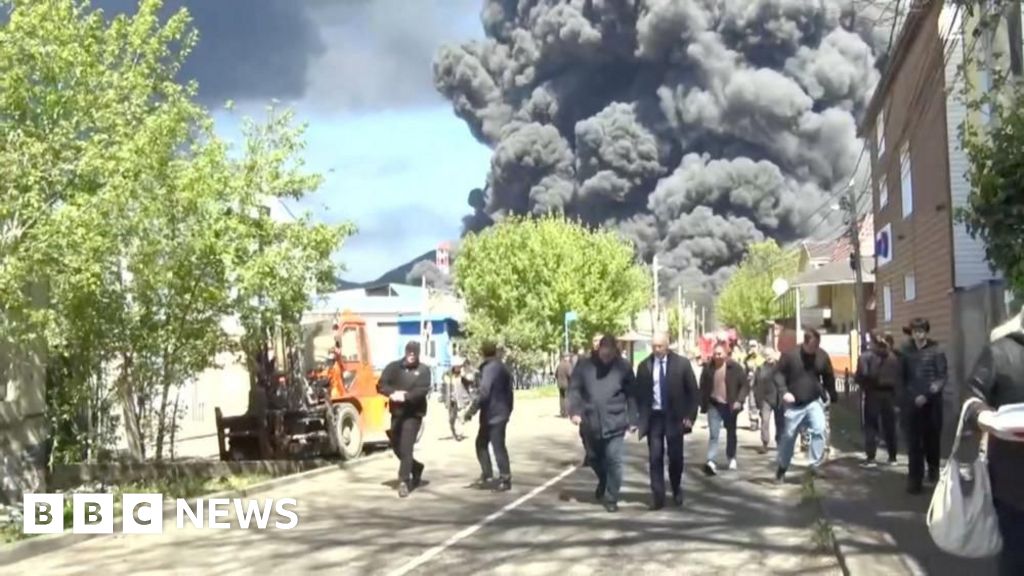
Ukraine struck the Tuapse oil refinery for the third time this month, triggering a massive fire, evacuation orders, and the deployment of more than 160 firefighters. The attack also follows earlier damage that caused an oil spill, while Russia says the refinery and storage facilities support export operations and global energy markets. Separately, one person was injured in a Russian drone attack on Kyiv.
The market takeaway is not just isolated refinery damage; it is the growing probability of a persistent, asymmetric disruption to Russian export logistics. Repeated hits on a coastal processing node raise the odds of knock-on outages in loading, storage, and inspection bottlenecks, which can tighten near-term product balances even if crude exports remain formally uninterrupted. That matters most for diesel and fuel oil spreads, where supply elasticity is low and replacement barrels are slower than headline crude flows.
The second-order winner is not broad energy beta but non-Russian refiners with access to cheap feedstock and Atlantic Basin product arbitrage. If Russian runs are intermittently constrained for weeks rather than days, Mediterranean and Northwest European diesel cracks should outperform crude, while tanker utilization can rise as flows reroute longer distances and emergency cargoes are sourced from the Middle East and India. Conversely, Russian upstream producers are less immediately impaired than refiners, but higher domestic security costs and export frictions can still bleed into realized pricing over time.
The key risk is escalation into a wider infrastructure campaign that forces policy response rather than market response. In the next 1-4 weeks, the main catalyst is whether this becomes a pattern of repeated downtime versus a quickly repaired facility; in a 1-3 month window, sustained attacks could force material product tightness and a larger risk premium in diesel-linked equities. The contrarian read is that headlines may overstate crude-supply loss while underpricing the spread impact: the trade is cleaner in products and shipping than in outright Brent direction.
What could reverse it is a rapid hardening of air defenses, a meaningful pause in strikes, or diplomatic pressure limiting Ukraine’s campaign if broader market volatility rises. Absent that, the asymmetric setup favors long volatility in refined-products exposure and selective long names with direct benefit from longer-haul trade and tighter diesel markets.
AI-powered research, real-time alerts, and portfolio analytics for institutional investors.
Request DemoOverall Sentiment
strongly negative
Sentiment Score
-0.55
Ticker Sentiment
