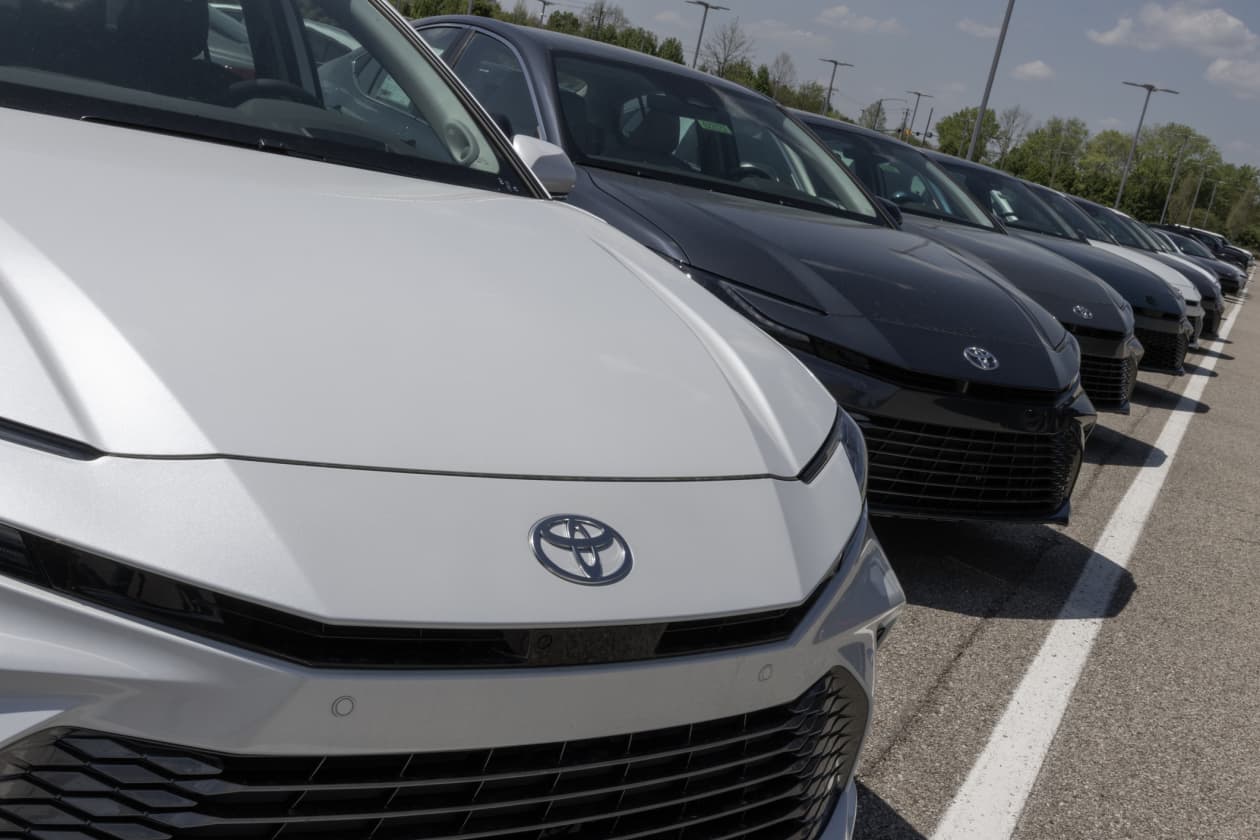
Hybrids are emerging as the “breakout” U.S. vehicle segment as EV demand cools, with hybrid electric volume up 82% over the past three years (Cox Automotive). The article expects hybrids to keep gaining market share over the next five years, while EV sales may remain stagnant. This shift is a positive demand signal for automakers positioned for hybrid portfolios.
The key market implication is not just slower EV adoption, but a re-rating of which OEMs own the most profitable mix over the next 4-6 quarters. Hybrids let legacy manufacturers monetize consumer demand for lower sticker prices without paying the full battery-cost penalty, so the earnings leverage likely accrues to Toyota (TM), Honda (HMC), and selectively Ford (F) rather than to pure EV growth stories. That is a margin story, not just a unit-share story: if hybrid mix keeps rising, consensus may need to lift gross margin assumptions for the OEMs with the deepest hybrid pipelines.
Second-order losers are the EV-adjacent names whose valuation depends on fleet electrification steepening every quarter. TSLA’s auto multiple is vulnerable if investors start modeling a flatter EV adoption curve, while charging-network names such as CHPT and EVGO face a slower path to utilization break-even because each hybrid sale is one less high-frequency charger user. Battery suppliers that are optimized for large packs and BEV scale can also see a less favorable mix than the market currently discounts.
The contrarian point is that hybrids may not be a temporary bridge; they solve affordability and infrastructure anxiety simultaneously, which is especially powerful in a higher-rate, price-sensitive consumer environment. That said, the move can overshoot: hybrid capacity is not infinitely scalable, and the next 1-3 months of monthly sales data will matter more than the narrative. What would falsify this thesis is an EV demand re-acceleration driven by aggressive price cuts, a material drop in financing costs, or a policy shift that re-tilts economics back toward BEVs over 6-18 months.
AI-powered research, real-time alerts, and portfolio analytics for institutional investors.
Request DemoOverall Sentiment
mildly positive
Sentiment Score
0.25
