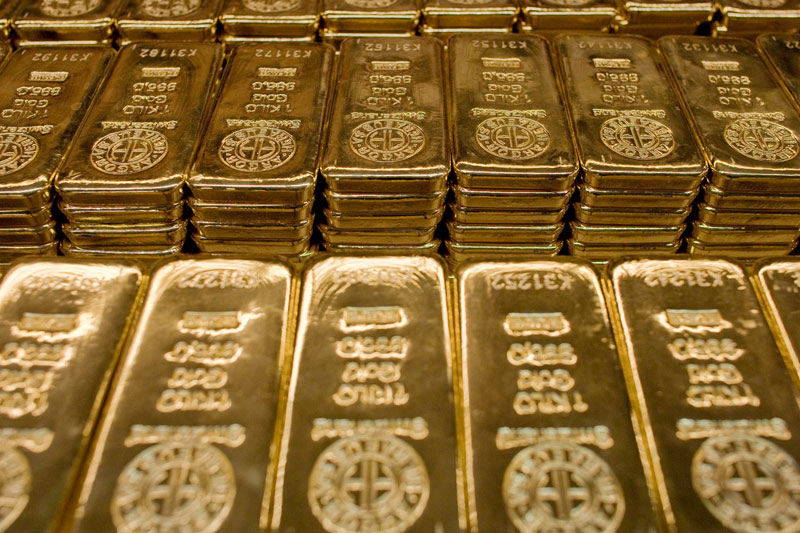
Gold prices declined on Monday, with spot gold falling 0.7% and futures down 1.5%, as investors awaited crucial U.S. inflation data and clarity on recent gold import tariffs. The market is focused on the upcoming July CPI, expected to show a 0.2% increase, and PPI, which will inform Federal Reserve rate cut expectations currently priced at 89% for September. Concurrently, a recent U.S. Customs ruling subjecting gold bars to import tariffs caused market dislocation and prompted Swiss refiners to halt shipments, though the White House is expected to issue an executive order to clarify the policy.
Despite a headline referencing Nvidia and AMD, the article's content exclusively details a downturn in the gold market and the key macroeconomic factors influencing it. Spot gold prices declined 0.7% to $3,376.24 an ounce, while gold futures fell 1.5%, pulling back from a recent record high above $3,530/oz. This price action is driven by two primary catalysts: significant uncertainty surrounding a new U.S. import tariff on gold bars and investor anticipation of crucial U.S. inflation data. The tariff, imposed by U.S. Customs, has already caused dislocation in physical supply chains, prompting some Swiss refiners to halt shipments. While the market expects a clarifying executive order from the White House, the situation remains unresolved. Concurrently, investor focus is fixed on the upcoming July Consumer Price Index (CPI), with expectations of a 0.2% month-over-month increase. This data is critical as it will heavily influence the Federal Reserve's upcoming policy decisions, with markets currently pricing in an 89% probability of a rate cut in September, a sentiment already bolstered by recent weak labor data. Adding to the uncertain environment is the impending August 12 expiration of the U.S.-China tariff truce.
AI-powered research, real-time alerts, and portfolio analytics for institutional investors.
Overall Sentiment
neutral
Sentiment Score
-0.10
Ticker Sentiment
