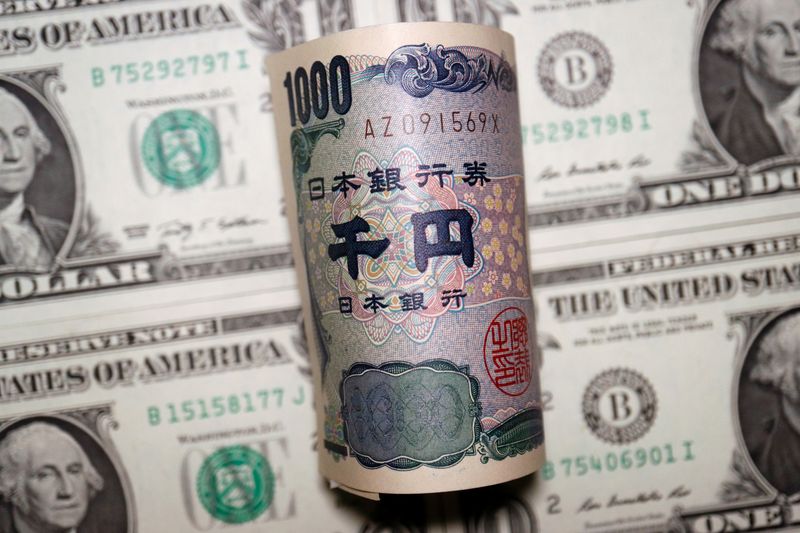
Asian currencies mostly firmed after the U.S. dollar held near a two-month high, with USD/JPY down 0.1% and USD/KRW down 0.4%, while AUD/USD rose 0.3%. The Fed kept rates unchanged but signaled scope for further tightening, and markets now price an 83% chance of a hike by December, supporting Treasury yields and the dollar. A U.S.-Iran interim peace deal eased Middle East supply fears and pushed oil lower, providing some relief to Asian FX.
The immediate market read is a two-factor regime: a higher-for-longer dollar/yield impulse that still dominates, partially offset by a risk-premium compression in energy. That matters because in Asia FX the first-order move is not uniform — low-beta, surplus-linked units tend to absorb a stronger USD better than high-beta importers, while the real pain sits in currencies where inflation sensitivity and external funding needs collide. The yen is the cleanest policy-volatility expression here: once spot pushes into intervention-adjacent territory, the market shifts from macro to positioning, and that tends to create sharp but temporary mean reversion rather than trend reversal.
The more interesting second-order effect is on Asia’s import bill and inflation paths. Softer oil is a hidden tailwind for India, Korea, Thailand, and parts of ASEAN through lower current-account pressure and easier domestic disinflation, which can reduce the urgency for local central banks to stay tight even if the Fed remains restrictive. That divergence can support relative performance in local duration and domestic cyclicals versus exporters, especially if crude continues to fade for several weeks rather than just one session.
The consensus risk is overestimating how durable the relief rally in FX can be if U.S. rate expectations keep repricing higher. In that setup, the broad dollar trend can overpower the oil-driven improvement in Asia terms of trade, leaving the winners as relative, not absolute. The market is also underpricing intervention asymmetry in Japan: authorities can lean against momentum, but they do not change the rate differential, so rallies in USD/JPY above perceived pain thresholds may still be buy-the-dip events unless U.S. yields roll over.
The contrarian angle is that the peace-driven oil downtick may be more important for rates than for FX. If energy stays subdued, breakeven inflation can compress and long-end yields can stabilize even while the Fed stays hawkish, which would be a more durable support for risk assets than the headline currency bounce suggests. That creates a near-term window where local Asian duration and some rate-sensitive equities can outperform despite a still-firm dollar.
AI-powered research, real-time alerts, and portfolio analytics for institutional investors.
Request DemoOverall Sentiment
neutral
Sentiment Score
0.10
Ticker Sentiment
