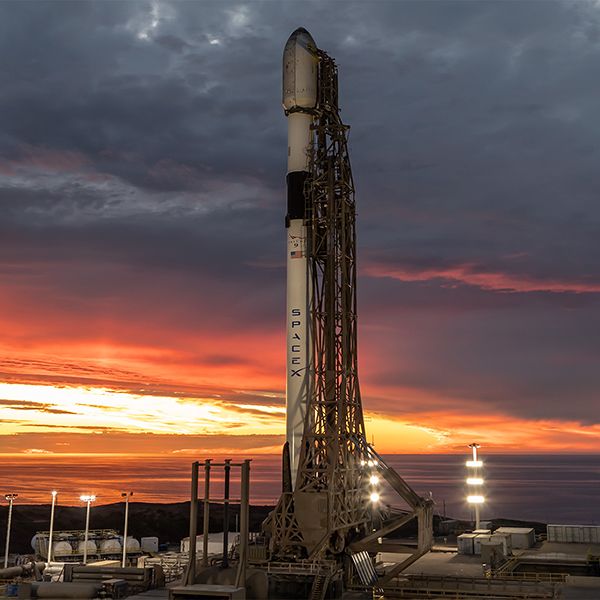
SpaceX is targeting Saturday, May 2 for the Falcon 9 launch of the CAS500-2 mission from Vandenberg, with a 37-minute window opening at 11:59 p.m. PT and a backup on Sunday, May 3. The mission will fly a first-stage booster on its 33rd use and carry 45 payloads for KAI, Argotec, Exolaunch, Impulso.Space, Loft-EarthDaily, Lynk Global, True Anomaly, and Planet Labs. The article is a routine launch schedule update with no financial or operational surprise.
This launch is a reminder that SpaceX’s cadence is now less about headline launches and more about monetizing excess reliability: a flight-proven booster on its 33rd mission compresses unit economics for the entire smallsat stack. The second-order winner is not just the launch provider but the downstream constellation operators and brokers that can opportunistically add capacity when rideshare pricing softens and manifest risk declines. That tends to widen the moat for scale players with diversified payload pipelines while pressuring smaller launchers that cannot match launch frequency, reusability, or schedule certainty.
For the listed tickers, the signal is modestly constructive for KAI and PL, but the alpha is likely in expectations management rather than immediate revenue step-up. KAI benefits from being embedded in a high-density mission mix that validates its integration capability and keeps it in front of institutional and government buyers; the real upside is follow-on demand and better pricing power in future manifest allocations. PL benefits more subtly: a sustained stream of launch availability lowers the operational risk premium on its constellation expansion and can pull forward cadence, but the market may already capitalize that benefit, making the move more of a confirmation than a catalyst.
The main risk is not launch failure alone; it is mission slippage or a weather-induced delay that cascades into schedule compression for multiple smallsat customers. Over months, the bigger threat is competitive: if reusable launch economics continue to fall faster than replacement demand grows, some payload owners may defer dedicated launches and negotiate harder on rideshare terms, which could compress margins across the ecosystem. Contrarian takeaway: the consensus may overstate the direct equity impact of a single launch and understate the structural advantage this cadence creates for customers that can repeatedly ride the Falcon 9 network at low variance.
From a trading lens, this is a better setup for relative-value than outright longs: the event supports a tactical long KAI versus a broad aerospace basket for 2-6 weeks if launch execution is clean, while PL is more suitable as a hold-to-event catalyst around future constellation milestones rather than this launch itself. If the launch slips twice or the landing/recovery narrative weakens, fade the sympathy bid in launch-adjacent names because the market is likely pricing a reliability premium that can unwind quickly. Best risk/reward is a small long KAI / short industrials hedge, with a tight stop on repeated delay headlines.
AI-powered research, real-time alerts, and portfolio analytics for institutional investors.
Request DemoOverall Sentiment
neutral
Sentiment Score
0.08
Ticker Sentiment
