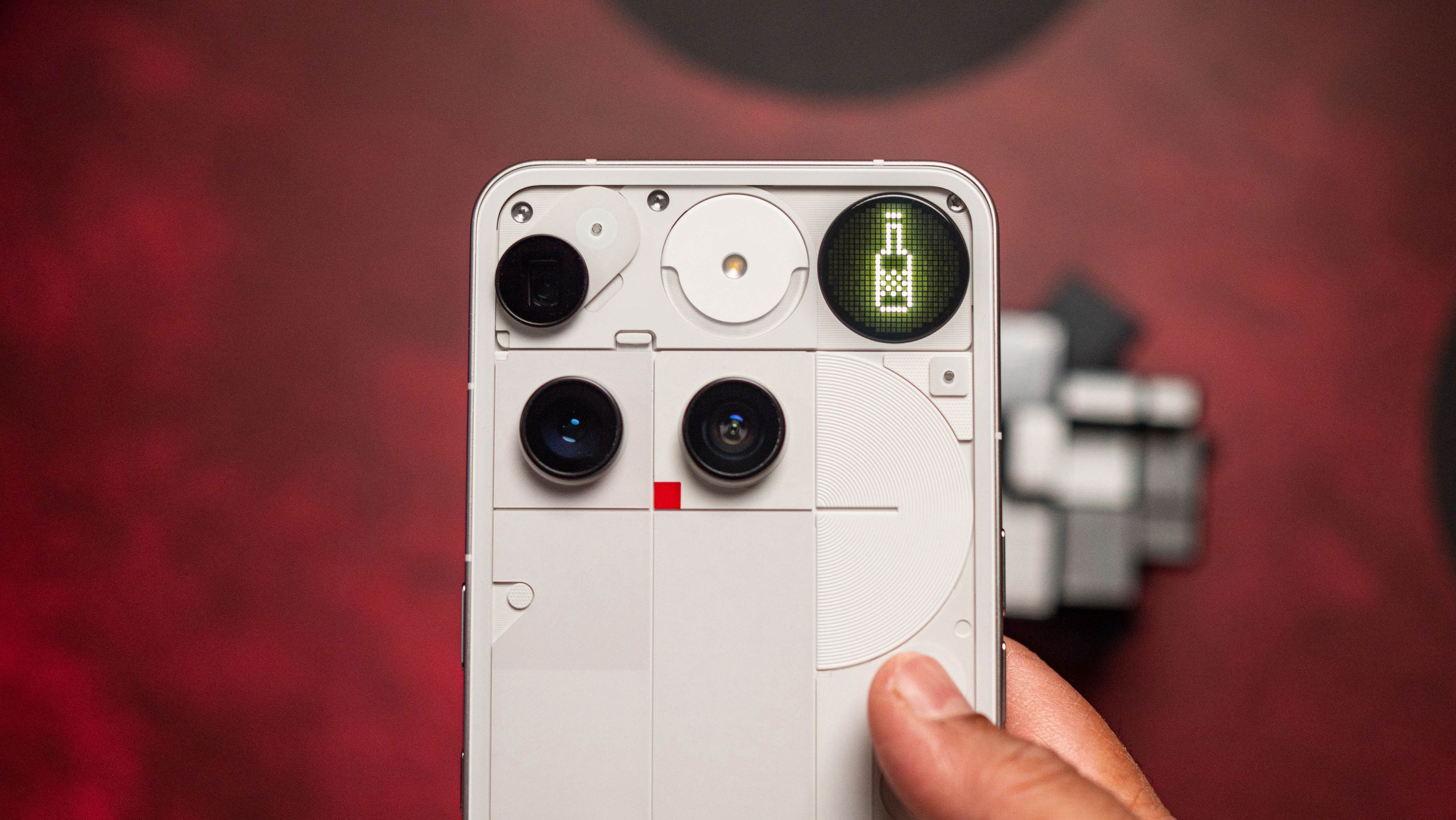
Nothing previewed a redesigned Glyph lighting for its upcoming Phone 4a series featuring a 'Glyph Bar' of 9 individually controllable mini-LEDs claimed to be ~40% brighter and using patented tech, with a major reveal slated for March 5. Leaks and company hints also point to a Snapdragon 7s Gen 4 chipset, 1.5K AMOLED displays (6.7" base, possibly 6.8" 144Hz for a Pro), a potential triple-camera array, and rumored price increases of $50–$100 for the 4a and 4a Pro.
Market structure: Nothing’s Glyph Bar teases benefit for component suppliers (chipset, mini‑LED, driver ICs) and foundries rather than major OEMs; expect modest revenue tailwind to Qualcomm (QCOM) via Snapdragon design wins and to foundries (TSM) for wafer volume, while low‑end OEMs that cannot differentiate may see margin pressure if pricing rises $50–$100. Competitive dynamics are incremental — this is a feature differentiation play, not a platform shift; market share effects for large incumbents (AAPL, Samsung) are likely <1–2 percentage points over 12–18 months, but mid‑tier Android brands could see increased CAC. Supply/demand: a move to mini‑LED and brighter arrays signals incremental component demand (LED dies, drivers, backlight modules) that could lift supplier revenue 2–6% near‑term if adoption scales; constrained driver/controller capacity or TSMC wafer slots could create 2–4 week lumpy delivery risk. Cross‑asset: expect near‑term small positive to semiconductor equities (SMH) and modest FX support for TWD/SEK if Taiwanese/Scandi suppliers benefit; no material bond/commodity impact unless component shortages force capex hikes >5% across the supply chain. Risk assessment: tail risks include patent litigation (Nothing claims patented tech) that could impose injunction/royalty costs >$50M for small suppliers, or a design flop that generates negative PR and returns, causing inventory write‑downs. Time horizons: immediate (days) — event volatility around March 5; short‑term (weeks–months) — preorder/sell‑through and supplier mentions matter; long‑term (6–18 months) — whether the UI feature drives sustained ASP lift or just one‑time curiosity. Hidden dependencies: adoption hinges on supply chain yield for 9 mini‑LEDs, controller availability, and consumer tolerance for a $50–100 ASP increase; elasticity could depress volumes 5–15% if perceived as a gimmick. Catalysts: March 5 reveal, Snapdragon 7s Gen 4 confirmation, supply agreements or supplier mentions in filings. Trade implications: direct plays — establish small, event‑sized exposure to QCOM (1.5–2% portfolio) and TSM (1–1.5%) ahead of March 5 to capture potential design‑win news and foundry demand; prefer call spreads to limit premium. Pair trades — overweight SMH (semis) + underweight XLY (consumer discretionary/retail) by 2–3% for 3–6 months to reflect supply‑led upside vs. retail margin pressure. Options strategies — buy 3–6 month QCOM call spreads (5% OTM buy / 15% OTM sell) sized to 0.5% portfolio for asymmetric upside with defined risk; trim on +12% move or if implied vol >40%. Entry/exit: enter before March 5, reassess within 48 hours of the event; cut positions if Nothing reports first‑week sell‑through <30% or suppliers are not named. Contrarian angles: consensus may overvalue the novelty — historically (OnePlus, Essential) feature wins rarely convert to sustainable share without ecosystem lock‑in; therefore suppliers’ upside is likely muted unless Nothing scales to 1–2M units/quarter. The market may under‑price patent risk and inventory markdown risk; a single injunction or poor returns could wipe 10–20% off niche supplier revenue estimates. Historical parallels: mid‑tier feature differentiation (LED gimmicks) often yields short alpha spikes but limited durable margins. Unintended consequences: rapid proliferation of “lighting” features could commoditize the benefit, pressuring future ASPs and increasing warranty/returns; set stop losses at 8–10% and require concrete sell‑through metrics before adding exposure.
AI-powered research, real-time alerts, and portfolio analytics for institutional investors.
Request DemoOverall Sentiment
neutral
Sentiment Score
0.12
