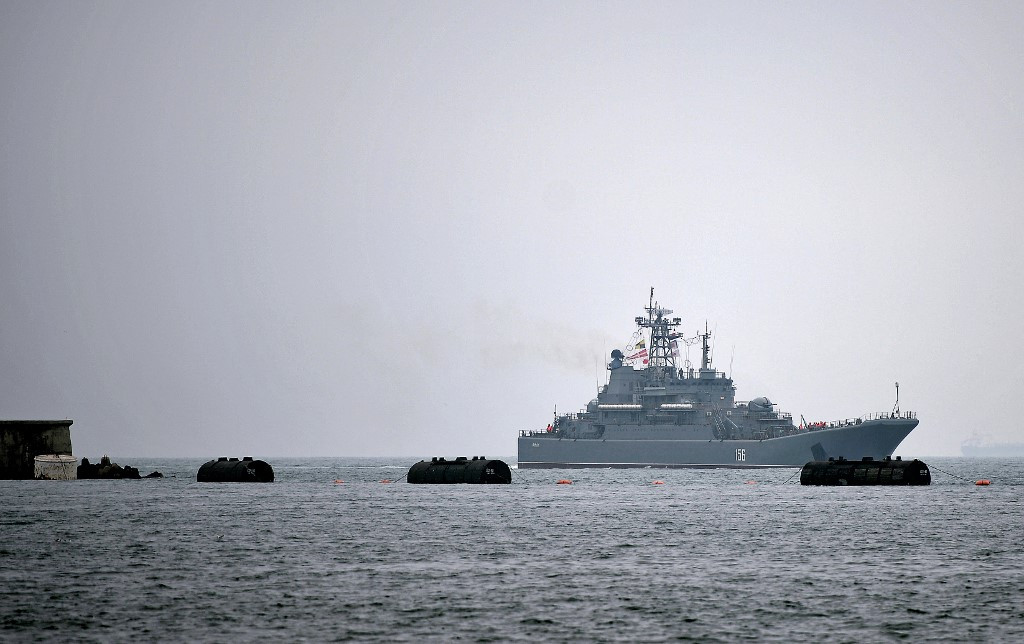
Ukraine said it struck a Russian Black Sea Fleet command center in occupied Sevastopol, along with drone control hubs in Kursk, a UAV control site in Kharkiv, a command post in Belgorod, and military positions in Donetsk overnight on April 21-22. The attacks extend Kyiv’s campaign against Russian military infrastructure far beyond the front line, following earlier strikes on ammunition depots, fuel storage sites, logistics hubs, and an oil terminal in Tuapse. The article points to elevated geopolitical and defense risk, though it contains no direct market pricing data.
This is less about battlefield noise and more about a sustained degradation of Russia’s rear-area command-and-control stack. Repeated strikes on fleet HQs, drone control nodes, logistics, and fuel/ammunition concentration points raise the operational cost of keeping Russia’s southern and occupied-territory war machine coherent; the second-order effect is slower sortie generation, weaker air defense reaction times, and more brittle resupply. That matters because even modest attrition in command latency tends to compound over weeks, not days, especially when it forces dispersal of assets that were previously centralized.
The bigger macro implication is to energy and transport risk premia in the Black Sea basin. Each successful hit on port-adjacent or command infrastructure increases the probability of opportunistic disruption to shipping, insurance, and port throughput, even if actual physical damage is limited; markets tend to reprice the tail before volumes change. Expect the highest sensitivity in near-term freight, marine insurance, and any asset linked to Black Sea export reliability, with the effect most pronounced over the next 1-3 months if the campaign continues at this cadence.
The contrarian miss is that these strikes can be strategically bullish for certain Russian war-economy bottlenecks only if they force substitution into more redundant, less efficient networks. In that scenario, Russia may accelerate decentralization, which reduces headline vulnerability but raises unit costs and procurement friction—bad for military efficiency, but not an immediate collapse trigger. The market may also be overestimating spillover to global commodity supply; unless strikes migrate deeper into export terminal capacity, the more durable impact is risk premium rather than outright supply loss.
AI-powered research, real-time alerts, and portfolio analytics for institutional investors.
Request TrialOverall Sentiment
moderately negative
Sentiment Score
-0.40
