


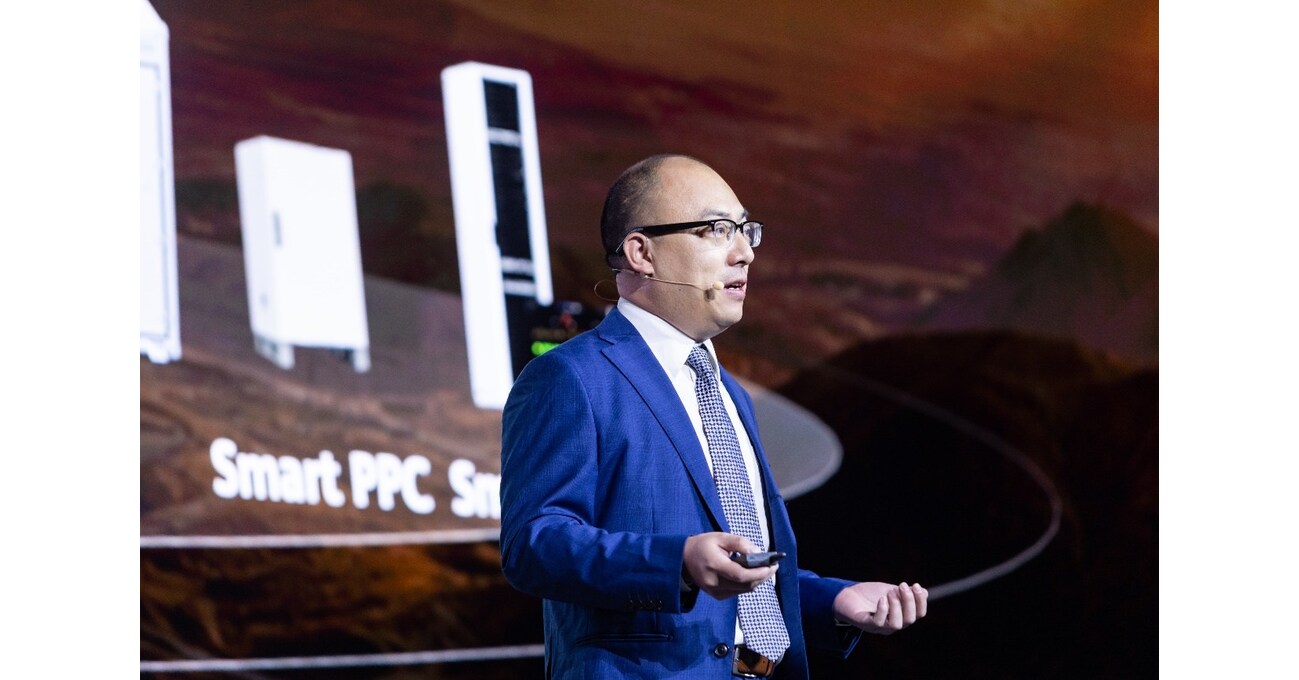
Huawei launched its LUTERRA Smart String Grid-Forming ESS Platform in Germany, touting 93.1% round-trip efficiency (RTE) on the low-voltage side at 25°C and SOC precision of 2.5% (and 3% in the plateau). For a 1GWh BESS plant, Huawei claims at least 30% lower delivery time and at least 20% lower balance-of-plant (BOP) costs versus conventional solutions, alongside a 1 sq. m footprint per MWh reduction. The platform is designed to improve throughput by more than 10% using a 1000V AC dual-stage architecture with SiC switching, supported by field operation at a 100% renewable microgrid in Saudi Arabia.
This reads less like an immediate earnings driver and more like a procurement signal: grid-forming is moving from differentiator to spec, which usually pushes economics away from hardware vendors and toward whoever owns the control stack, service network, and project financing. That is modestly negative for standalone utility-scale storage integrators with thinner moat and more exposure to ASP compression, while asset owners and developers with large BESS pipelines can capture the higher throughput and lower BOS cost in project IRRs.
Near term, I would not expect a clean, tradeable move in the named small caps; these claims still need independent validation in award data, financing terms, and operating history. Over 1-3 months, watch Germany, the UK, and Australia for tender language that makes inertia/black-start mandatory, because that is when spec creep turns into quote pressure. Over 6-18 months, standardized GFM could commoditize the container and expand the premium on software, EMS, and field service, which is structurally more favorable to utilities/IPP balance sheets than to equipment-only vendors.
The contrarian miss is that Huawei’s launch may be more geopolitical theater than commercial threat for U.S./EU listed peers. If export constraints or bankability concerns limit deployment, the competitive effect stays local and slower than the headline suggests. The thesis is falsified if public storage OEMs continue to expand backlog conversion and gross margin despite tighter GFM requirements, or if tender data shows no pricing pressure after the new specs hit the market.
AI-powered research, real-time alerts, and portfolio analytics for institutional investors.
Overall Sentiment
mildly positive
Sentiment Score
0.25
Ticker Sentiment
