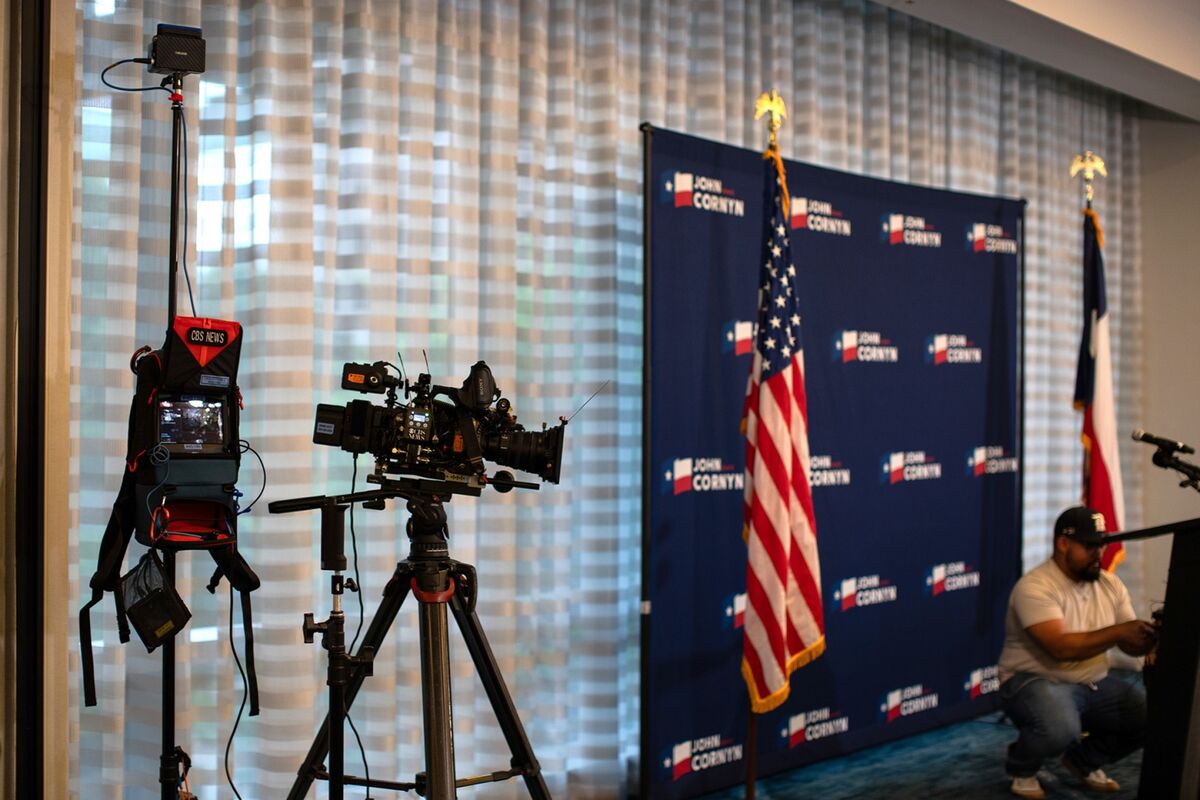
Political ad spending in the US midterm elections is projected to reach a record $11.6 billion, underscoring intensifying races in states including Texas, Maine, North Carolina and Michigan. The article is primarily a political update rather than a direct market-moving financial event, with implications mostly for media ad revenue and campaign-related spending.
The immediate winners are not the candidates themselves but the platforms that monetize urgency: local TV stations, CTV inventory, political adtech, direct mail operators, and ballot-data vendors. A record spend year usually compresses available inventory in the final 6-8 weeks, which allows broadcasters and streaming distributors to reprice spots at a disproportionate premium versus normal election cycles. The second-order effect is that political dollars tend to crowd out commercial advertising, so even non-political media names can see better near-term pricing discipline and lower churn into Q4.
The bigger structural read is that the ad surge is a proxy for close races, which increases the probability of post-election gridlock rather than sweeping policy shifts. That matters for budget-sensitive sectors: if the election produces divided government, the market loses tail risk around tax, healthcare, and antitrust over the next 6-18 months. Conversely, if a surprise sweep occurs in either direction, expect a sharp but short-lived repricing in regulated industries, defense, energy, and managed care as legislative probabilities get recalibrated.
The consensus likely underestimates how concentrated the spend becomes late in the cycle. Once campaigns hit the final stretch, marginal dollars chase the same handful of households, which can create localized pricing spikes in battleground DMAs and lift CPMs well beyond the national average. The contrarian risk is that this is a one-quarter windfall, not a durable earnings step-up: if fundraising or polling shifts after the key debates, spend can roll over quickly, leaving media owners with a weaker post-election demand air pocket.
AI-powered research, real-time alerts, and portfolio analytics for institutional investors.
Request DemoOverall Sentiment
neutral
Sentiment Score
0.00
