
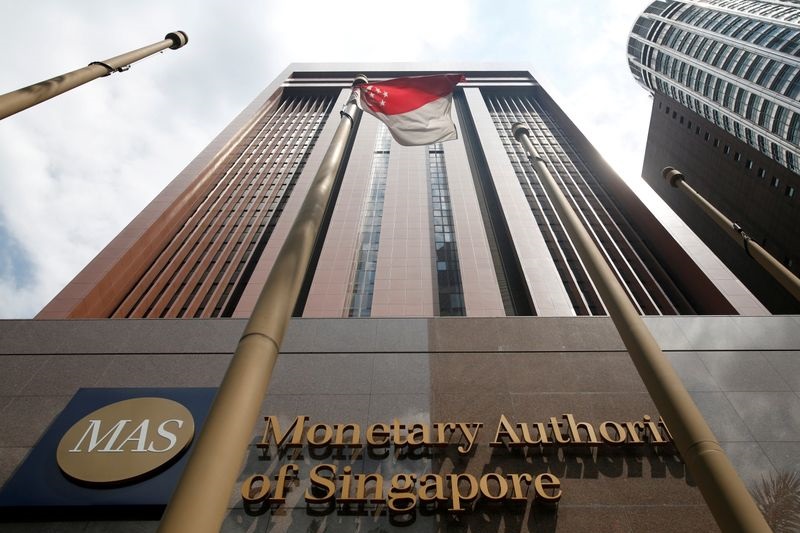
Singapore's Q1 2026 GDP grew 4.6% year on year, below the 5.4% expected, while quarter-on-quarter GDP fell 0.3%, reflecting softer trade and services after a strong prior quarter. The MAS slightly tightened policy by allowing more S$NEER appreciation and raised 2026 core inflation and CPI forecasts to 1.5% and 2.5% from 1.0% and 2.0%, citing higher imported energy costs from the Middle East war. The outlook remains uncertain for shipping through the Strait of Hormuz and for energy-dependent sectors such as petrochemicals and transportation.
This is a classic late-cycle policy squeeze where the first-order macro hit is modest, but the second-order dispersion is larger than the headline GDP miss suggests. Singapore is effectively choosing to defend imported-inflation credibility before growth rolls materially lower, which usually supports the currency and domestic pricing power while compressing margins in energy-intensive and freight-linked businesses. The market should care less about the current print and more about the lag: higher fuel pass-through tends to show up in transport, chemicals, and logistics earnings over the next 1-2 quarters, not immediately.
The cleanest beneficiaries are balance-sheet-light exporters and firms with USD revenue or strong pass-through, while the obvious losers are refiners, petrochemicals, airlines, shipping, and any business with high bunker-fuel sensitivity but limited contractual indexation. A stronger Singapore dollar also creates a quiet relative-value headwind for locally listed companies competing against regional peers with weaker currencies, especially where pricing is set in USD but costs are local. That said, if the Strait of Hormuz risk de-escalates, the inflation impulse can unwind quickly, making this more of a 1-3 month tactical theme than a structural regime change.
The contrarian point is that policy tightening into an externally driven energy shock may be near-peak hawkishness, not the start of a longer tightening cycle. If oil stabilizes, Singapore could end up with a tighter currency and softer growth simultaneously, which is bearish for cyclicals but constructive for importers and domestic consumption quality. That asymmetry argues for trading the spread between energy-sensitive industrials and defensive, pricing-power names rather than making a broad macro bet.
The largest upside surprise would be a renewed disruption to regional shipping and fuel supply chains, which would widen the earnings gap between firms that can reprice quickly and those locked into fixed-rate contracts. Conversely, any clear reduction in Middle East shipping risk would likely trigger a fast mean reversion in inflation expectations and a partial unwind of the policy move within weeks, not quarters.
AI-powered research, real-time alerts, and portfolio analytics for institutional investors.
Request TrialOverall Sentiment
mildly negative
Sentiment Score
-0.15
Ticker Sentiment
