
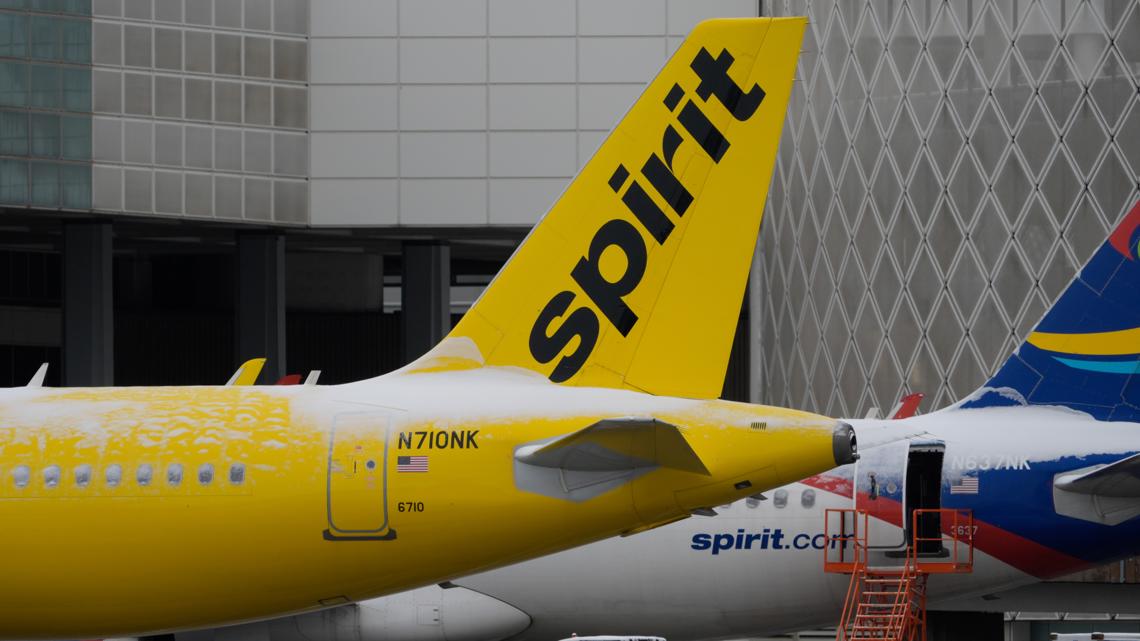
Spirit Airlines has requested an emergency bailout to avoid liquidation as it tries to exit a second bankruptcy, with creditors questioning its future. Rising jet fuel prices, which have roughly doubled since the Iran war began, are adding pressure to an already fragile restructuring. The company lost more than $2.5 billion since the start of 2020 and is set to meet with Transportation Secretary Sean Duffy next week.
The market is moving from an airline-specific restructuring story to a broader test of how much political capital the administration is willing to spend on preserving ultra-low-cost capacity. If Spirit is forced into liquidation, the biggest near-term winners are not the legacy carriers, but the strongest ULCC peers and the aircraft lessors that can reprice, redeploy, or repossess capacity into a tighter market. The second-order effect is higher industry fare discipline: Spirit’s cost structure has been a de facto cap on domestic leisure pricing, so even a partial removal of that seat supply should support unit revenues for the next 1-2 quarters, especially in Florida, the Caribbean, and VFR-heavy routes.
The real stress point is liquidity timing, not long-run demand. Fuel acts like a short-duration margin shock that compresses covenant headroom faster than management can cut capacity, so the catalyst window is days-to-weeks around creditor negotiations and any government signaling. If the bailout is denied, the downside likely accelerates in a nonlinear way because aircraft redeliveries, slot/route reallocation, and employee attrition can turn an orderly wind-down into a fire sale, which would pressure liquidation recoveries across the capital structure.
Consensus may be underestimating how little sympathy there is for an equity rescue, which means the equity can still behave like a distressed optionality trade rather than a zero. But that option value is fragile: any credible financing or creditor standstill could produce a violent short-covering bounce, while a negative meeting outcome likely triggers an immediate gap-down and a repricing of restructuring recoveries. The most attractive asymmetric setup is in peers and suppliers, not Spirit itself, because the industry can benefit from capacity destruction without taking direct balance-sheet risk.
AI-powered research, real-time alerts, and portfolio analytics for institutional investors.
Request TrialOverall Sentiment
extremely negative
Sentiment Score
-0.90
Ticker Sentiment
