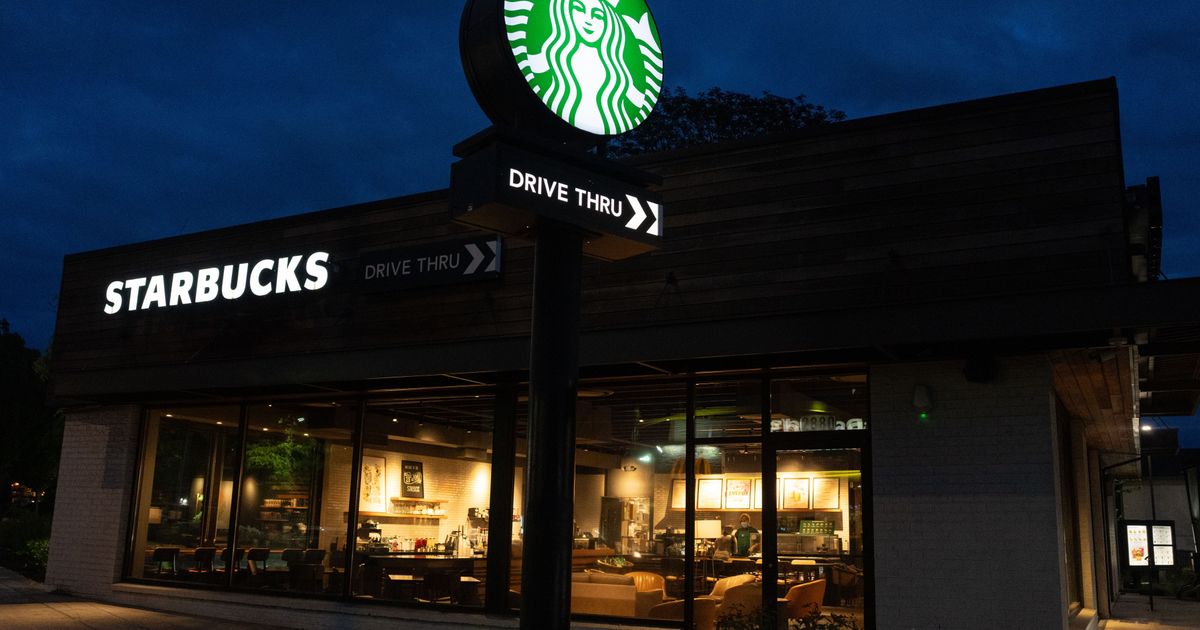
Starbucks reported fiscal Q2 revenue of $9.5 billion, up 9% and ahead of the $9.2 billion consensus, while adjusted EPS came in at 50 cents versus 43 cents expected. Global same-store sales rose 6.2% and U.S. same-store sales increased 7%, both exceeding forecasts, signaling improving customer traffic and service execution under CEO Brian Niccol. The company highlighted continued turnaround efforts, including staffing changes, technology upgrades, and store redesigns.
SBUX is showing that the turnaround is no longer just a cost story; the critical signal is mix and traffic quality improving at the store level, which usually has more durable earnings power than one-off margin cuts. The second-order implication is that labor densification and order-sequencing tech are now offsetting friction from mobile throughput, suggesting the company can raise throughput without sacrificing ticket or guest experience. If that persists for another 1-2 quarters, consensus may need to re-rate the name from a near-term operational fix into a multi-year compounding story with less dependence on discounting.
The market may be underestimating the competitive damage to mid-tier coffee and quick-service players that compete on convenience rather than brand. If Starbucks is reclaiming frequency while maintaining premium positioning, regional chains and drive-thru-heavy concepts face a tougher traffic battle just as wage inflation and rent reset higher. On the supply side, better order flow and store rationalization should improve labor productivity and waste, which can flow through to incremental margin expansion even if absolute wage rates stay sticky.
The main risk is that the improvement is still early-cycle and could fade if service consistency slips during peak periods, especially with higher traffic and seasonal demand. The catalyst path is likely monthly: if same-store sales remain above the low-single-digit hurdle for the next 2-3 prints, the market will start capitalizing the turnaround at a higher multiple; if comps revert toward the 2-3% range, the stock will likely de-rate quickly because expectations are moving up faster than the operating base is fully stabilized. The contrarian takeaway is that the upside may be less about this quarter's beat and more about reducing the probability of a failed turnaround, which can matter more for the stock than the absolute earnings beat itself.
AI-powered research, real-time alerts, and portfolio analytics for institutional investors.
Request DemoOverall Sentiment
moderately positive
Sentiment Score
0.65
Ticker Sentiment
