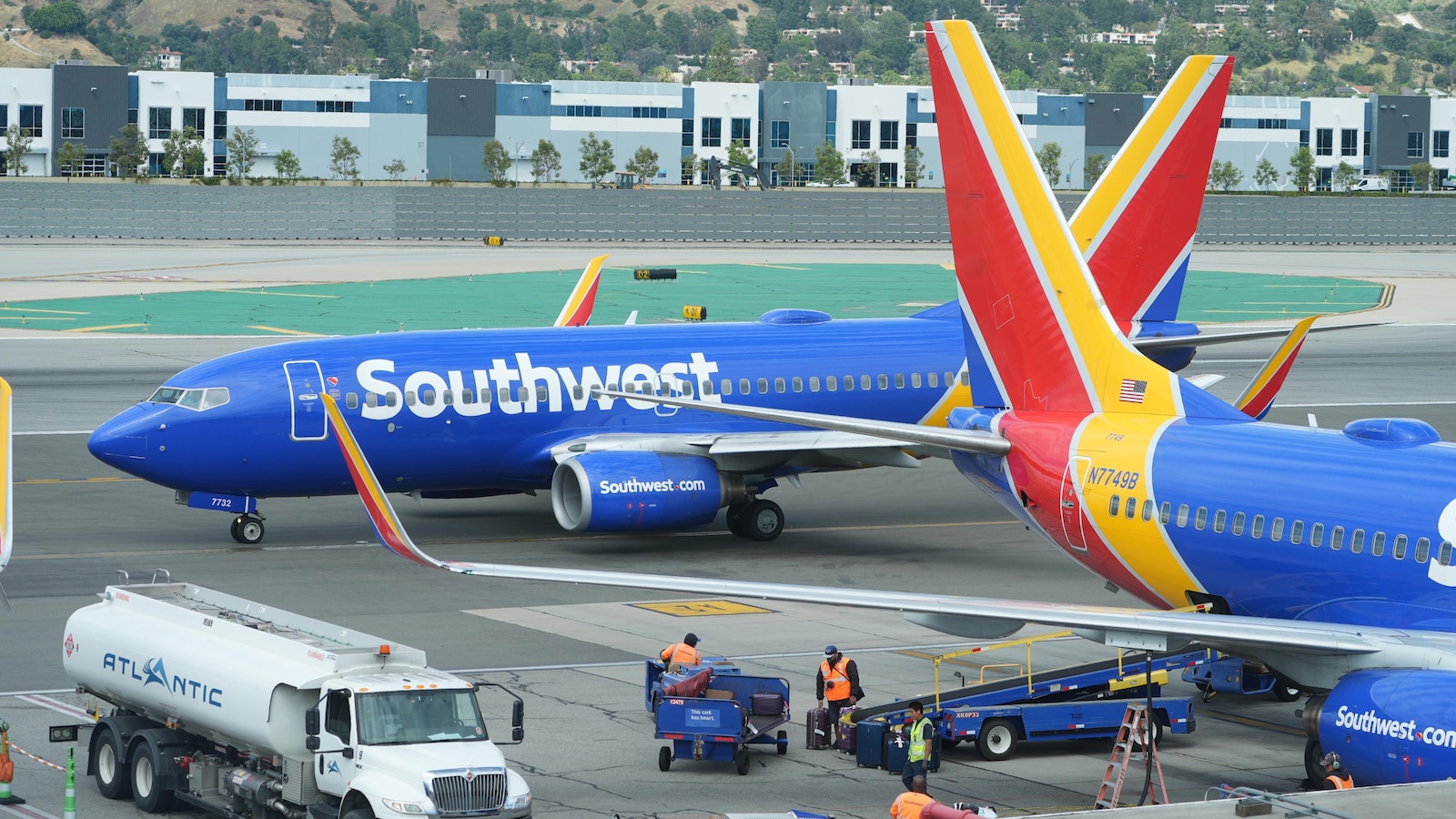
Two Southwest Airlines flights came dangerously close in Nashville after an air traffic control instruction placed one aircraft in the path of another departing from a parallel runway. Both crews received collision-avoidance alerts and took evasive action; the FAA is investigating and has not yet disclosed the exact separation, though flight data suggest the planes may have been as close as 500 feet. The incident is a safety negative for Southwest and aviation operations, but it is likely to have limited direct market impact unless the FAA review leads to broader regulatory findings.
This is not a classic airline-demand event; it is a systems-and-regulation event. The immediate market read-through is modest for LUV because the issue appears operationally contained, but the second-order risk is that every close call involving a major carrier increases the odds of a tighter controller workload review, runway-flow restrictions, and higher insurance/fuel costs from schedule padding. That matters more for hubs with parallel-runway complexity and strong banked departure structures, where even small procedural changes can reduce asset utilization and dilute unit revenue over the next 1-2 quarters.
The more material medium-term implication is for the FAA’s enforcement posture and for airline network optimization. If the review concludes that controller sequencing, not pilot discipline, was the key failure, carriers may face new ground-delay programs and more conservative separation standards during crosswind or go-around conditions. That would hurt marginally more for low-cost carriers with tight turns and high aircraft utilization, while legacy carriers with larger schedule buffers can absorb the inefficiency better.
AAL is a cleaner relative beneficiary in a risk-off read because the event is not idiosyncratically tied to its balance sheet or brand, but that benefit is mostly on a relative basis, not absolute. The contrarian view is that the overreaction opportunity is likely in LUV: unless the FAA identifies a pattern at a specific airport or systemic procedural defect, this should fade into a short-lived headline. The bigger trade is around volatility pricing into airline names versus actual earnings impact, which is likely negligible unless the investigation broadens into broader runway-incursion reforms.
AI-powered research, real-time alerts, and portfolio analytics for institutional investors.
Request DemoOverall Sentiment
mildly negative
Sentiment Score
-0.15
Ticker Sentiment
