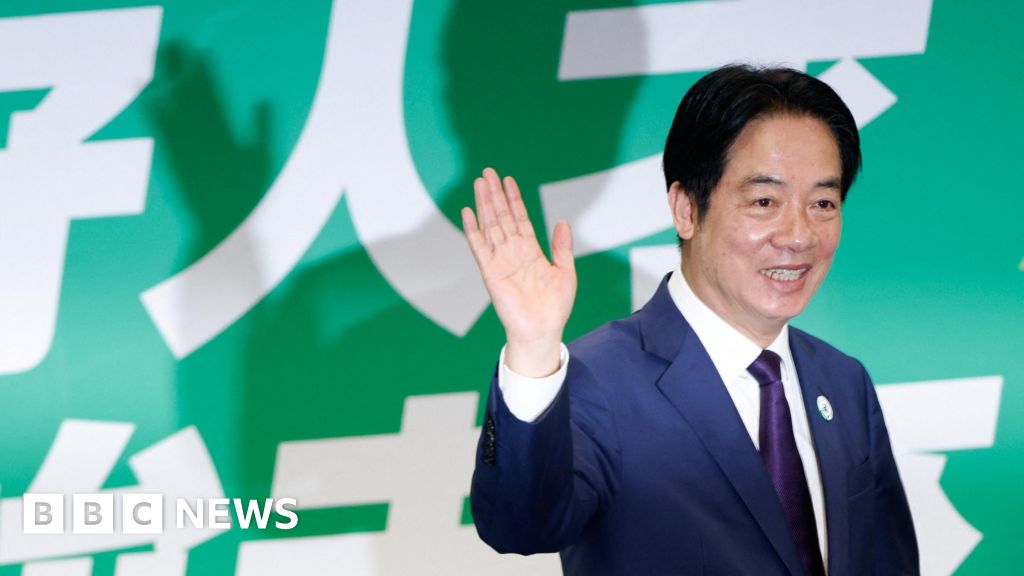
Trump signaled he may soon decide on an $11bn weapons package for Taiwan while reiterating that US policy on the island has not changed. The article highlights continued cross-strait tensions, with Beijing opposing Taiwan's leadership and ramping up military drills around the island. Taiwan reaffirmed its status as a sovereign, independent democratic country while stressing it wants to maintain the status quo.
This is a classic volatility regime shift rather than a clean directional macro event: the base case remains status quo, but the distribution of outcomes has fatter left tails for regional risk assets. The immediate market channel is not Taiwanese equity beta alone; it is semi supply-chain optionality, with downside concentrated in leading-edge equipment, advanced packaging, and high-value substrate capacity that can reprice on even a modest rise in perceived blockade or sanction probability. In the next few sessions, headline risk likely compresses risk appetite across Taiwan proxies and lifts implied vol more than it moves realized fundamentals.
The second-order issue is policy credibility on both sides. If Washington is seen as wavering on defense commitments while still authorizing arms sales, allies may reassess security premiums, but Beijing also has an incentive to keep pressure below the threshold that would force a stronger U.S. response. That creates a dangerous “slow-burn” setup: the market may underprice drift toward more frequent drills, cyber activity, and maritime harassment over 3-6 months, which is more damaging to logistics and insurance costs than a one-off diplomatic flare-up.
Contrarian view: this may be less bullish for a broad China/Taiwan de-risking trade than consensus expects because the most likely near-term outcome is managed ambiguity, not escalation. The better expression is convexity—own upside in defense and vol while fading outright panic in semis unless there is a concrete catalyst such as an arms-sale denial, formal transit by a top U.S. official, or an actual exclusion-zone exercise. The real mispricing is in how quickly markets can normalize after the headline fades, while the geopolitical premium quietly ratchets higher in the background.
AI-powered research, real-time alerts, and portfolio analytics for institutional investors.
Request DemoOverall Sentiment
mildly negative
Sentiment Score
-0.15
