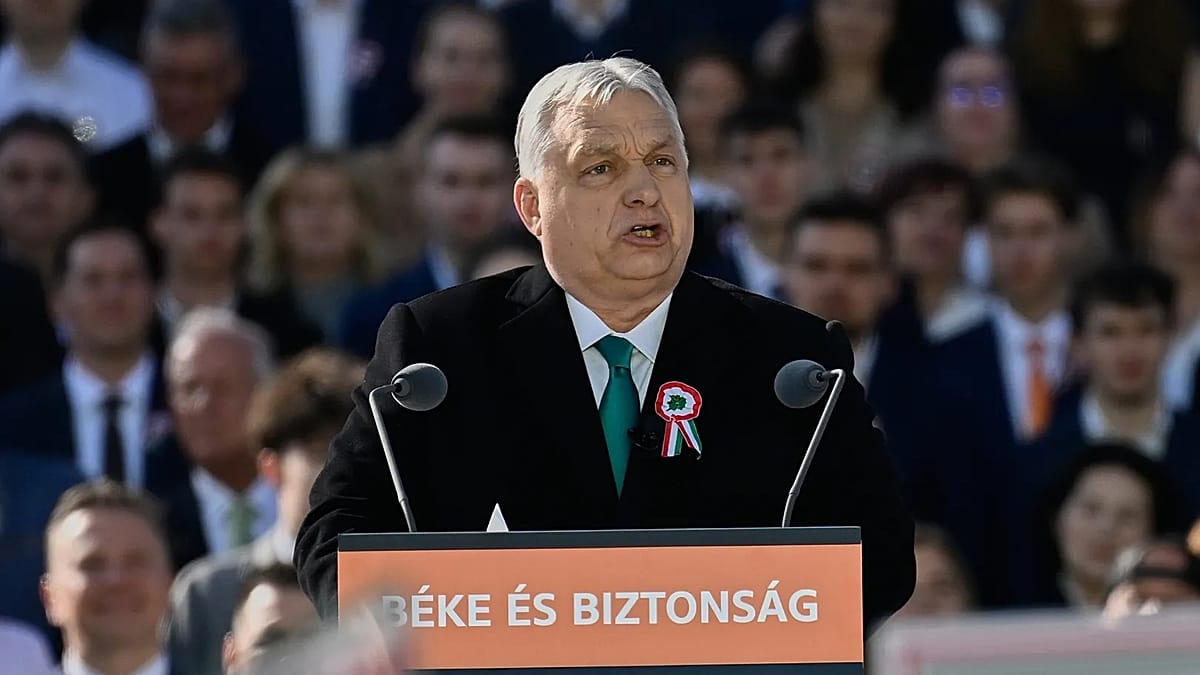
Hungary holds parliamentary elections on April 12, with PM Viktor Orbán framing the vote as a choice between peace and war as he faces his most serious challenge since 2010 and polling behind opposition leader Péter Magyar. Budapest has blocked an EU €50 billion loan package to Ukraine pending restoration of the Druzhba oil pipeline, and recently seized $40m, €35m and 9kg of gold from two Ukrainian cash transports, triggering a diplomatic spat with Kyiv and heightening regional political and energy risk. Orbán accuses Kyiv and Brussels of seeking to unseat him and has set a target of at least 3 million votes for Fidesz, increasing the stakes for domestic stability and cross-border energy flows.
The immediate market channel is political veto power over EU-level transfers, which creates a binary event risk around the election outcome that can move Hungarian sovereign spreads and the forint sharply in days-to-weeks. If the veto persists, expect 100–200bp of widening in 5y CDS and a 5–10% depreciation in HUF vs EUR in 1–3 months as fiscal backstops and EU conditionality are delayed, pressuring local banks and corporates with FX exposure.
Energy-market second-order effects will come through rerouting and grade mismatches rather than headline volumes: constrained pipeline throughput forces Central European refiners to pay seaborne freight/premiums and switch grades, widening Urals/Brent differentials in Europe by $2–6/bbl and pressuring regional refinery margins over the coming 1–3 months. Firms owning import terminals, storage and longer-haul logistics capture most of the margin; integrated producers with access to flexible shipping are insulated.
Geopolitical signaling elevates defense and risk-premium trades: an entrenched veto player increases EU policy friction and could accelerate defensive procurement and EU solidarity measures conditional on political alignment, creating a 6–18 month tailwind for European defense contractors and insurance companies selling political-risk cover. The key reversals are rapid: a clear opposition victory and a prompt release of funds would reverse spreads and HUF moves within days, while protracted stalemate creates a multi-quarter deterioration in local assets.
AI-powered research, real-time alerts, and portfolio analytics for institutional investors.
Request DemoOverall Sentiment
mildly negative
Sentiment Score
-0.30
