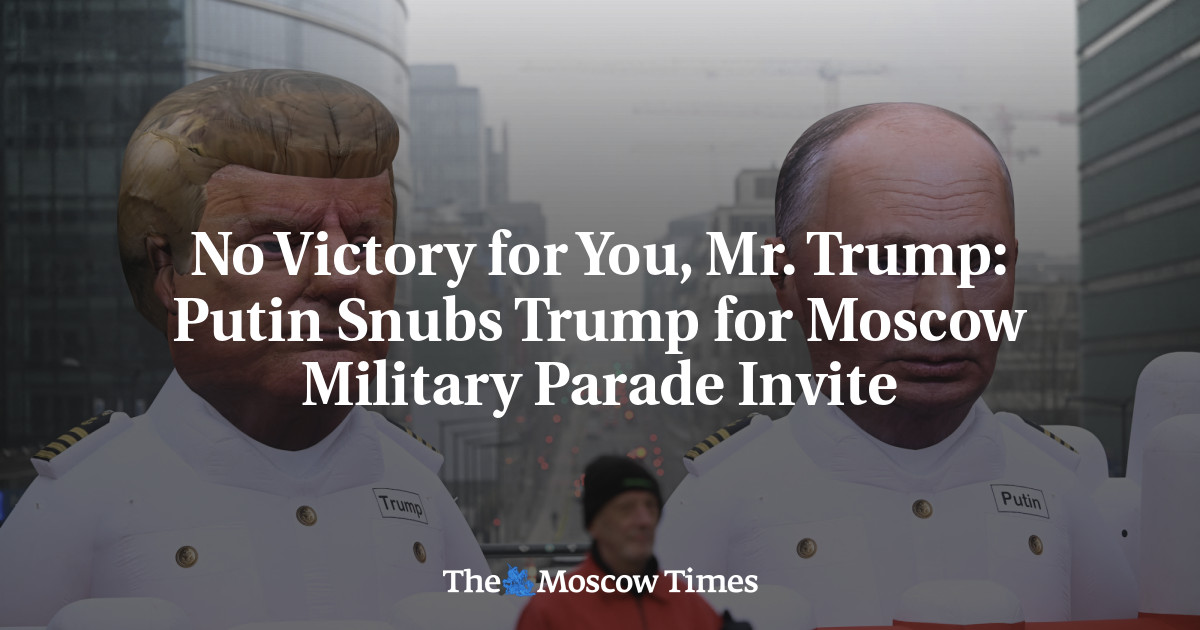
Russia said Trump was not invited to Moscow’s May 9 Victory Day parade, while the Kremlin is weighing a May 9 ceasefire proposal amid ongoing war in Ukraine and heightened Ukrainian drone attacks. This year’s Red Square parade will exclude military vehicles for the first time in nearly two decades due to security concerns. Zelensky said Ukraine will seek clarification, but reiterated that Kyiv wants a longer-term ceasefire and an end to the war.
The market implication is less about the ceremonial optics and more about signaling discipline on Russia's war posture: a temporary pause around the parade window is a low-cost way to reduce drone risk while preserving escalation optionality elsewhere. That makes the near-term read-through for defense and cyber spending mildly bullish, because security sensitivity is rising faster than the odds of a durable de-escalation. The absence of military vehicles is also a subtle reminder that Russia is managing operational risk under pressure, which usually coincides with more resource allocation to air defense, EW, and internal security rather than front-line force projection.
Second-order, any ceasefire language tied to a symbolic date should be viewed as a volatility event rather than a regime change. If Ukraine treats the proposal as window-dressing, the most likely outcome is renewed headline risk within days, not months, and that tends to keep European defense, ISR, and drone-countermeasure suppliers bid on dips. If Russia does get a short pause, it could briefly reduce the pace of attack-related incidents, but that would probably compress into a narrower strike window afterward, leaving the medium-term threat profile unchanged.
The bigger contrarian point is that markets may underprice how this strengthens the political case for higher defense budgets in Europe: leaders will cite the need for layered air defense and domestic resilience, not just battlefield capabilities. The trade is therefore not a broad 'peace premium' fade, but a selective long in suppliers to missile defense, sensors, and electronic warfare, with the cleanest risk/reward in names tied to replenishment cycles rather than one-off war headlines. Tail risk is that a genuine 72-hour pause snowballs into a negotiation narrative, which would hit the most headline-sensitive defense names first, but that looks like a low-probability, short-duration outcome rather than the base case.
AI-powered research, real-time alerts, and portfolio analytics for institutional investors.
Request DemoOverall Sentiment
neutral
Sentiment Score
-0.05
