
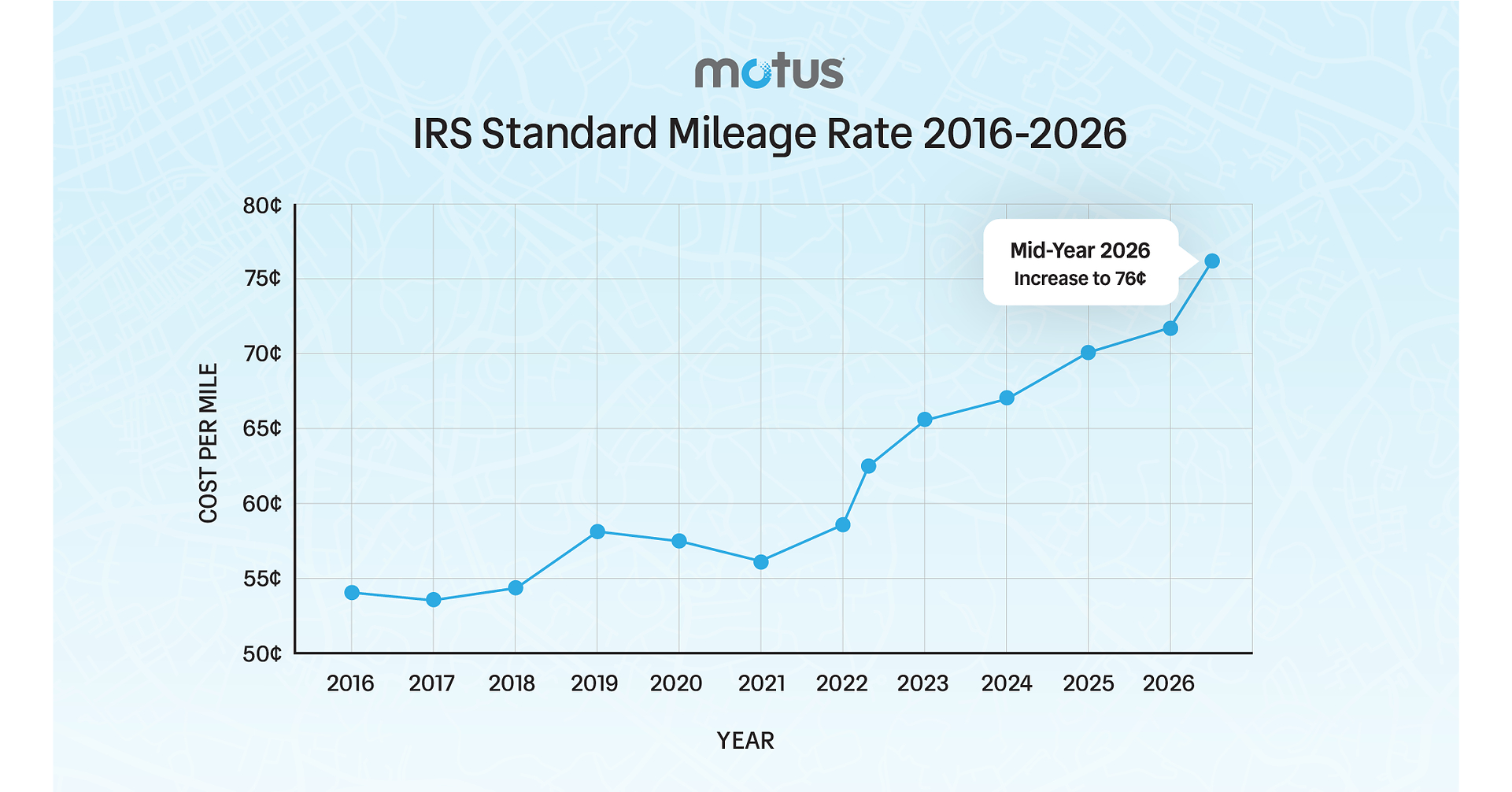
The IRS increased the 2026 business-use standard mileage rate to 76 cents per mile effective July 1, 2026, citing changes in fuel-price volatility. Motus attributes the off-cycle adjustment to significant fuel fluctuations earlier in 2026 that can widen the gap between reimbursement benchmarks and actual operating costs. The update is mainly administrative/benchmark-focused for employer reimbursement and mileage-based tax deductions, with no direct market-wide signal.
This is more a lagging inflation signal than an investable event. The practical market mechanism is small but real: companies with dense field-sales, home-service, and route-based workforces face a modest SG&A uplift when reimbursement benchmarks reset upward, while firms that own their fleets or tightly manage per-mile spend are less exposed. The bigger economic readthrough is that fuel volatility is still persistent enough to force an administrative reset, which matters for wage-sensitive small businesses more than for large-cap software or industrials.
The likely winners are private reimbursement/workforce-management vendors and, second-order, fleet/payment platforms that sit in the workflow. Public-market beneficiaries are thin; the economic value here is in adoption of more structured reimbursement programs, not in the rate change itself. The losers are employers with large reimbursed-driving populations and low pricing power — local services, healthcare field ops, telecom install, and specialty distribution — but the effect should be too small to move broad earnings estimates unless fuel re-accelerates.
The contrarian risk is that the market treats this as a fresh inflation impulse when it is mostly a catch-up adjustment to earlier fuel moves. If gasoline moderates over the next 4-8 weeks, the story fades quickly and there is no durable earnings tailwind for energy or durable headwind for consumers. The thesis only becomes investable if fuel prices stay elevated through Q3 and we see actual guidance revisions in mobile-workforce-heavy names; otherwise this is mostly noise.
On SVTE specifically, there is no obvious direct listed-equity catalyst from this release. Treat it as a watch item on broader fuel-volatility and reimbursement-processing trends, not a standalone trade.
AI-powered research, real-time alerts, and portfolio analytics for institutional investors.
Request TrialOverall Sentiment
neutral
Sentiment Score
0.05
Ticker Sentiment
