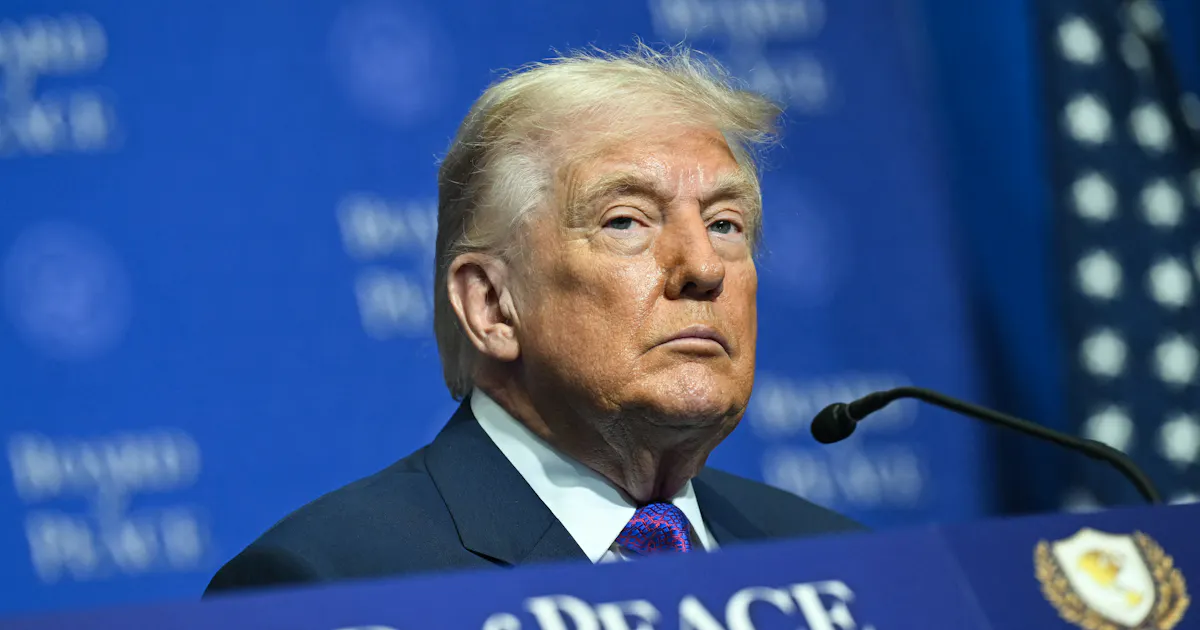
Trump’s Board of Peace official fund has received $0 so far, despite billions pledged, with donations instead flowing through a JPMorgan account that has no transparency or reporting requirements. Morocco has contributed $20 million and the UAE $100 million, but the UAE police-training funds are frozen and the program has yet to begin. The State Department has offered $50 million and promised $1.2 billion in reallocated aid, but a congressional aide said none of that money is actually being managed by the board.
The market-relevant issue is not the headline governance theater; it is counterparty and payment-channel risk around JPMorgan’s role as the operational wallet for a politically sensitive, low-transparency vehicle. Even if direct economic exposure is de minimis, JPM’s brand and compliance apparatus can be pulled into a higher-frequency AML/KYC and reputational review cycle, which matters more than any fee income from the account itself. The second-order read is that banks with large correspondent and politically exposed person pipelines may face tighter internal scrutiny on charitable/government-adjacent flows, creating a small but real drag on onboarding speed and profitability of adjacent business lines. The bigger market implication is funding latency. When pledged capital sits outside the official vehicle and freezes in a quasi-off-balance-sheet structure, execution risk shifts from “can they raise money?” to “can they actually disburse it on schedule?” That is bearish for any contractors, logistics providers, and reconstruction-linked names that would be front-end beneficiaries of a rapid rollout; the cash waterfall is now the gating item, not the policy announcement. In practice, the next 1-3 months are more likely to produce headlines about stalled implementation, donor fatigue, and intra-committee disputes than real spend, which argues against chasing any reconstruction beta. Contrarian angle: the absence of money in the official fund does not necessarily mean no activity; it may be a deliberate structure to preserve optionality and reduce public disclosure. If this evolves into a parallel private-donor model, the beneficiaries shift toward banks, legal advisers, and politically connected intermediaries rather than traditional aid contractors. That makes the current setup more of a governance and optics trade than a pure policy trade, and the immediate downside is headline risk if regulators or legislators force disclosure later. For JPM, the direct earnings impact is trivial, but the event can become a nuisance catalyst if it triggers hearings or compliance questions tied to other custody/escrow-type accounts. The risk window is days to weeks for media blowback, but months for any formal inquiry. That asymmetry favors fading any knee-jerk selloff in JPM unless evidence emerges of broader control failures beyond this one account.
AI-powered research, real-time alerts, and portfolio analytics for institutional investors.
Request DemoOverall Sentiment
strongly negative
Sentiment Score
-0.55
Ticker Sentiment
