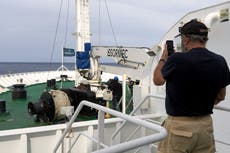
A hantavirus outbreak aboard the MV Hondius has killed 3 people, with 6 of 8 suspected cases now confirmed by the WHO. The cruise ship evacuation off Tenerife is underway, with 22 British passengers and 3 crew expected to be repatriated and then held for up to 72 hours before a possible 45-day isolation period. While the public health risk is described as low, the incident is disrupting travel and triggering protests at the port.
This is less a single-event health story than a short-duration disruption test for the travel stack. The direct economic hit is concentrated in cruise operators, port services, and regional tourism around Tenerife, but the larger second-order effect is reputational: even a low-probability contagion event can materially raise booking friction for cruise lines already dependent on high advance deposits and group travel confidence. The market usually underprices how quickly a perceived bio-risk can spill into pricing power, with itinerary discounts, waived cancellations, and weaker onboard spend hitting margins before any formal demand downgrade shows up.
The more interesting risk is not the outbreak itself but the operational precedent. If authorities conclude that medically supervised disembarkation, repatriation, and quarantine logistics were handled effectively, the near-term tail risk for the sector compresses; if there are any secondary cases tied to repatriation or quarantine, it becomes a headline template for other pathogens and could force higher insurance, screening, and port handling costs across the industry. That is a months-long earnings issue, not a days-long headline.
There is also a potential beneficiary set outside the obvious travel names: healthcare logistics, testing, and isolation capacity providers in the affected jurisdictions. In contrast, cruise operators and premium leisure travel stocks may see a modest but immediate multiple compression if the event extends into booking season, because investors will extrapolate from one vessel to broader health-safety operating leverage. The market’s first instinct may be to fade the headline, but the real variable is whether this becomes a recurring diligence item for consumers and regulators rather than a one-off anomaly.
The contrarian view is that the move may be overdone if the outbreak stays contained and no asymptomatic spread is found during repatriation. In that case, the event likely fades into a transient sentiment shock with limited direct earnings impact, especially for diversified carriers and operators with flexible capacity. The asymmetry is therefore best expressed with short-dated optionality around cruise-exposed names rather than outright directional shorts in the broader travel complex.
AI-powered research, real-time alerts, and portfolio analytics for institutional investors.
Request DemoOverall Sentiment
strongly negative
Sentiment Score
-0.55
