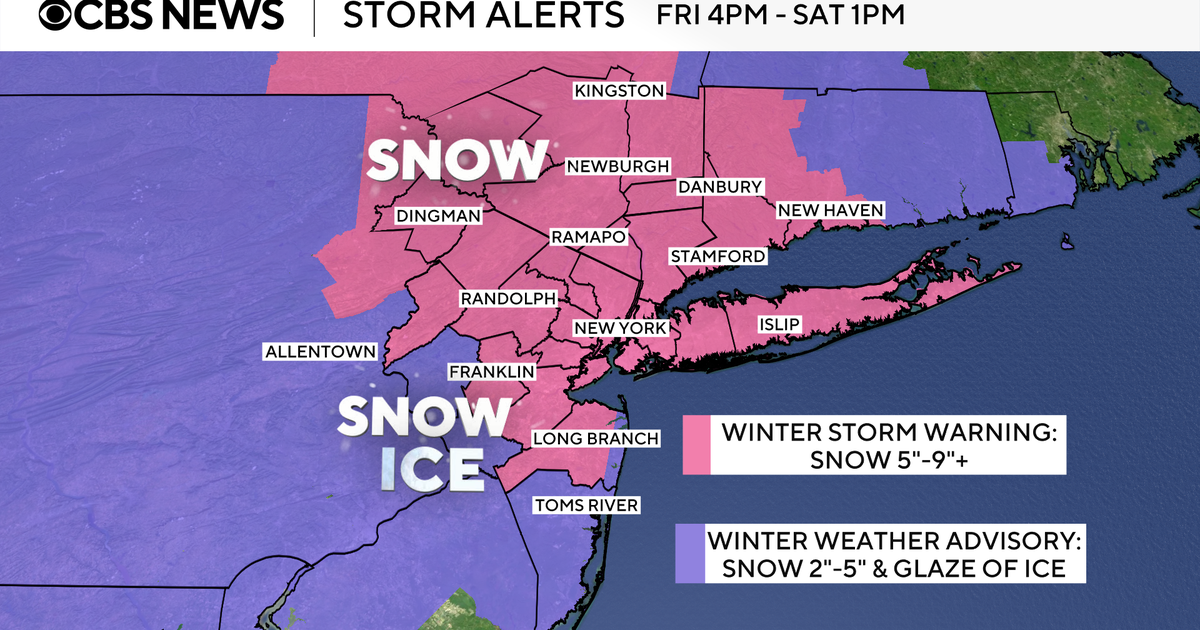
A strong winter storm is forecast to hit the New York City region beginning Friday evening, with 5–9 inches expected citywide and localized amounts up to 11 inches (particularly northeast Queens and northern neighborhoods); snowfall rates could reach 1–2 inches per hour between about 5 p.m. Friday and 6 a.m. Saturday. New York and New Jersey declared states of emergency, New York City issued a travel advisory and Code Blue for freezing temps, and local authorities mobilized plows, salt and sanding trucks—actions that signal significant near-term disruptions to road transport, holiday travel and regional logistics. Municipal guidance urging residents to avoid travel and shelter the homeless underscores immediate demand on emergency and infrastructure resources.
Market structure: This storm creates clear near-term winners — road-salt producers (Compass Minerals CMP), grocery chains (WMT, COST) and local snow-removal contractors — and losers — airlines (UAL, DAL, AAL), parcel carriers (UPS, FDX) and urban retail foot-traffic. Pricing power is transient: salt and grocery can push 1–3% price/margin improvement over 1–8 weeks while transport capacity and last-mile logistics see measurable volume/time-cost losses for 3–10 days. Cross-asset: expect a small bid in short-dated natural gas and power (ConEd/ED exposure) and temporary spread widening in NY/NJ municipal paper as emergency cash needs and lowered trading liquidity emerge.
Risk assessment: Tail risks include cascading logistics failures around holiday travel (multi-day airport closures causing multi-week revenue disruption for carriers) and concentrated insurance auto/property claims in dense urban corridors leading to elevated loss ratios for P&C carriers in the region (2–4% EPS hit for exposed insurers). Immediate window is 0–72 hours (operational disruptions), short-term 1–8 weeks (inventory/supply rebalancing), long-term negligible unless storms become recurring seasonal pattern changing capital allocation in muni budgets. Hidden dependencies: Port trucking/warehouse chokepoints can delay national e‑commerce flows beyond region; municipal budget reallocations could pressure NY/NJ credit metrics if storms recur.
Trade implications: Direct tactical plays: small-capital, high-conviction buys in CMP (1–3 month), tactical short or options exposure on UAL/UPS/FDX for 1–2 weeks, and a modest short-dated natural gas call spread to capture heating demand. Pair trades: long CMP vs short UPS/FDX captures asymmetric salt demand vs logistics pain. Use weekly options to limit time risk; scale sizes 0.5–3% of portfolio and set stop-losses at 8–12% absolute move.
Contrarian angles: The market often overweights headline airline disruption; post-storm operational resilience typically leads to a snap-back in 7–14 days — avoid large directional shorts >1–2% position beyond two weeks. NY/NJ muni selloff risk is likely overdone intraday: if spreads widen >20bp vs national munis for 2–4 weeks, selectively buy high-quality muni paper (AA/AAA) for yield pickup. Historical parallels (2018/2022 storms) show short-lived real economy impact but durable one-off demand boosts for winter services and commodities.
AI-powered research, real-time alerts, and portfolio analytics for institutional investors.
Request DemoOverall Sentiment
moderately negative
Sentiment Score
-0.45
