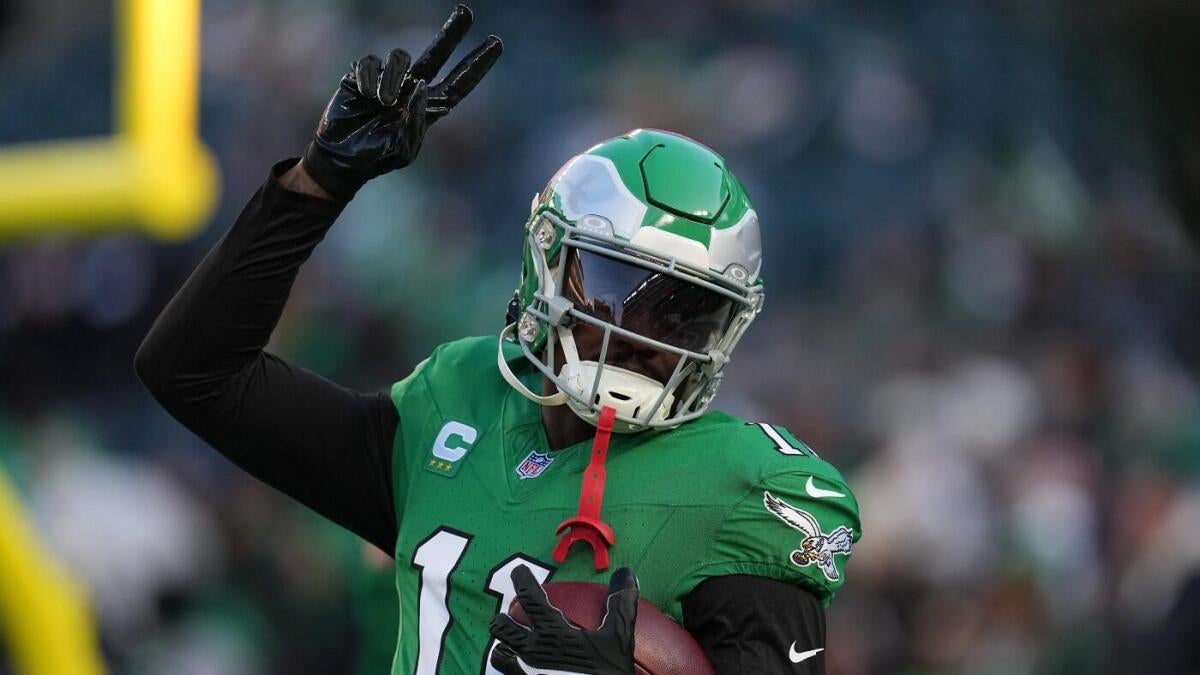
The article centers on a likely AJ Brown trade, with Philadelphia reportedly seeking at least a first-round pick while the optimal post-June 1 timing would limit 2026 cap damage to a $1.55 million savings and $21.84 million of dead money. Brown carries $113 million remaining on his deal, including a fully guaranteed $29 million in 2026, and a new team would inherit a $6.79 million cap hit next year plus significant future option-bonus obligations. The story is materially relevant to NFL roster management and cap strategy, but the market impact is limited and mostly team-specific.
This is less a pure sports trade than a structured balance-sheet cleanup with asymmetric signaling value. The key second-order effect is that Philadelphia can convert an emotionally messy asset into optionality: the post-June 1 timing preserves near-term cap flexibility while pushing most pain into a later year, which materially improves roster construction in the next 12 months. That matters because teams often overpay for perceived contention windows; here the market may be discounting how much of the “must move” pressure is already priced into negotiations.
The acquiring club is buying two things: elite target demand and a future accounting headache. That combination usually compresses the buyer universe to teams with urgent quarterback/playoff motives and enough cap slack to absorb a short-dated star without immediately reworking the deal. The best setup is a contender that can treat the player as a one-year on-field edge and later refinance the contract; the worst outcome for the seller is not a low draft pick, but a delayed resolution that drags into preseason and forces a wider discount as other teams fill needs.
The contrarian angle is that the market may be overestimating the likelihood of a “clean” first-round type return. At this age and with this contract structure, the true clearing price is probably driven more by urgency than valuation discipline, which means one or two interested teams can anchor a surprisingly strong bid while the broader league postures. But if the July/August window passes without a deal, leverage flips fast: the seller’s cap logic weakens, the buyer pool shrinks, and the eventual package can fall to second-round-plus territory.
For the roster around him, the main beneficiaries are the younger receivers and the quarterback ecosystem, not just the eventual trade partner. Any team trading for him should expect a near-term target-share spike but also a medium-term cap drag that reduces depth investments elsewhere, which is why the real loser is often the following year’s secondary pass-catchers and defensive spending. In other words, the headline deal may look like a win-now upgrade, but the hidden cost is reduced roster optionality in the next two offseasons.
AI-powered research, real-time alerts, and portfolio analytics for institutional investors.
Request TrialOverall Sentiment
mildly negative
Sentiment Score
-0.15
