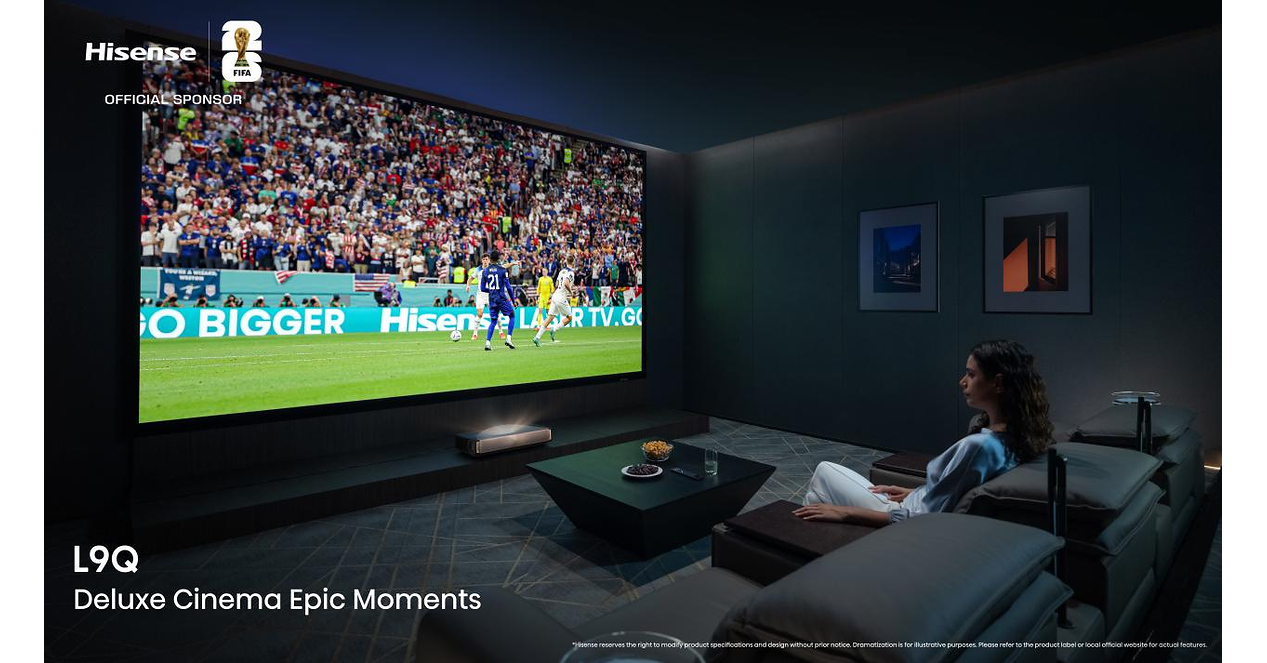
Hisense announced new laser-display viewing solutions for the FIFA 2026™ World Cup at home, including the Laser TV L9Q TriChroma with screen sizes up to 200 inches and the laser projector XR10 with projection up to 300 inches. The company highlights brighter, more vivid daytime viewing (with ambient light suppression) and immersive audio to recreate a stadium-like experience without room blackout. This is a product/marketing update with no financial guidance or earnings figures, so near-term market impact is likely limited.
This is mostly a marketing signal, not an earnings event. The only real economic lever is mix: if a World Cup-driven upgrade cycle exists, it favors larger-screen and higher-ASP categories, but those dollars are likely to be competed away through promo spend and retailer rebates. In public markets, the cleaner beneficiaries are the distribution layer — BBY, AMZN, COST — rather than the brand owner, because they capture basket expansion even if category margins stay thin.
Competitive spillover matters more than the press release implies. Premium TV and projector incumbents may be forced to defend share with heavier marketing, which can compress margins before any unit uplift shows up. The second-order winner could be panel and component suppliers if orders get pulled into late-2025/early-2026, but this is a channel-inventory story, not a structural demand step-up.
Contrarian view: investors routinely overestimate event-driven electronics demand because most households already own “good enough” screens, and the upgrade decision is highly sensitive to consumer confidence and financing costs. The thesis is falsified if large-screen ASPs do not improve in the next two holiday cycles or if retailers report flat sell-through and rising markdowns. On that path, this stays a branding exercise with little P&L impact.
AI-powered research, real-time alerts, and portfolio analytics for institutional investors.
Request DemoOverall Sentiment
mildly positive
Sentiment Score
0.15
