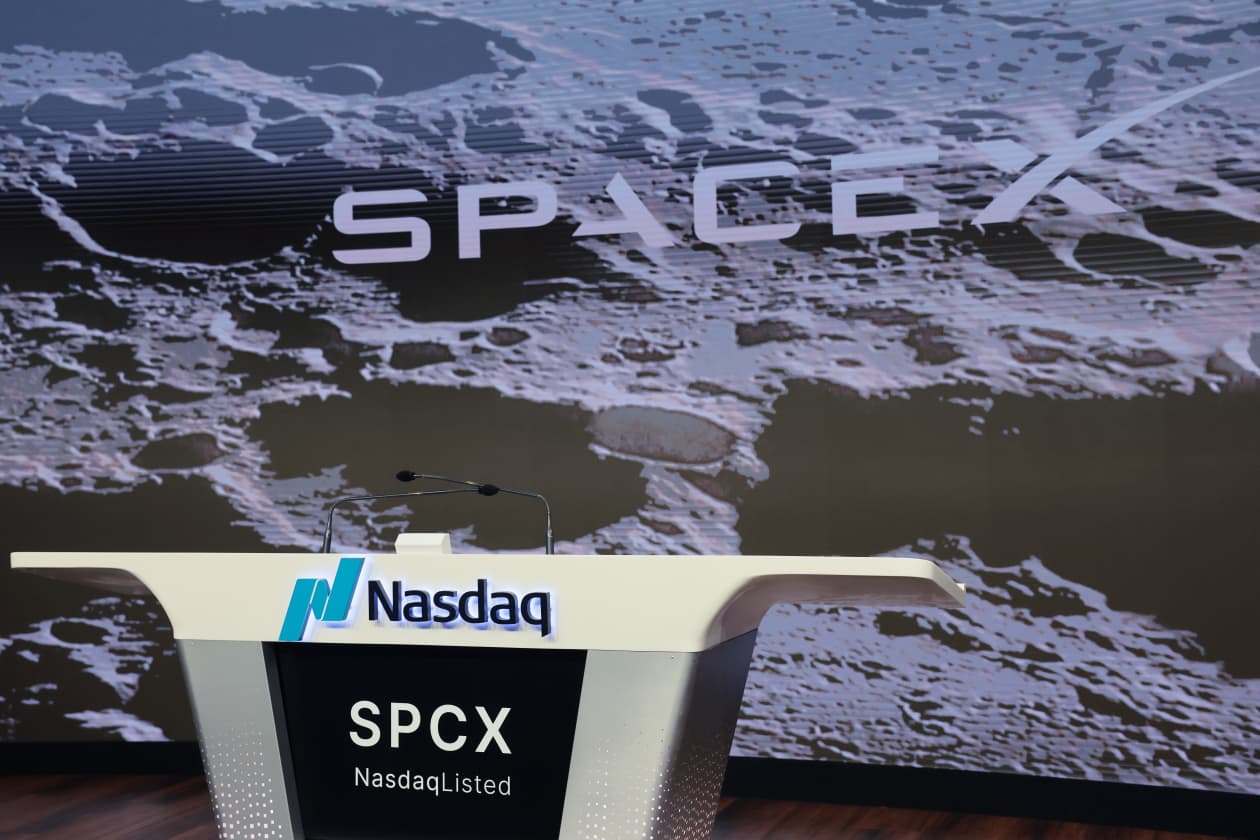
The article asks whether it is too late to buy SpaceX stock after an implied IPO pricing of $135, framing the decision as a long-term holding question rather than reporting a new corporate event. It compares the potential post-listing trajectory to Tesla’s first-day and five-year performance, but provides no new financial results or catalysts. Overall, it is commentary on investor timing and sentiment, with limited immediate market impact.
The key market issue is not whether the asset deserves a premium, but how quickly that premium can be monetized across the ecosystem. A high-profile private-market print tends to lift the “long-duration tech” complex first through sentiment and second through fund-markings: venture-style assets, late-stage private comparables, and even listed proxies for deep-tech optionality can re-rate before fundamentals change. The more important second-order effect is that it may tighten the discount-rate applied to adjacent private rounds, which helps incumbent private holders but can make future financing more dilutive for companies still burning capital.
For public-market traders, the relevant comparator is not the company itself but the post-IPO path of prior cult-name listings: early momentum can extend for weeks if supply is constrained and retail narratives dominate, but the median outcome five years out is usually driven by execution versus expectation, not brand strength. That means the risk/reward is asymmetric for late entrants: near-term upside can be strong if float is tight and secondary supply stays limited, while the downside is a slow bleed once lockup overhang, monthly marks, or any operational miss forces a reset.
The contrarian point is that the crowd likely underestimates how much of the value is already embedded in the story before public accessibility. In these situations, the best trade is often not “buy the dream,” but own the cheaper way to express the same beta through listed beneficiaries or hedge the narrative with a short against a more richly owned momentum name. The catalyst path matters: if the next 1-3 months are dominated by positive news flow and scarcity, the trade works; over 12-24 months, returns will depend on whether the business converts optionality into cash flow fast enough to justify compounding at venture-like multiples.
AI-powered research, real-time alerts, and portfolio analytics for institutional investors.
Request DemoOverall Sentiment
neutral
Sentiment Score
0.05
Ticker Sentiment
