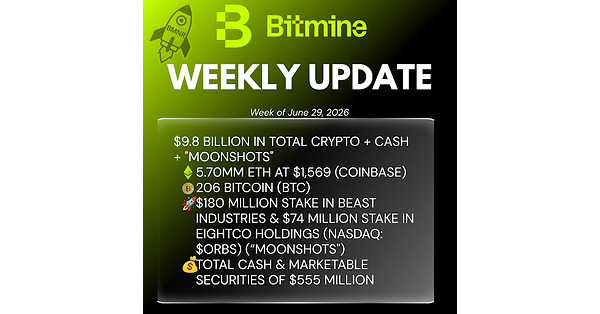
Bitmine reports $9.8B total crypto/liq./tradable assets, including 5.70M ETH worth $1,569/ETH (4.7% of total ETH supply of 120.7M ETH). The company has 4.879M ETH staked (7.7B) and projects annualized staking rewards of ~$246M and annualized staking revenue of ~$211M at a 2.75% 7-day yield. Bitmine also closed a $80.0/share preferred equity offering of 3.5M perpetual A-class shares, raising net ~$273.8M, and was added to the Russell 1000 Large-cap on June 26, potentially expanding institutional ownership.
BMNR is now less a mining story than a public-market wrapper around scarce ETH float plus staking yield. That structure can tighten the tradable supply of ETH and support basis / borrow costs across the ecosystem, but the immediate beneficiaries are the capital-allocation intermediaries: custody, prime brokerage, staking, and financing counterparties that earn fees on the churn. The loser is any ETH treasury peer that trades on similar scarcity optics without BMNR’s scale advantage, because index inclusion and visible accumulation can pull passive and momentum capital toward the largest vehicle first.
The main catalyst path is flow-driven, not fundamental, over the next 2-6 weeks: Russell-related ownership, quarter-end window dressing, and retail/multi-manager momentum can keep the equity bid as long as ETH doesn’t break materially lower. Over 1-3 months, the key issue is whether the stock continues to trade at a premium to reported NAV after the one-time inclusion effect fades; if the premium compresses, the market will stop paying up for treasury optionality. A harder medium-term risk is that staking yield is being marketed as a stabilizer, but in practice it is too small versus ETH beta to protect equity downside in a drawdown.
The consensus is probably underestimating how reflexive this structure is: once a treasury gets large enough, each incremental purchase is more likely to move the asset it owns than to create incremental shareholder value. That makes the story more fragile than a normal operating business — if ETH volatility rises or financing markets tighten, the equity can gap from “scarcity premium” to “liquidity overhang” quickly. The cleanest falsifier is a sustained failure of BMNR to hold its post-inclusion premium while ETH trades flat-to-down; that would argue the market is already pricing the narrative and the next leg is dilution risk, not compounding.
AI-powered research, real-time alerts, and portfolio analytics for institutional investors.
Request DemoOverall Sentiment
mildly positive
Sentiment Score
0.25
Ticker Sentiment
