
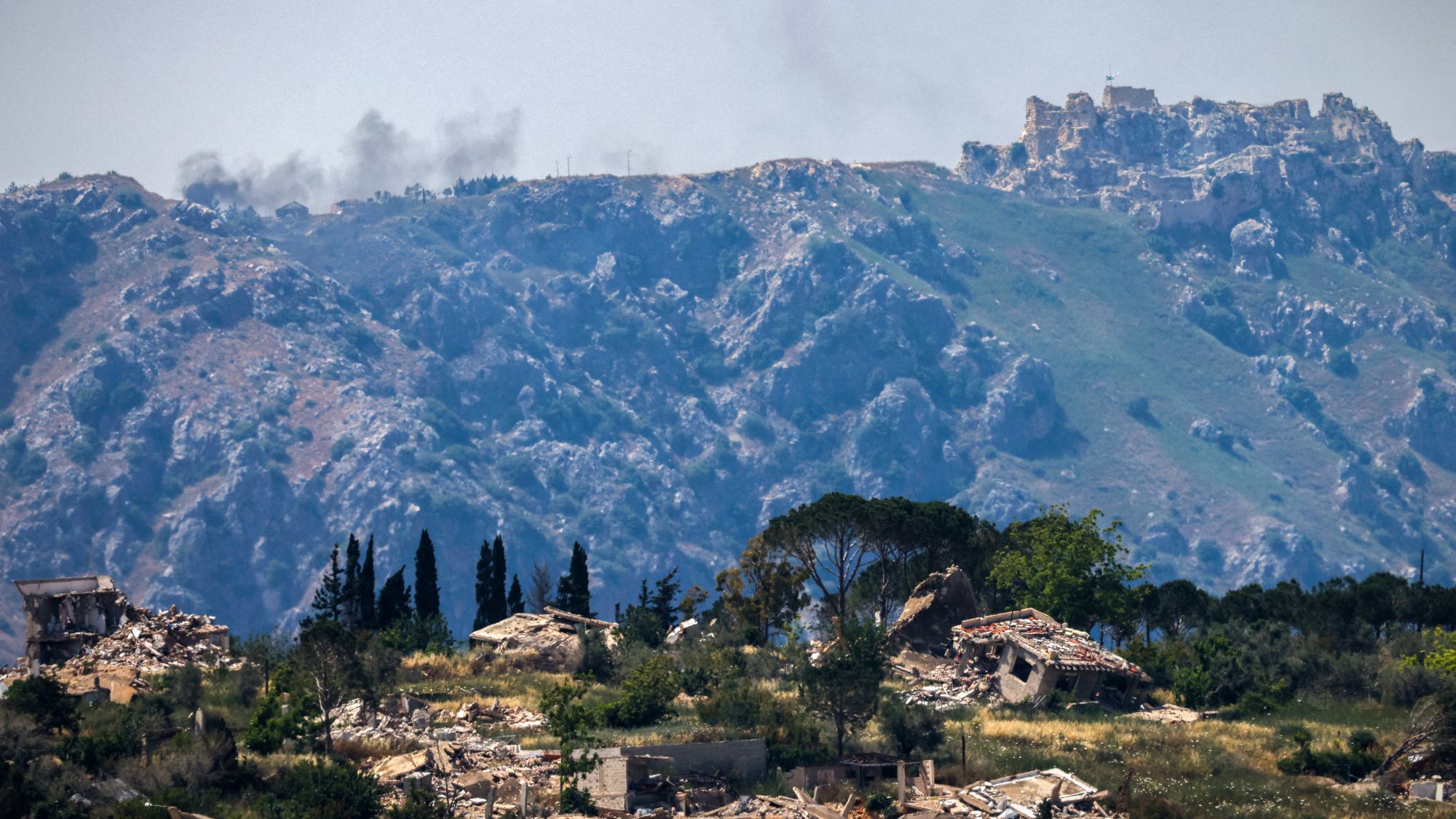
Israel said it captured Beaufort Castle in Lebanon, a 900-year-old fortress and former Israeli base, marking its deepest incursion inside Lebanon since the 2000 withdrawal. Prime Minister Benjamin Netanyahu framed the move as part of a broader effort to deepen Israel's grip on Hezbollah-held areas, but the advance is complicating ceasefire and Iran-linked negotiations. France has requested an emergency U.N. Security Council meeting, underscoring elevated geopolitical risk in the region.
This is less a single battlefield update than a stress test on the credibility of the negotiating framework. The market implication is that the downside tail is not just a wider regional conflict, but a collapse in the assumption that U.S.-brokered de-escalation can contain localized advances; once that belief breaks, every adjacent concession becomes politically harder for all parties within days, not months.
For equities, the second-order effect is on duration-sensitive, event-sensitive assets rather than direct war exposure. The higher-probability loser is NYT in the near term: conflict headlines are supportive for traffic, but prolonged ambiguity and negotiation failure tend to compress ad inventory quality and make management teams more cautious on guidance confidence across the media complex. More broadly, defense and security vendors can see a bid if the narrative shifts from ceasefire to occupation/containment, but the immediate beneficiary basket is likely in surveillance, drones, and counter-UAS rather than traditional platforms.
The bigger hidden risk is escalation via process failure: if talks are seen as toothless, the path of least resistance is a series of incremental retaliations over 2-6 weeks, not a clean binary war/no-war outcome. That kind of regime is bad for risk assets because it keeps oil and rates bid on headlines while failing to create a durable defense premium, which often means multiple compression in Europe/EM and a volatile, mean-reverting response in U.S. equities.
Consensus may be underpricing how quickly diplomatic theater can turn into market structure damage. If France pushes an emergency U.N. move and talks remain alive, the move could reverse just as fast as it broke, making crowded geopolitical longs vulnerable; but if negotiations visibly stall, the repricing in defense and energy could have a longer runway than the current headline cycle suggests.
AI-powered research, real-time alerts, and portfolio analytics for institutional investors.
Request TrialOverall Sentiment
strongly negative
Sentiment Score
-0.55
Ticker Sentiment
