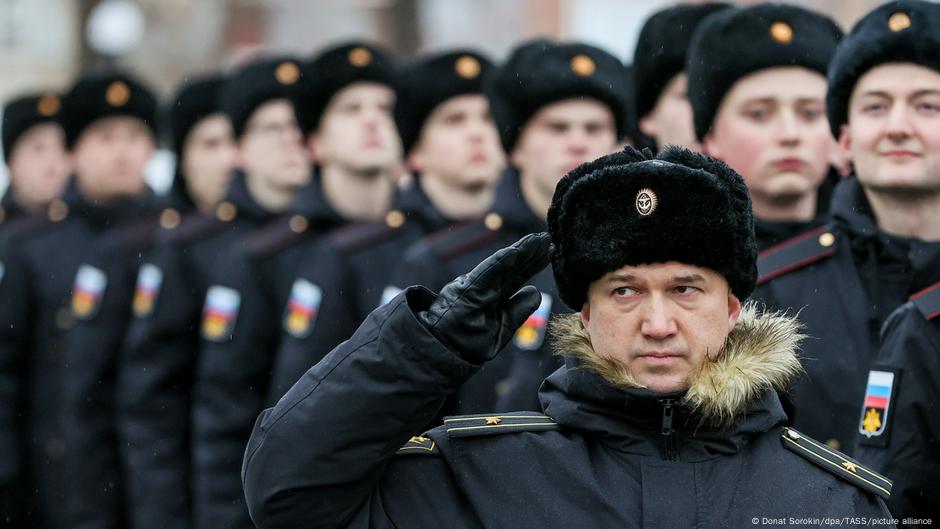
Putin signed a decree canceling debts of up to 10 million rubles for new military recruits who sign at least one-year contracts after May 1, with the exemption also covering spouses and applying to debts incurred before May 1. The move is another wartime incentive aimed at sustaining Russia's troop pipeline, alongside existing salary and career perks for veterans. He also enacted a law broadening Moscow's ability to deploy armed forces abroad to protect Russian citizens facing foreign legal proceedings.
The immediate market read is not “more war spending” but a sharper deterioration in Russia’s fiscal optionality. Converting private household leverage into state-contingent labor supply is effectively a recruiting subsidy financed through future social losses, which raises the probability of deeper monetization, tax extraction, or forced domestic reprioritization over the next 6-18 months. That matters because it pushes military capacity up at the margin while making the non-defense economy more brittle, especially in credit-sensitive categories tied to consumption, housing, and regional banks.
The second-order effect is on credit risk and labor allocation inside Russia rather than on frontline dynamics alone. Debt relief to recruits is a signal that the state is willing to absorb private balance-sheet stress to preserve manpower; that tends to worsen moral hazard and accelerate capital flight by households that can still move money, while also raising the odds of tighter internal controls on banks and collections. The legal authority to project force abroad on behalf of Russian citizens also increases tail risk for cross-border detentions and diplomatic friction, which can freeze asset recovery, raise political risk premia, and complicate any remaining Russia-linked settlement channels.
From a market perspective, the better expression is not a broad geopolitical short but a relative-value trade on elevated sanctions/compliance risk versus headline military escalation. The consensus likely underestimates how these measures can keep Russia’s war machine operational without producing a near-term macro breakout; that means the more tradable implication is prolonged stagnation with episodic policy shocks, not a one-way collapse. Any reversal would require a material battlefield de-escalation or a fiscal constraint that forces the Kremlin to reduce these subsidies, which looks more like a multi-quarter rather than multi-week catalyst.
The most asymmetric risk is to counterparties with residual Russia exposure, especially those dependent on trade finance, ship insurance, commodity logistics, or legal recoveries. Even if direct commodity flows are less exposed than in 2022, the legal broadening increases the probability of asset freezes, arbitrary detentions, and settlement disputes that can spill over into Europe-based intermediaries. That argues for staying cautious on any names still carrying Russia-related legal tail risk and for using event-driven vol rather than directional beta.
AI-powered research, real-time alerts, and portfolio analytics for institutional investors.
Request DemoOverall Sentiment
moderately negative
Sentiment Score
-0.20
